

Fast Facts
-
Machine Learning Breakthrough: Researchers from MIT, Harvard, and Clemson University have developed a machine learning-based approach to quickly and cost-effectively predict the magnetic structures of crystalline materials, overcoming the limitations of traditional methods.
-
Innovative Neural Network Design: Guided by the principles of equivariant Euclidean neural networks, MIT undergraduates designed a neural network that effectively classifies materials into ferromagnetic, antiferromagnetic, and nonmagnetic categories, leveraging a comprehensive materials database.
-
High Prediction Accuracy: The neural network achieved an average accuracy of 78% for predicting magnetic order and 74% for magnetic propagation, with a remarkable 91% accuracy for nonmagnetic materials, showcasing its potential effectiveness.
- Future Research Directions: This work lays the groundwork for more complex challenges in determining full magnetic structures, including the specific magnetic moments of every atom, signaling promising advancements in materials science and applications in quantum computing and spintronics.
MIT Researchers Simplify Magnetic Classification with Machine Learning
Researchers at MIT, Harvard University, and Clemson University recently unveiled a new method to improve magnetic classification. This breakthrough could accelerate how scientists study the magnetic structures of crystalline materials. Understanding these structures is essential for advancements in data storage, imaging, spintronics, superconductivity, and quantum computing.
Traditionally, determining the magnetic properties of materials has been a complex task. Scientists relied on methods like neutron diffraction, which are limited by available machines and resources. Consequently, only about 1,500 magnetic structures have been tabulated so far. Predicting these structures through computations is labor-intensive and costly, particularly as crystal sizes increase.
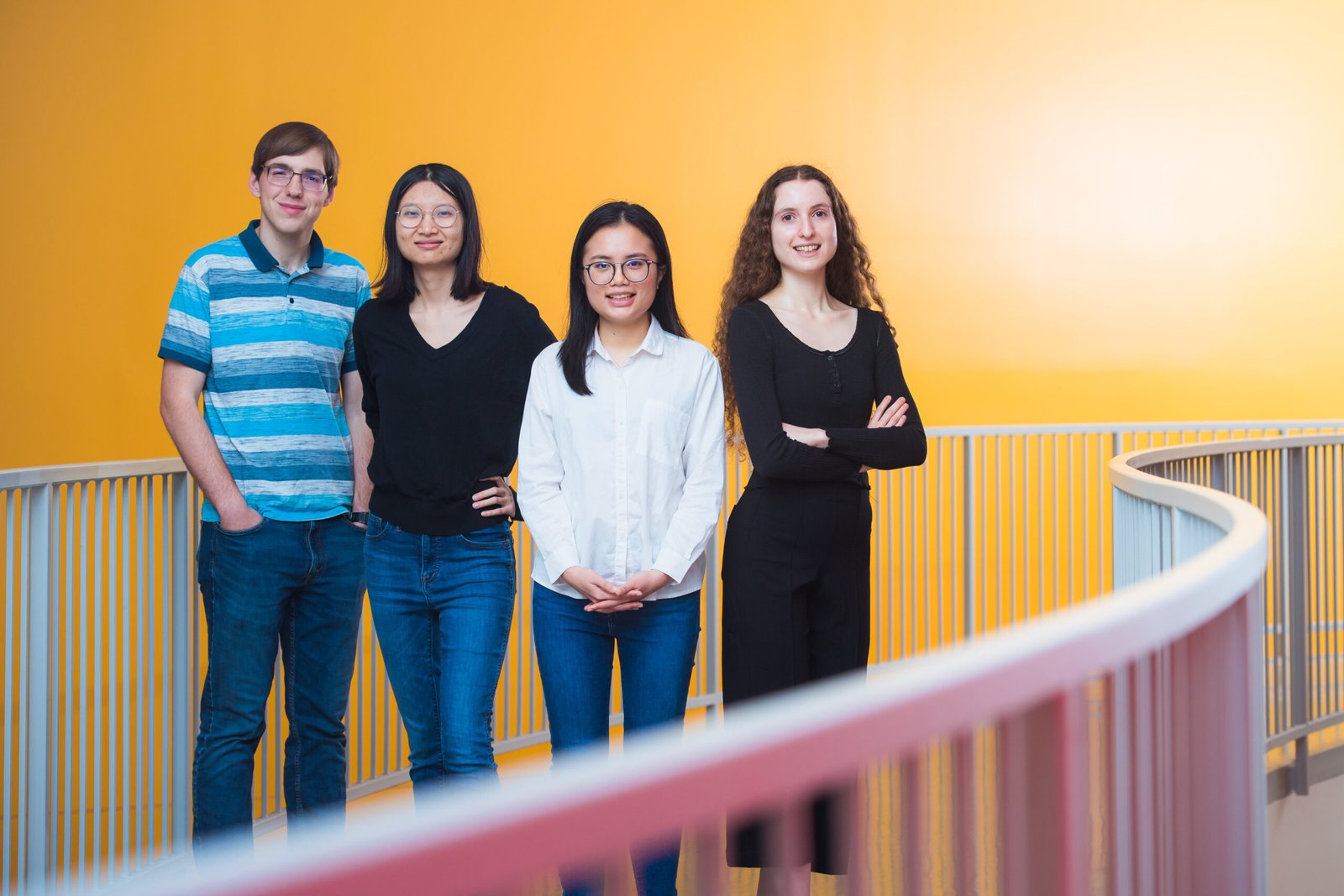
The team, led by Mingda Li and Tess Smidt, introduced a machine learning approach to streamline the process. "This might be a quicker and cheaper approach," Smidt remarked. The research showcased three MIT undergraduate students—Helena Merker, Harry Heiberger, and Linh Nguyen—who made significant contributions by developing a neural network to predict these magnetic structures.
Using a database of nearly 150,000 materials from the Materials Project, the students trained their model to link crystal arrangements to magnetic orders. They classified materials as ferromagnetic, antiferromagnetic, or nonmagnetic based on atomic behavior.
The researchers reported an impressive accuracy of about 78% for predicting magnetic order and propagation. Notably, the model achieved 91% accuracy with nonmagnetic materials that contain magnetic atoms. This high level of accuracy signals promising potential for further applications.
Looking to the future, the MIT team envisions extending this method to analyze larger molecules and disordered alloys. They believe this project takes a significant step toward fully determining magnetic structures, which could unlock new avenues in material science.
"This research, completely led by undergraduates, is a testament to the potential of collaborative learning in scientific exploration," Li stated. The students echoed this sentiment, expressing how the experience allowed them to connect computer science with real-world materials.
By enhancing the efficiency of magnetic classification, this research not only addresses past challenges but also paves the way for innovations in various tech fields. With these advancements, researchers may soon uncover new magnetic materials that could revolutionize technology as we know it.
Discover More Technology Insights
Learn how the Internet of Things (IoT) is transforming everyday life.
Stay inspired by the vast knowledge available on Wikipedia.
QuantumV1
