

Quick Takeaways
-
Innovative Metamaterials: MIT researchers have developed a computational design framework for creating soft, compliant 3D woven metamaterials, diverging from traditional rigid designs to enable applications in soft robotics and biomedical devices.
-
Universal Design Framework: The new framework generates customizable metamaterials with varied properties using an algorithm that dictates fiber placement, allowing unprecedented design freedom for both simulation and 3D printing.
-
Tailored Behaviors: These metamaterials can be engineered for specific mechanical properties, such as varying stiffness across different regions, providing unique functionalities like wearable sensors and flexible electronics.
-
Open-Source Potential: The research teams aim to inspire broader exploration in metamaterial design, offering open-source tools to encourage innovation in various fields, from aerospace to functional textiles.
3D-Printed Metamaterials Pave New Paths in Engineering
Researchers at MIT’s Department of Mechanical Engineering have unveiled groundbreaking 3D-printed metamaterials. These materials, designed to stretch and fail intentionally, promise to revolutionize various fields, from soft robotics to biomedical devices.
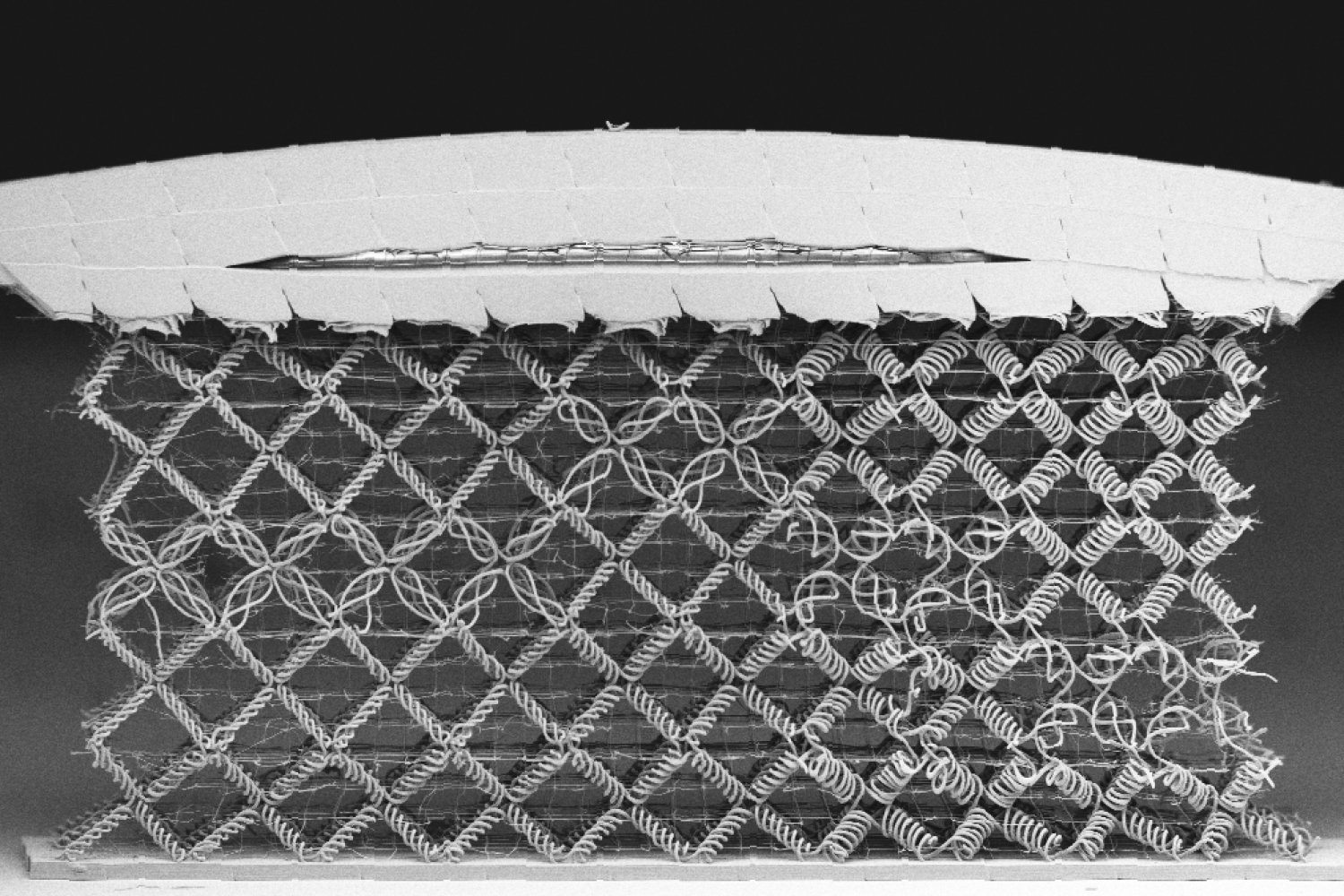
Traditionally, most metamaterials focused on strength and stiffness. However, recent innovations introduced a new class known as 3D woven metamaterials. These materials consist of intertwined fibers that create unique properties. Carlos Portela, an associate professor in mechanical engineering, highlights the importance of soft materials for modern engineering challenges.
The research team shared their findings in a paper published in Nature Communications. They provided a universal design framework, allowing users to create intricate, customizable metamaterial designs. This framework also includes open-source code, enabling designers to print or simulate these materials easily.
Portela emphasized the shift from conventional knitting or weaving patterns, which have been limited for centuries. With this new technology, the rules have changed, opening doors to innovative textile behaviors.
Applications of 3D woven metamaterials are vast. Potential uses include wearable sensors that adapt to human movement, advanced fabrics for defense, and flexible electronics. The design framework allows for specific adjustments, enabling materials to be softer in some areas and stiffer in others, changing shape upon stretching.
Molly Carton, the study’s lead author, mentioned that this approach enables precise control over how these materials undergo deformation and identify potential failure points. The simulations provide insight into complex behaviors, such as how fibers contact and entangle.
The research represents a significant leap in designing extensible and durable metamaterials. By predicting and controlling failures, researchers can tailor these materials for specific applications. Carton described it as a major advancement, stating that the previous manual design methods hindered innovation.
With the introduction of this design tool, researchers anticipate new opportunities across various disciplines. The hope is that this flexible framework will inspire more discoveries using woven lattices, further expanding the potential applications of 3D-printed metamaterials.
This work signifies an exciting step forward in technology development, showcasing how innovative materials can address emerging engineering needs. As researchers continue to explore these possibilities, the impact on fields like healthcare and aerospace could be transformative.
Expand Your Tech Knowledge
Stay informed on the revolutionary breakthroughs in Quantum Computing research.
Access comprehensive resources on technology by visiting Wikipedia.
QuantumV1
