
Close Menu
    Facebook X (Twitter) Instagram
    Wednesday, July 15
    Top Stories:
    • Revolutionary Foldable Display: Tougher, Crease-Resistant Technology from Samsung
    • Unfolding Resilience: Samsung’s Tougher New Foldable Display
    • Samsung’s Flex Titanium: Reducing Foldable Creases for a Flawless Experience
    Facebook X (Twitter) Instagram Pinterest Vimeo
    IO Tribune
    • Home
    • AI
    • Tech
      • Gadgets
      • Fashion Tech
    • Crypto
    • Smart Cities
      • IOT
    • Science
      • Space
      • Quantum
    • OPED
    IO Tribune
    Home » June Sky Wonders: Celestial Seasons Unveiled
    Space

    June Sky Wonders: Celestial Seasons Unveiled

    Staff ReporterBy Staff ReporterJune 1, 2025No Comments3 Mins Read
    Share Facebook Twitter Pinterest LinkedIn Tumblr Reddit Telegram Email
    Share
    Facebook Twitter LinkedIn Pinterest Email

    Quick Takeaways

    1. Mars: With a year lasting 687 Earth days and a thin atmosphere, Mars experiences long, cold seasons; recent temperatures reported a high of -18°F.

    2. Saturn: Featuring a 27-degree axial tilt like Mars and Earth, Saturn’s seasons last an astonishing seven years due to its 29-year orbit; the last ring plane crossing was observed in March 2025.

    3. Neptune: Each of Neptune’s seasons spans over 40 years. Observations from 1996 to 2002 using the Hubble Space Telescope revealed subtle atmospheric changes indicating seasonal shifts.

    4. Educational Opportunity: As Earth enters summer, resources like the Suntrack model on NASA’s Wavelength provide engaging ways to learn about the Sun’s path and planetary seasons.

    June’s Night Sky Notes: Seasons of the Solar System

    As we dive into June, many of us enjoy the warmth of summer. However, the Solar System offers unique seasonal experiences. Let’s explore how seasons vary across different planets.

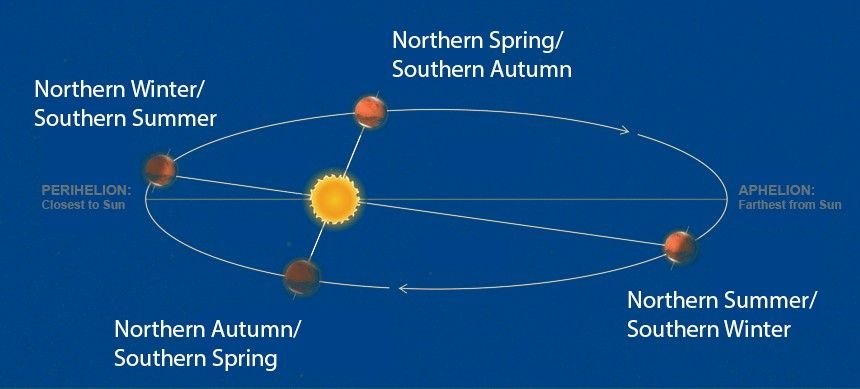
    First, Mars presents an intriguing case. Its axial tilt closely matches Earth’s, yet a year there spans 687 Earth days. This extended orbit results in a long autumn. Recently, temperatures at Gale Crater reached a brisk -18 degrees Fahrenheit, far from the comfortable summer days we cherish here.

    Next, we venture to Saturn. While its tilt is similar to Mars’ and Earth’s, Saturn’s orbit lasts about 29 years. This means each season stretches over seven Earth years. Although we can’t feel a Saturnian season, we can witness its ring plane crossings from Earth. The last occurrence occurred in March 2025, offering a spectacular view as the rings appeared to vanish from sight.

    Further out, Neptune showcases even more fascinating dynamics. Each season lasts over 40 Earth years. Though more gradual, seasonal changes affect its atmosphere. Observations between 1996 and 2002 using the Hubble Space Telescope revealed bright shifts, indicating seasonal effects in its southern hemisphere.

    As we enjoy our summer, consider building a Suntrack model. This engaging project illustrates the Sun’s trajectory throughout the seasons. Resources like this are available on NASA’s Wavelength and Energy platform, highlighting the intersection of education and technology.

    By examining the seasons of the Solar System, we expand our understanding of planetary science. These insights inspire technological advancements that improve our daily lives. As we stargaze, let’s remember the wonders of our celestial neighbors.

    Continue Your Tech Journey

    Stay informed on the revolutionary breakthroughs in Quantum Computing research.

    Stay inspired by the vast knowledge available on Wikipedia.

    SciV1

    Cosmos Mars NASA Night Sky Network Space Sustainability VT1
    Share. Facebook Twitter Pinterest LinkedIn Tumblr Email
    Previous ArticleBitcoin Price Check: Is BTC Rising After an 8% Dip?
    Next Article Android’s Instant Hotspot: No Longer a Secret!
    Avatar photo
    Staff Reporter
    • Website

    John Marcelli is a staff writer for IO Tribune, with a passion for exploring and writing about the ever-evolving world of technology. From emerging trends to in-depth reviews of the latest gadgets, John stays at the forefront of innovation, delivering engaging content that informs and inspires readers. When he's not writing, he enjoys experimenting with new tech tools and diving into the digital landscape.

    Related Posts

    Science

    Ants Transform Hunger Cues Into Survival Instincts

    July 15, 2026
    Tech

    Revolutionary Foldable Display: Tougher, Crease-Resistant Technology from Samsung

    July 15, 2026
    Gadgets

    Ask Maps: Your New Trip Planning Assistant

    July 15, 2026
    Add A Comment

    Comments are closed.

    Must Read

    Ants Transform Hunger Cues Into Survival Instincts

    July 15, 2026

    Revolutionary Foldable Display: Tougher, Crease-Resistant Technology from Samsung

    July 15, 2026

    Ask Maps: Your New Trip Planning Assistant

    July 15, 2026

    Unfolding Resilience: Samsung’s Tougher New Foldable Display

    July 15, 2026

    Ebike Lost, Trapped in Chatbot Chaos

    July 15, 2026
    Categories
    • AI
    • Crypto
    • Fashion Tech
    • Gadgets
    • IOT
    • OPED
    • Quantum
    • Science
    • Smart Cities
    • Space
    • Tech
    Most Popular

    T-Mobile vs. Verizon: Which Carrier Reigns Supreme?

    February 20, 2026

    FTC to Challenge Meta’s Antitrust Ruling

    January 22, 2026

    Are Chinese Characters Truly Visual Language?

    June 12, 2026
    Our Picks

    軽量化と推進力向上!SYLAN 2の革新

    May 24, 2026

    Unleashing TikTok: The Journey to Super App Status

    June 27, 2026

    Stock Market Reaches New Heights!

    December 6, 2025
    Categories
    • AI
    • Crypto
    • Fashion Tech
    • Gadgets
    • IOT
    • OPED
    • Quantum
    • Science
    • Smart Cities
    • Space
    • Tech
    • Privacy Policy
    • Disclaimer
    • Terms and Conditions
    • About Us
    • Contact us
    Copyright © 2025 Iotribune.comAll Rights Reserved.

    Type above and press Enter to search. Press Esc to cancel.