

Summary Points
-
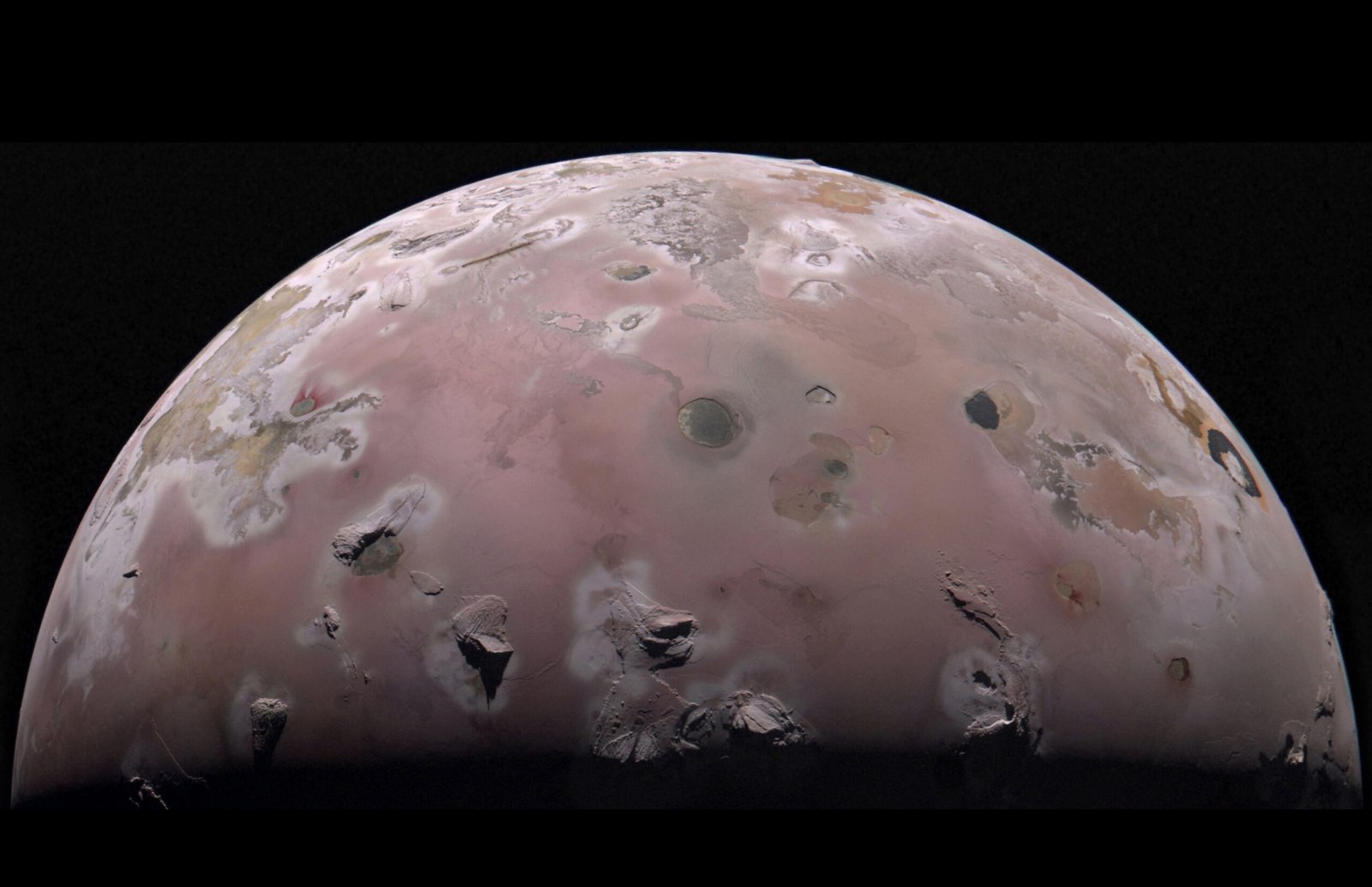
Significant Image Improvement: Initial images sent back by Juno during its close approach to Io showed minimal improvement but dramatically enhanced just days before reaching 930 miles of the moon’s surface, revealing detailed geological features.
-
Ongoing Research and Development: Juno has orbited Jupiter 74 times, with recent image noise challenges prompting the application of an annealing technique across various instruments to improve performance and reliability.
-
Insights for Future Missions: Juno’s findings are contributing invaluable knowledge on radiation tolerance, which will benefit future satellites, including military and commercial applications, as well as other NASA missions.
- Collaboration and Management: The Juno mission is managed by NASA’s Jet Propulsion Laboratory and involves collaboration with multiple institutions, showcasing a robust partnership in advancing space exploration.
NASA Aims to Revive Camera 370 Million Miles Away Near Jupiter
NASA recently shared exciting news about its Juno spacecraft, which flies around Jupiter. Engineers applied a technique called "annealing" to improve the performance of JunoCam, a camera that had been experiencing issues. Initially, test images sent back to Earth showed little improvement during the first week. However, as Juno approached Io, one of Jupiter’s moons, the situation began to change.
By December 30, 2023, Juno came within 930 miles of Io’s surface. The images captured were stunning, nearly as clear as when the camera first launched. They revealed remarkable details of Io’s north polar region. Observers spotted mountain blocks covered in sulfur dioxide frosts and new volcanoes with extensive lava flow fields.
This technology doesn’t just benefit the Juno mission. The spacecraft has orbited Jupiter 74 times and continuously provides insights about crafting resilient spacecraft. Scott Bolton, Juno’s principal investigator, noted how these advancements could also help satellites in orbit around Earth. He expects that lessons from Juno will influence both military and commercial satellites in the future.
NASA’s Jet Propulsion Laboratory oversees the mission, which is part of the New Frontiers Program. The collaboration includes several institutions that enhance Juno’s scientific capabilities. This ingenuity helps push the boundaries of space exploration while enhancing technology that could improve life on Earth.
For more information about Juno, visit NASA’s website.
Continue Your Tech Journey
Stay informed on the revolutionary breakthroughs in Quantum Computing research.
Stay inspired by the vast knowledge available on Wikipedia.
SciV1
