

Top Highlights
-
Innovative Training Tool: NASA is developing mixed reality flight simulators to create an immersive, cost-effective alternative to traditional displays, aimed at enhancing pilot training for commercial airlines and emerging air taxi operators.
-
Real Data Collection: In a groundbreaking study, pilots tested mixed reality in the world’s largest flight simulator, providing NASA with essential data on its performance and effects on pilot ability.
-
Reduced Motion Sickness: Early findings indicate that pilots experienced lower motion sickness and found the mixed-reality setup to be more realistic compared to previous simulator experiences.
- Future Opportunities: Results from this study will be publicly released next year, potentially leading to broader applications of mixed reality technology in aviation and space missions.
NASA Tests Mixed Reality Sim In Vertical Motion Simulator
NASA recently conducted exciting tests on a mixed reality flight simulation system at its Ames Research Center in California. This innovative technology aims to enhance pilot training. By merging the physical and digital worlds, mixed reality offers a more immersive experience for trainee pilots.
Currently, commercial companies and government agencies are exploring more efficient alternatives to traditional flight displays. NASA’s project seeks to accelerate the integration of mixed reality into pilot training. While these systems show promise, regulatory standards remain limited. Consequently, data on their performance is scarce.
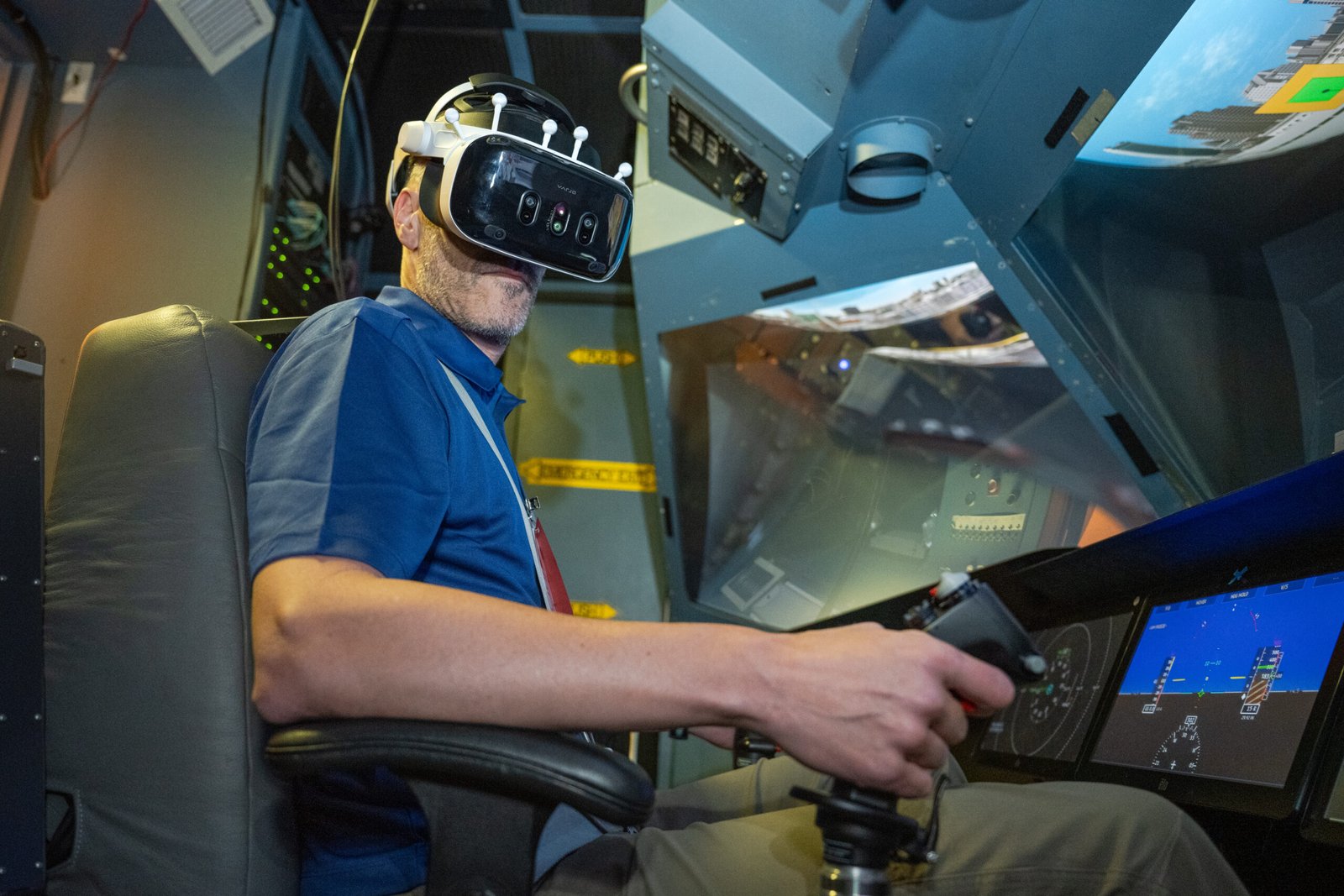
The recent study included a dozen pilots who tested the mixed reality system in the world’s largest vertical motion simulator (VMS). “For the first time, we’re collecting real data on how this type of mixed reality simulation performs,” stated an Ames principal systems architect. This research aims to improve training tools for commercial airlines and future air taxi operators.
During the testing from May 23 to May 30, pilots wore headsets that allowed them to see both the physical controls of the simulator and a virtual cockpit overlay. They viewed a virtual landscape of San Francisco while performing standard flight maneuvers.
Pilots completed their tasks under various motion conditions. Afterward, they reported their experiences regarding motion sickness and how realistic the simulation felt. Surprisingly, initial feedback indicated that pilots experienced lower levels of motion sickness than anticipated. Many reported that the mixed-reality environment felt more fluid compared to earlier simulator setups.
Additionally, experts from the Federal Aviation Administration attended the testing to analyze factors affecting human performance in aerospace. They evaluated the mixed reality setup independently, focusing on how well the display provided essential visual cues for piloting an aircraft.
NASA plans to release the full results of this test to the public and the aviation community early next year. This pioneering endeavor, supported by an Ames Innovation Fair Grant, signals a significant step forward in the use of mixed reality technologies in aviation. As research continues, the potential impact on pilot training and future aviation missions remains promising.
Continue Your Tech Journey
Dive deeper into the world of Cryptocurrency and its impact on global finance.
Stay inspired by the vast knowledge available on Wikipedia.
SciV1
