

Top Highlights
-
Exoplanet Candidate Insights: Using data from the Very Large Telescope and observations from the James Webb Space Telescope, researchers simulated orbits for a potential gas giant around Alpha Centauri A, assessing gravitational stability near Alpha Centauri B.
-
Orbit Variability: Findings indicated that in many simulated orbits, the planet could be too close to its star for detection, explaining the absence of sightings in the latest Webb observations from February and April 2025.
-
Significance of Discovery: If confirmed, this exoplanet would be the closest observed to its star and shares similarities with gas giants in our solar system, potentially reshaping our understanding of planet formation in binary star systems.
-
Future Exploration: NASA’s upcoming Nancy Grace Roman Space Telescope, scheduled for launch in late 2026 or 2027, aims to work in tandem with Webb to explore this binary system further, enhancing knowledge of exoplanets via visible light data.
NASA’s Webb Finds New Evidence for Planet Around Closest Solar Twin
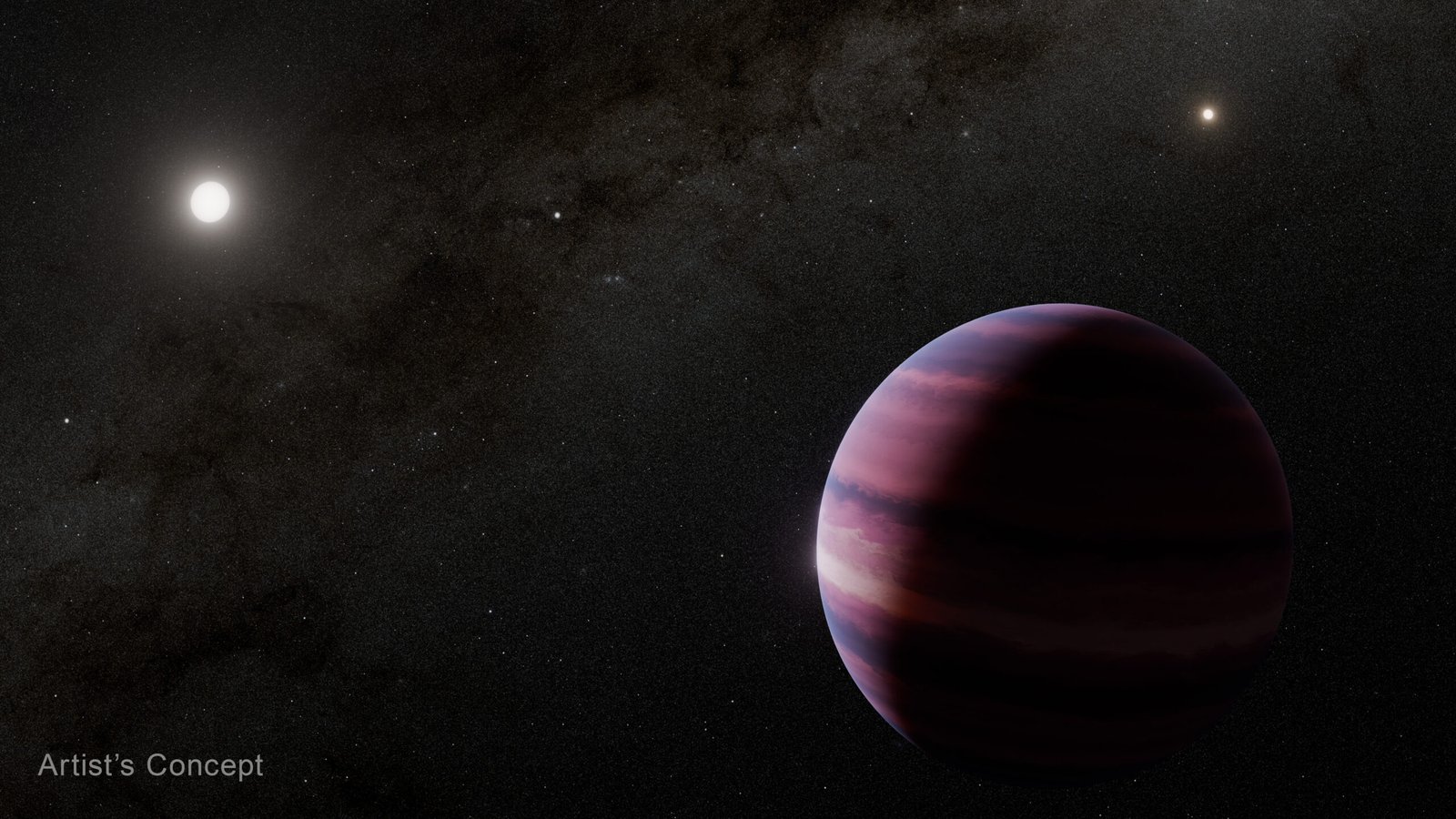
NASA’s James Webb Space Telescope has unveiled promising evidence of a planet orbiting Alpha Centauri A, the closest solar twin to our Sun. This discovery builds on a 2019 observation using the European Southern Observatory’s Very Large Telescope. Researchers combined these findings with Webb’s recent data to model stable orbits for the potential exoplanet.
Notably, the team found that during subsequent observations, the planet might have moved too close to its star, making it undetectable at that time. Despite this, researchers remain optimistic. They estimate that this gas giant could have a mass comparable to Saturn and might orbit at distances between one to two times that of Earth from the Sun.
If confirmed, this planet represents a significant milestone in exoplanet research. Its proximity and similarity to the giant planets in our solar system could reshape our understanding of planet formation within binary star systems. As one scientist pointed out, the potential planet’s existence challenges existing theories about how planets can thrive amid chaotic environments.
Moreover, additional observations could pave the way for unprecedented insights into exoplanet science. Future missions, including the upcoming Nancy Grace Roman Space Telescope, aim to provide complementary data. Set to launch as early as fall 2026, Roman’s visible light capabilities will enhance Webb’s infrared findings, allowing scientists to examine the planet’s size and reflectivity more closely.
Webb serves as a vital tool in solving cosmic mysteries and exploring the structures of our universe. This joint effort among NASA, the European Space Agency, and the Canadian Space Agency highlights the importance of international collaboration in advancing space technology. Webb’s findings not only enhance our understanding of distant worlds but also inspire future innovations, potentially leading to new technologies that can benefit life on Earth.
For more information about Webb’s groundbreaking work, visit the NASA website.
Discover More Technology Insights
Explore the future of technology with our detailed insights on Artificial Intelligence.
Discover archived knowledge and digital history on the Internet Archive.
SciV1
