

Fast Facts
-
Neutrino Production Revolutionized: MIT physicists propose a compact “neutrino laser” that could produce accelerated bursts of neutrinos by laser-cooling a gas of radioactive atoms to extreme temperatures, allowing them to decay in sync.
-
New Experiments Ahead: The team plans to build a tabletop demonstration using rubidium-83 atoms to test this concept, significantly reducing the time needed for radioactive decay from 82 days to mere minutes.
-
Potential Applications: A functioning neutrino laser could enable innovative communications through the Earth and enhance medical imaging through efficient radioisotope production.
-
Quantum Effects Explored: The research combines concepts of Bose-Einstein condensates and superradiance, suggesting that coherent behavior among atoms can vastly increase neutrino output.
MIT Physicists Propose Neutrino Laser Technology
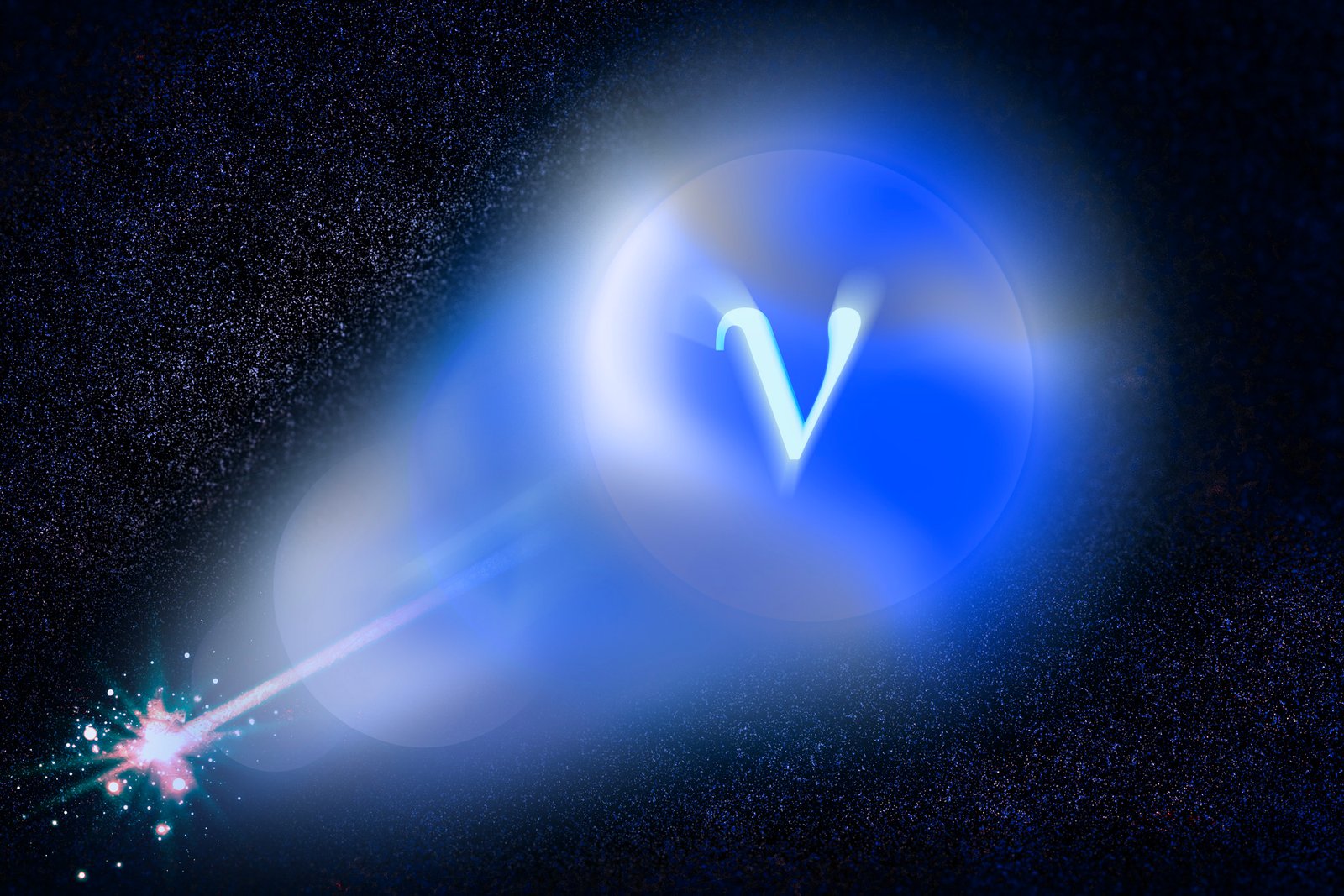
Scientists at MIT have proposed an innovative concept that could revolutionize how we generate and use neutrinos. Their idea involves creating a “neutrino laser,” a mechanism that would produce bursts of neutrinos much like traditional lasers emit photons.
Current methods for generating neutrinos rely on large facilities, such as nuclear reactors and particle accelerators, which are expensive and complex. By contrast, MIT’s approach aims for a compact, tabletop experiment. The researchers plan to use laser cooling techniques on a gas of radioactive atoms. This cooling would bring the atoms to temperatures colder than those found in outer space.
In such extreme conditions, atoms could behave as a single quantum entity, allowing them to decay together. When these radioactive atoms decay, they naturally release neutrinos. Co-author Ben Jones, an associate professor at the University of Texas at Arlington, describes how the neutrinos would be emitted at a much faster rate. “It’s similar to how lasers work,” he explains.
The team specifically looks at rubidium-83 atoms, which usually have a half-life of 82 days. However, by cooling them to a coherent state, the atoms might decay in mere minutes, drastically increasing neutrino production. Joseph Formaggio, a physics professor at MIT, emphasizes the novelty of this approach, stating, “This accelerates radioactive decay and the production of neutrinos in a way that’s never been done before.”
If successful, a neutrino laser could offer new communication capabilities. For instance, neutrinos can penetrate the Earth, potentially allowing for secure communication with underground stations. Additionally, the process could create useful radioisotopes, enhancing medical imaging and cancer diagnostics.
The team’s next step includes building a small demonstration to validate their theory. If they succeed, this groundbreaking technology could open doors to new methods in both communication and medical applications. This development highlights the exciting intersection of physics and technology, promising advances that could reshape our understanding and use of fundamental particles.
Expand Your Tech Knowledge
Dive deeper into the world of Cryptocurrency and its impact on global finance.
Stay inspired by the vast knowledge available on Wikipedia.
QuantumV1
