

Fast Facts
-
Urban Engagement: NASA’s training program demonstrates that urban parks and green spaces can effectively connect communities to space science, challenging the notion that astronomy is limited to remote locations.
-
Educational Empowerment: The “Rivers of Stars and Stories” course transformed participants from novices into confident astronomy communicators, enhancing their ability to engage diverse audiences through hands-on learning and resource-sharing.
-
Indigenous Perspectives: The program emphasized the importance of incorporating local indigenous knowledge into astronomy, promoting respectful representation of traditional stewardship of the land.
-
Community Building: The initiative fostered a lasting network of science communicators, expanding public access to NASA’s discoveries and promoting ongoing collaboration between NASA, the National Park Service, and U.S. Fish and Wildlife Service.
From City Lights to Moonlight: NASA Training Connects Urban Communities with Space Science
Urban parks often evoke images of relaxation and recreation. Recently, however, a NASA training program showcased their potential for connecting people with space science. Funded by NASA’s Science Activation Program, this initiative emphasizes that even in cities, the wonders of the night sky await discovery.
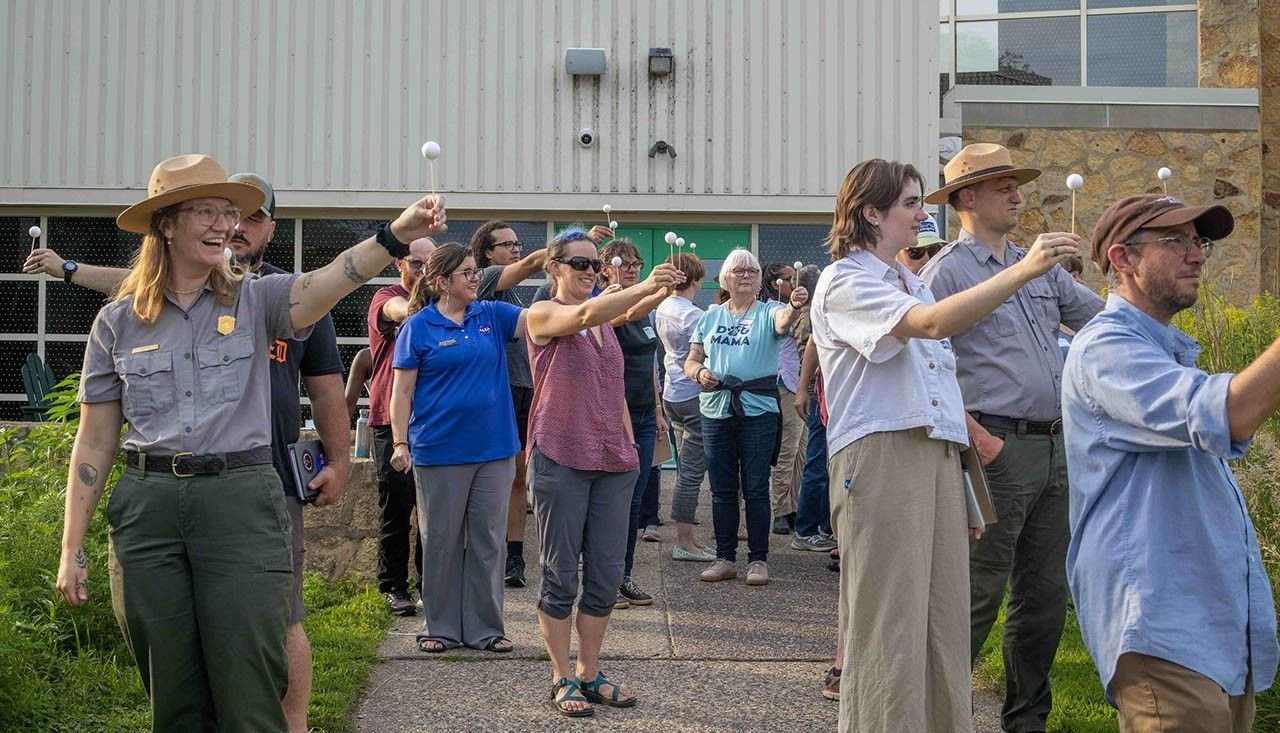
In August 2025, NASA Earth to Sky partnered with the National Park Service and U.S. Fish and Wildlife Service. Together, they hosted a training program at Minnesota Valley National Wildlife Refuge, near Minneapolis-St. Paul. This three-day event gathered 28 park rangers and educators. They explored creative ways to engage urban communities in astronomy.
Participants dived into topics like lunar observations and aurora science. They also learned about NASA’s Artemis Program and the search for extraterrestrial life. One enthusiastic participant reflected on the experience, stating they evolved from a novice to a knowledgeable astronomy advocate, excited to share findings with their community.
Moreover, the training fostered collaboration among participants. They discussed incorporating indigenous perspectives into astronomy, ensuring respectful representation of local knowledge. This approach not only honors tradition but enriches the program’s cultural relevance.
NASA’s experts shared resources and tools to enhance community learning. Attendees gained access to programs like the GLOBE Observer and Aurorasaurus Citizen Science project. These resources empower participants to share discoveries well beyond the training.
The result? A stronger sense of belonging within the Earth to Sky community. Feedback from participants revealed enthusiasm, with all expressing interest in further training opportunities. Collaboration between NASA, the National Park Service, and U.S. Fish and Wildlife Service proved vital. It aligns public communication goals while reaching thousands in urban settings.
By cultivating local educators, this initiative broadens access to space science. It illustrates the importance of engaging communities in meaningful ways. The Earth to Sky team plans to continue these partnerships, promoting hands-on, local experiences that inspire curiosity and learning.
This innovative work not only connects urban residents to the cosmos but also sparks interest in technology and scientific development. Through accessible programs, NASA and its partners are paving the way for future generations to explore and understand the universe around them.
Continue Your Tech Journey
Learn how the Internet of Things (IoT) is transforming everyday life.
Discover archived knowledge and digital history on the Internet Archive.
SciV1
