

Top Highlights
-
NASA’s Lunar Exploration: NASA has selected three scientific instruments for lunar exploration as part of the Artemis campaign, with two to be integrated onto the Lunar Terrain Vehicle (LTV) and one for future orbital use.
-
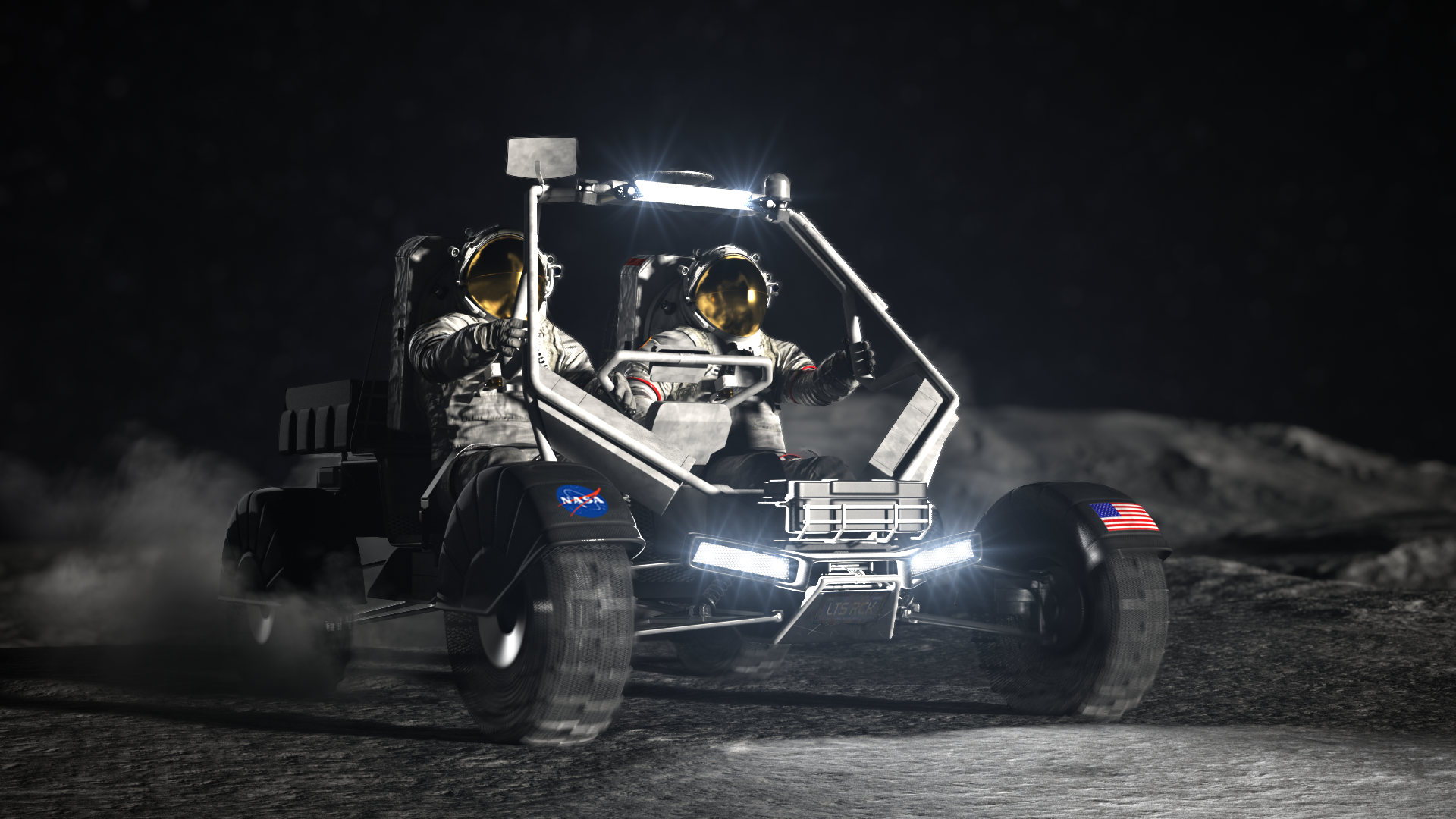
Innovative LTV Design: The LTV, designed for up to two astronauts or remote operation, is the first crew-driven vehicle on the Moon in over 50 years, aimed at enhancing scientific discoveries across a vast lunar terrain.
-
Cutting-Edge Instruments: The selected instruments include the Artemis Infrared Reflectance and Emission Spectrometer (AIRES) for mapping lunar minerals, and the Lunar Microwave Active-Passive Spectrometer (L-MAPS) to explore subsurface conditions and locate ice.
-
Broader Goals for Artemis: Together, these instruments will advance our understanding of the Moon’s geology and resources, supporting human exploration while paving the way for future missions to Mars.
NASA’s recent selection of three instruments for the Artemis Lunar Terrain Vehicle marks a significant step forward in lunar exploration. This vehicle, the first crew-driven machine on the Moon in over 50 years, aims to enhance humanity’s understanding of our closest celestial neighbor. It can carry two astronauts and operate remotely, enabling ambitious scientific goals.
First, the Artemis Infrared Reflectance and Emission Spectrometer (AIRES) will analyze lunar minerals and volatiles, such as water and carbon dioxide. It captures spectral data, allowing scientists to map minerals in the Moon’s south polar region. This work will broaden our knowledge about the Moon’s composition.
Next, the Lunar Microwave Active-Passive Spectrometer (L-MAPS) will delve beneath the lunar surface. This instrument combines a spectrometer and ground-penetrating radar, enabling it to measure temperature and density up to 131 feet deep. L-MAPS will help locate ice and understand subsurface structures, further informing human exploration efforts.
Additionally, NASA plans to use the Ultra-Compact Imaging Spectrometer for the Moon (UCIS-Moon) in a future orbital mission. This instrument will provide a broader view of the geology and resources beneath the surface. From space, it will help identify areas where astronauts can collect valuable lunar samples.
Together, these instruments will offer critical insights into the Moon’s resources and history. Their data will not only aid in characterizing the lunar terrain but also enhance astronaut safety during missions. As NASA prepares for future Mars exploration, understanding the Moon becomes ever more crucial.
These developments demonstrate NASA’s commitment to advancing technology for deep-space exploration. The collaboration with various vendors shows a concerted effort to ensure the Lunar Terrain Vehicle meets all necessary requirements.
Artemis missions aim to answer vital scientific questions, paving the way for economic benefits and eventually sending humans to Mars. This initiative reflects a forward-thinking approach to space exploration, promising discoveries that will influence our understanding of the universe and the development of innovative technologies. For more details about Artemis, visit NASA’s official website.
Continue Your Tech Journey
Learn how the Internet of Things (IoT) is transforming everyday life.
Explore past and present digital transformations on the Internet Archive.
SciV1
