

Quick Takeaways
-
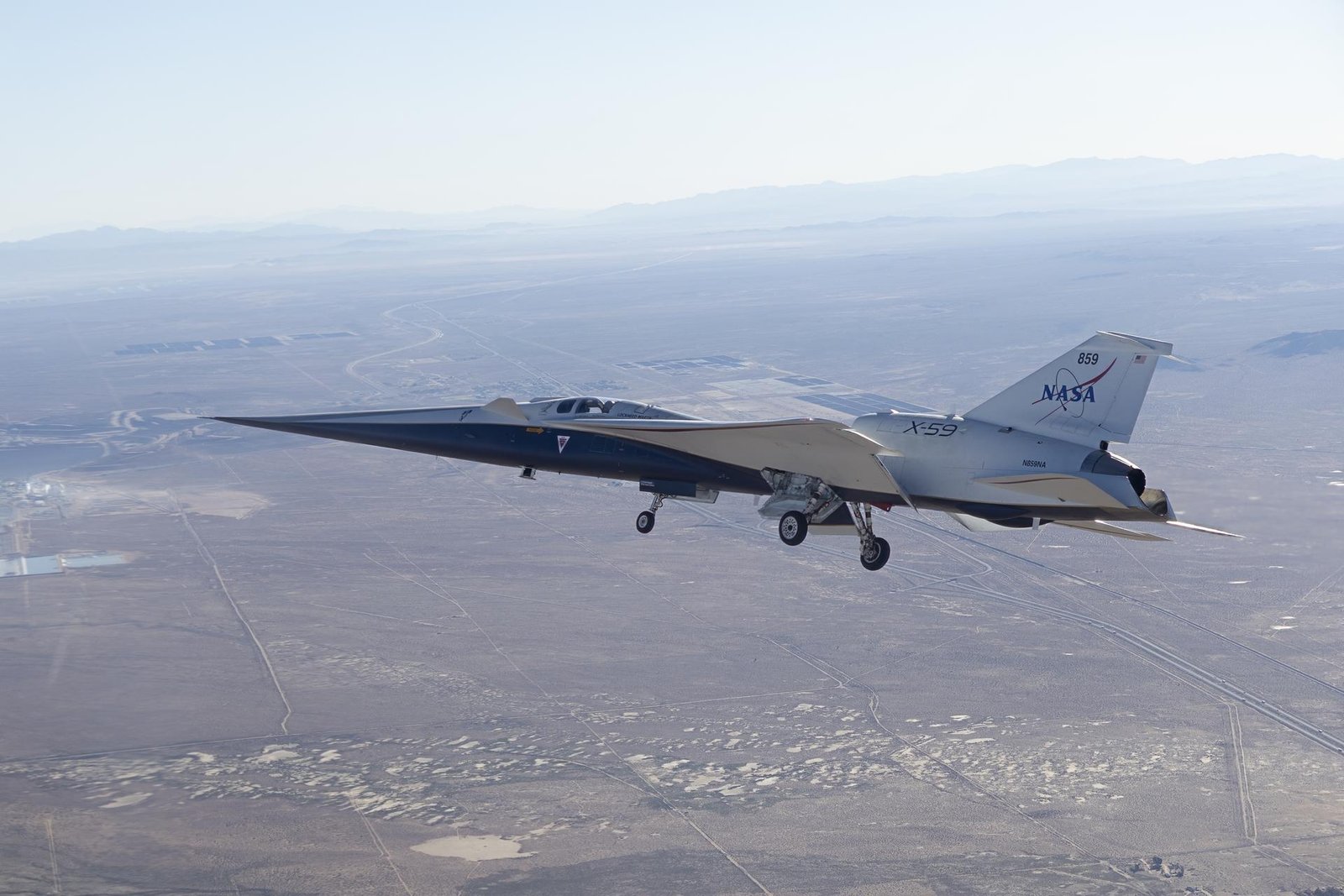
Historic First Flight: NASA’s X-59 aircraft successfully flew for the first time on October 28, marking a significant advancement in quiet supersonic flight aimed at reducing sonic booms to quieter sounds.
-
Innovative Design: The X-59 features a unique design to redirect shock waves, with an engine above the fuselage and an eXternal Vision System for visibility, all intended to prove supersonic flight over land can be acceptable to the public.
-
Next Steps in Testing: Following its inaugural flight, the X-59 will undergo full flight testing to evaluate its performance and gather data on community responses to its quieter sonic thump, paving the way for new standards in commercial supersonic travel.
-
Legacy of Innovation: The X-59 continues NASA’s long-standing tradition of experimental X-planes, contributing to advancements in aeronautics and setting the stage for the future of faster, quieter air travel.
NASA’s X-59 Completes First Flight, Prepares for More Testing
NASA’s X-59 quiet supersonic research aircraft took off for its maiden flight on Oct. 28, marking a significant milestone in aeronautics. The flight lasted 67 minutes, showcasing the aircraft’s ability to reduce loud sonic booms to quiet sonic thumps, vital for future commercial air travel.
The X-59 took off from Palmdale, California, at 11:14 a.m. EDT. NASA pilot Nils Larson guided the aircraft through vital system checks before advancing the throttle. “All the training, all the planning prepares you,” Larson noted. The flight successfully maintained a speed of 230 mph and reached an altitude of about 12,000 feet, ensuring safety and airworthiness as it transitioned to the next phase of testing.
This aircraft is the centerpiece of NASA’s Quesst mission, designed to make supersonic flight acceptable over land. NASA has a rich history of pioneering experimental aircraft, from the X-1 to the X-15. Each aircraft expanded our understanding of flight, and the X-59 aims to reduce the impact of sonic booms, an ongoing concern for communities near airports.
Looking ahead, the X-59 team prepares for extensive flight testing. The goal is to reach a cruising speed of approximately 925 mph at 55,000 feet. Innovative design choices, such as an engine positioned to redirect airflow and an external vision system, are crucial for handling shock waves effectively.
As part of its mission, the X-59 will fly over different U.S. communities to gather data on how people perceive its sonic thump. Collecting this feedback will help shape future regulations for commercial supersonic flights.
With its first flight, the X-59 heralds a new era in air travel. This aircraft embodies a commitment to innovation, promising a future where faster, quieter flights may become a reality for everyday travelers.
Continue Your Tech Journey
Explore the future of technology with our detailed insights on Artificial Intelligence.
Access comprehensive resources on technology by visiting Wikipedia.
SciV1
