

Quick Takeaways
-
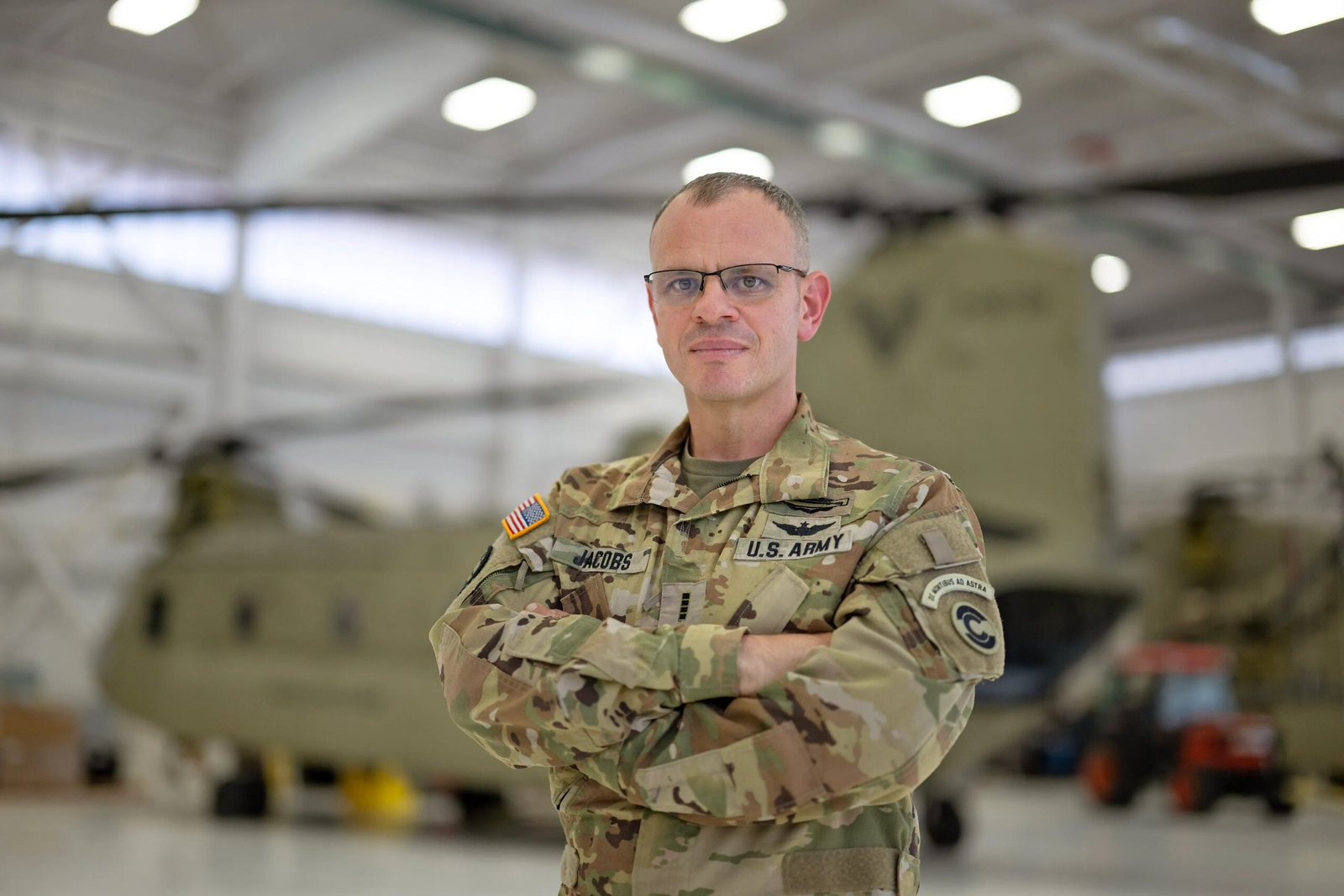
Mission Preparation: Ethan Jacobs, a helicopter pilot and chief warrant officer in the Colorado Army National Guard, is developing a NASA-certified foundational training course to prepare Artemis astronauts for lunar landings.
-
Lunar Environment Simulation: Colorado’s challenging terrain and extreme visual conditions are ideal for replicating the lunar environment, helping astronauts navigate and land under similar conditions to those they will face on the Moon.
-
Real-World Training: The training involves realistic flight scenarios where astronauts must communicate and navigate effectively in high-stakes situations, enhancing their skills to manage potential visual and cognitive illusions.
-
Future Missions: This foundational training is critical for astronauts as NASA prepares for the Artemis III mission to the lunar South Pole, laying the groundwork for future crewed missions to Mars and expanding scientific exploration.
NASA Trains Astronauts for Lunar Landing With Help From Colorado Guardsman
High above the Rocky Mountains, Ethan Jacobs, a helicopter pilot and chief warrant officer with the Colorado Army National Guard, assists NASA in preparing for its Artemis III mission. This mission aims to send astronauts to the lunar South Pole, marking humanity’s return to the Moon after over 50 years.
Jacobs plays a crucial role in developing a foundational flight training course at the High-Altitude Army National Guard Aviation Training Site in Gypsum, Colorado. The course teaches astronauts how to navigate and land in challenging conditions similar to those they will find on the Moon.
Colorado’s terrain offers low-visibility situations and extreme landscapes, perfect for replicating lunar conditions. For instance, the state’s flat light can distort depth perception. Jacobs emphasizes the importance of recognizing slopes in poor visibility. “We normally judge slope by shadows, but here, the landscape can be monochromatic, much like the Moon,” he says.
During training flights in a UH-72 Lakota helicopter, Jacobs simulates real-world scenarios. He works with a two-person astronaut crew, teaching them to communicate effectively and manage the pressures of actual flight. “They can’t press the pause button like in a simulator,” Jacobs notes. Fuel burns, and decisions matter.
Recently, NASA certified this specialized course, a significant step towards preparing astronauts for their upcoming lunar missions. Since 2021, participating astronauts from NASA and the European Space Agency have shown adaptability and enthusiasm throughout their training.
Moreover, future Artemis astronauts will receive additional training on specific landers from commercial providers, including SpaceX and Blue Origin. Together, these training efforts equip astronauts to safely navigate and explore the lunar surface.
The Artemis program promises exciting advancements not just for space travel, but also for technological development. It aims to foster scientific discovery and economic growth, ultimately paving the way for crewed missions to Mars.
For more information about Artemis, visit NASA’s Artemis page.
Discover More Technology Insights
Explore the future of technology with our detailed insights on Artificial Intelligence.
Stay inspired by the vast knowledge available on Wikipedia.
SciV1
