

Fast Facts
-
Urban Air Mobility Simulation: NASA’s Strategic Deconfliction Simulation is designed to coordinate electric air taxis and drones, improving safety and efficiency in crowded urban airspaces.
-
Real-Time Traffic Management: The simulation showcased tools like the Situational Viewer and Demand-Capacity Balancing Monitor, optimizing flight plans and visualizing air traffic to manage drone operations in congested areas.
-
Industry Collaboration: Working with partners like ANRA Technologies, NASA is enhancing technologies for fleet and vertiport management to smoothly integrate multiple aircraft into urban settings.
-
Future Developments: This initiative is part of NASA’s plan for a technical capability simulation in 2026, aimed at facilitating the safe integration of air taxis and drones into U.S. cities, ensuring they become a reliable transportation option.
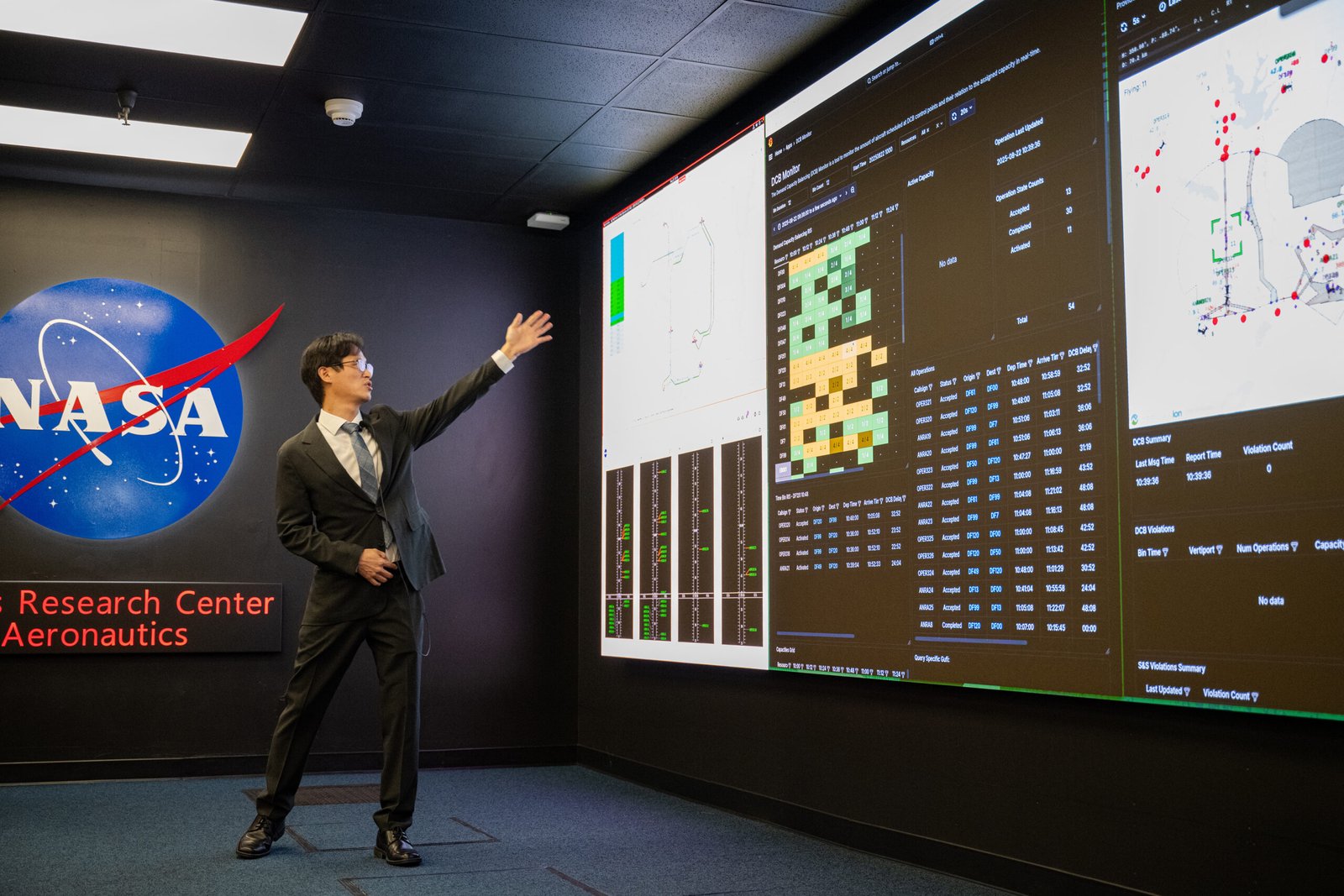
NASA is driving advancements in urban air travel with a groundbreaking simulation designed for electric air taxis and drones. This initiative aims to ensure safer skies in busy cities. Recently, NASA held a demonstration at its Ames Research Center in California. The focus was on a system called the Strategic Deconfliction Simulation. This system manages flight plans before takeoff, significantly lowering the risk of air traffic conflicts.
During the event, researchers showcased NASA’s Situational Viewer and Demand-Capacity Balancing Monitor. These tools visualize air traffic and adjust flight plans in real-time. For example, the simulation simulated drone operations in the Dallas-Fort Worth area. Here, preplanned flights showed promise in reducing congestion and managing airspace demand and capacity.
Collaborating with industry partners is essential for NASA. At the simulation, ANRA Technologies presented its fleet and vertiport management systems. These systems support coordination among multiple aircraft and ground operations. Such partnerships enhance NASA’s ability to refine technologies that will promote future air mobility.
“This simulation of complex environments aids our broader efforts to integrate drones into U.S. airspace,” highlighted a NASA engineer. By demonstrating these capabilities, the team gathers crucial data and insights for the agency and industry stakeholders alike.
The recent demonstration represents a significant stride toward a more advanced simulation planned for 2026. This upcoming event will further shape the services necessary for managing aircraft in urban settings. The simulation developed by NASA’s Air Mobility Pathfinders project is part of ongoing efforts to ensure that innovative aircraft, like air taxis, can safely navigate U.S. cities and airspace.
The overarching goal aligns with NASA’s Airspace Operations and Safety Program, focusing on enabling safe and efficient aviation transportation. Through these advanced evaluations and simulations, NASA is paving the way for a future where air taxis and drones become a reliable component of daily life.
Discover More Technology Insights
Stay informed on the revolutionary breakthroughs in Quantum Computing research.
Discover archived knowledge and digital history on the Internet Archive.
SciV1
