

Top Highlights
-
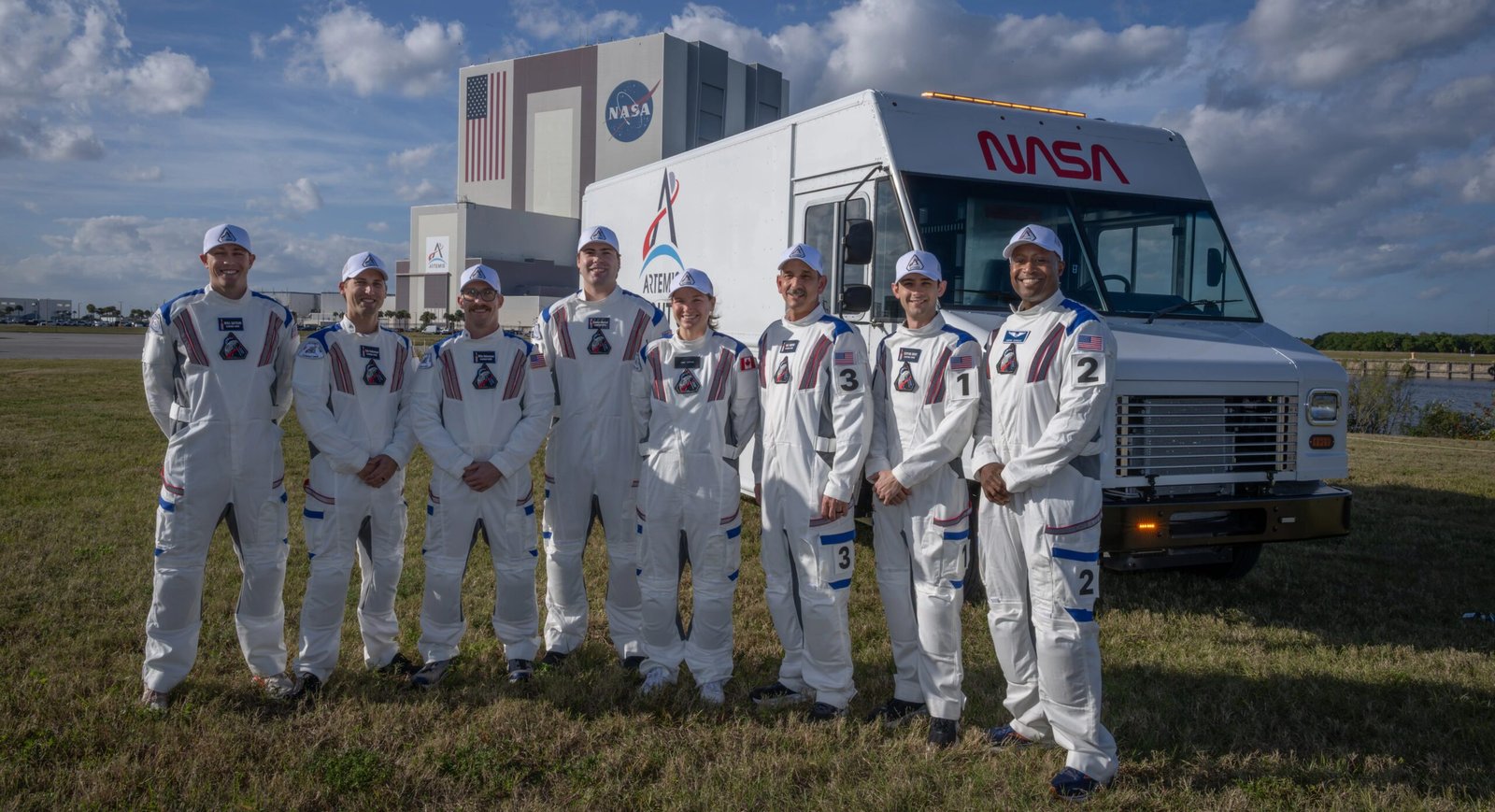
Artemis II Closeout Crew’s Role: The five-member Artemis closeout crew assists astronauts in preparing for launch, ensuring safety and proper securing within NASA’s Orion spacecraft.
-
Complex Process: Astronauts require multiple straps and connections beyond a single seatbelt, highlighting the intricate nature of securing themselves inside the spacecraft.
-
Detailed Closure Procedure: Closing the Orion hatch is a complex task requiring air lines and meticulous care to prevent any obstruction, such as hair, which could impede closure.
-
Mission Significance: Artemis II represents the first crewed flight in NASA’s Artemis campaign, paving the way for future lunar and Mars expeditions.
Get In, We’re Going to the Moon: Meet NASA’s Artemis Closeout Crew
For most, getting into a car is a task that can be done without assistance. Yet for astronauts heading to the Moon, the process is much more complex. This intricate task falls to NASA’s Artemis closeout crew.
This closeout crew will support Artemis II and upcoming lunar missions. They consist of five dedicated team members. Their roles focus on ensuring that astronauts Reid Wiseman, Victor Glover, Christina Koch, and Canadian astronaut Jeremy Hansen are safely secured in the Orion spacecraft before launch.
When launch day arrives, the closeout crew will already be stationed at Launch Complex 39B in Florida. First, they help the astronauts put on their helmets and gloves. Then, they assist with the intricate buckling process inside Orion. Instead of a single seatbelt, astronauts have several straps connecting them to the spacecraft’s environmental control and life support systems.
The process of securing the astronauts takes time. Each seat includes five straps, along with extra connections for safety and communication. This detailed work ensures astronauts can focus on their mission.
After strapping in, the crew turns their attention to the hatch. Unlike a simple car door, Orion’s hatch requires careful sealing. It operates pneumatically, meaning it needs air pressure to close securely. According to the team lead, the closing process involves hooking up air lines and coordinating with ground support.
Once the astronauts are completely secured, the team tackles the hatch closure. This procedure can take around four hours. Careful attention is crucial; even a single strand of hair could cause issues. The crew meticulously cleans and seals to guarantee a perfect fit.
The tasks don’t end there. After closing the crew hatch, the closeout crew installs thermal protection panels and removes protective barriers. These actions shield the crew module during launch and ascent.
The team departs the launch pad after completing preparations. However, they remain nearby, ready to respond if needed. Following the mission, some crew members will head to San Diego to assist with post-splashdown efforts.
As part of a Golden Age of exploration, Artemis II represents a milestone. This mission marks NASA’s first crewed flight in the Artemis campaign. It is a crucial step toward returning Americans to the Moon and, eventually, preparing for crewed missions to Mars. Innovations in technology and engineering emerge from these endeavors, enhancing our journey into space and advancing life on Earth.
Discover More Technology Insights
Learn how the Internet of Things (IoT) is transforming everyday life.
Access comprehensive resources on technology by visiting Wikipedia.
SciV1
