

Fast Facts
-
Rigorous Training for Artemis II: NASA’s Artemis II crew is undergoing extensive training, led by Jacki Mahaffey, to ensure readiness for their lunar mission aboard the Orion spacecraft.
-
Expert Collaboration and Planning: Mahaffey’s team meticulously planned training by gathering experts to create a structured curriculum, emphasizing a logical progression of lessons for the astronauts.
-
Simulation and Real-World Experience: Using advanced training facilities, the crew practices scenarios to prepare for microgravity conditions, with seasoned astronauts contributing valuable insights to enhance training procedures.
-
Legacy and Future of Exploration: Mahaffey sees her role in Artemis II as a continuation of her family’s space legacy, blending advanced technology with mission objectives that extend knowledge of the Moon and pave the way for Mars exploration.
NASA’s Artemis II: A Focus on Training for Lunar Exploration
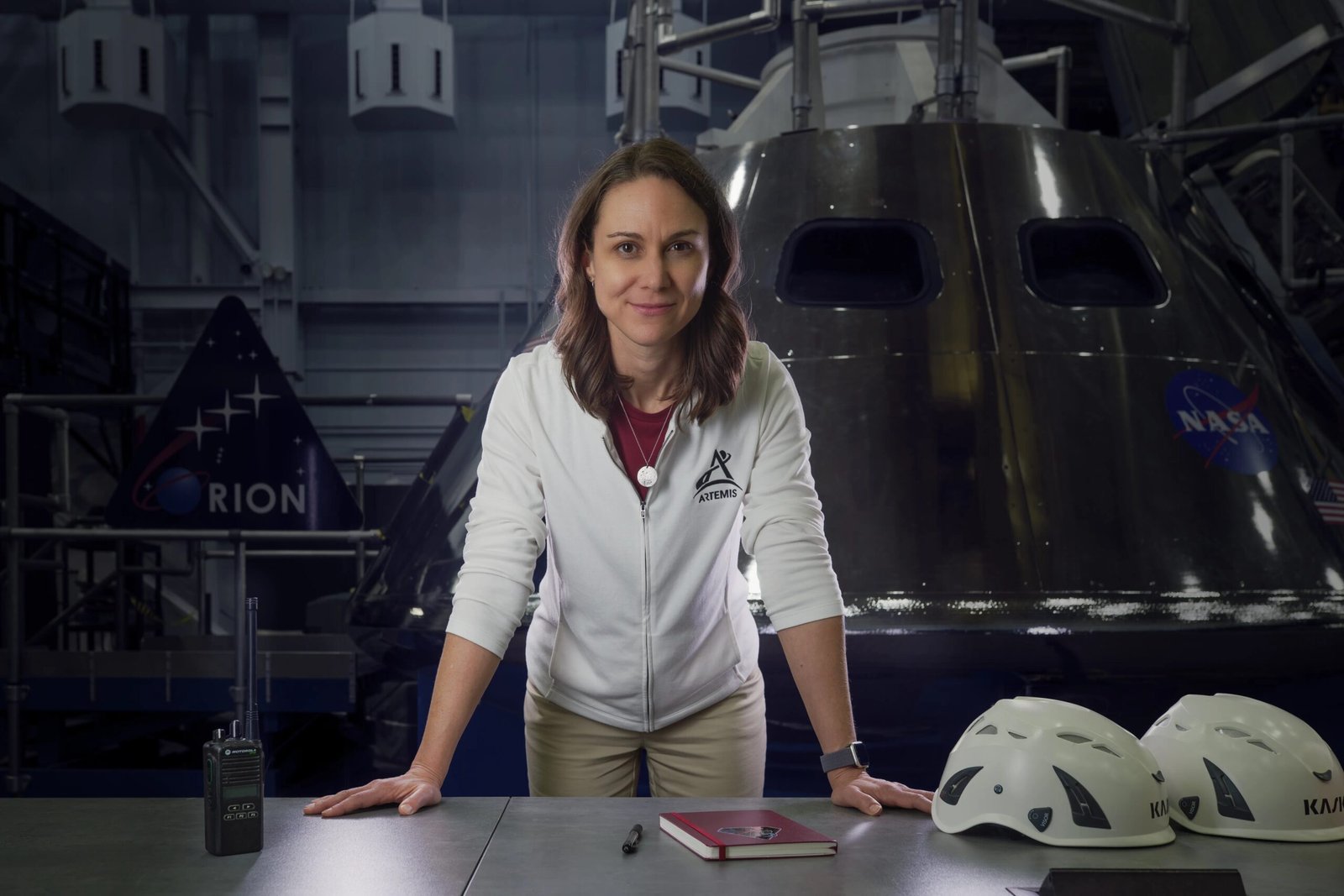
The Artemis II mission is set to mark a new chapter in space exploration. As the crew prepares to travel around the Moon in the Orion spacecraft, rigorous training under the guidance of Jacki Mahaffey plays a crucial role. Mahaffey, the chief training officer at NASA’s Johnson Space Center, orchestrates extensive preparations.
Training commenced promptly after the crew was announced in 2023. Before that, Mahaffey and her team spent years assembling expertise. They focused on essential lessons needed for the mission. “All the experts gathered to create a logical training sequence,” Mahaffey explained. This collaborative effort laid the foundation for the extensive training program.
The astronauts are not just learning about the spacecraft; they are engaging in hands-on experiences. Mahaffey’s team utilizes specialized facilities to simulate various scenarios. For instance, the Space Vehicle Mockup Facility allows astronauts to practice living and working in Orion. Meanwhile, the Orion Mission Simulator replicates flight conditions, enhancing readiness.
Nevertheless, training presents unique challenges. “We try to simulate as much as we can here on Earth,” Mahaffey noted, acknowledging the limitations of gravity. The astronauts draw from their previous space missions, enriching the training process with valuable insights.
Interestingly, three of the four Artemis II astronauts have flown before. Their experience adds depth to the training program. They collaborate closely, sharing unique problem-solving approaches. “They are teaching us about the crew experience and what will matter most,” Mahaffey said, illustrating the symbiotic nature of training.
Mahaffey’s background adds another layer to her role. Initially, she pursued engineering and worked as a flight controller. Over time, she transitioned into training, discovering her passion for teaching. She now leads a team of about 100 contributors, all focused on preparing the crew for this historic mission.
Her connection to space exploration runs deep. Mahaffey reflects on her grandfather’s work with Apollo, seeing Artemis as a continuation of that legacy. “We’re expanding on what Apollo did,” she stated. “We’re learning about the Moon and preparing for Mars.”
Moreover, Mahaffey will serve as a capsule communicator during Artemis II. In this role, she will guide the crew during the crucial splashdown phase. The moment they return will symbolize the culmination of extensive teamwork. “I’ll feel good when the recovery forces report that the hatch is open,” she said, emphasizing the significance of this achievement.
As technology evolves, so does training in space exploration. The Artemis II mission not only aims to deepen our understanding of the Moon but also advances aerospace technology. Mahaffey’s work exemplifies how focused training enhances mission success and prepares us for future endeavors in space.
Discover More Technology Insights
Learn how the Internet of Things (IoT) is transforming everyday life.
Access comprehensive resources on technology by visiting Wikipedia.
SciV1
