

Top Highlights
-
Sudden Stratospheric Warming in late November weakened the polar vortex, enhancing the waviness of the polar jet stream and leading to severe cold spells across North America, Europe, and Asia in December and January.
-
The Kamchatka Peninsula experienced record snowfall, with over 5.7 meters (18.7 feet) accumulating in just a few weeks, one of the heaviest snowfalls since the 1970s, severely disrupting local infrastructure.
-
Petropavlovsk-Kamchatsky, the peninsula’s capital, was particularly affected, facing large snowdrifts that buried vehicles and obstructed access to essential buildings.
-
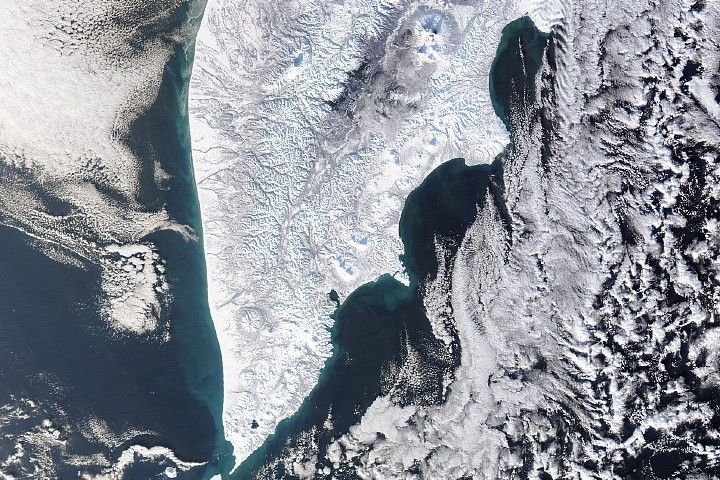
NASA monitoring captured the dramatic snow coverage of Kamchatka’s volcanic landscape, highlighting the region’s ongoing battles with extreme winter weather.
Snow Buries Kamchatka Peninsula, Impacting Life and Research
Petropavlovsk-Kamchatsky, the capital of Russia’s Kamchatka Peninsula, faces an unprecedented snowfall. Over the last month, the area received more than 2 meters (7 feet) of snow in January alone, adding to December’s total of 3.7 meters. Consequently, residents struggle as heavy snowdrifts block roads and bury vehicles.
NASA scientists monitor these extreme conditions closely. They note that a sudden warming in the stratosphere last November contributed to a distorted polar vortex. As a result, the polar jet stream became wavy. This phenomenon allowed frigid air to flow into mid-latitudes, stirring up severe winter storms across North America, Europe, and Asia.
Due to the recent weather, regional authorities declared a state of emergency. They aim to ensure public safety and restore access to essential services. Snow removal operations continue, as residents seek to return to normalcy. Despite the challenges, the snowfall presents an opportunity for scientific research. The extreme conditions allow scientists to study climate patterns and their impacts.
The image captured by NASA’s Aqua satellite on January 17, 2026, showcases the breathtaking landscape of Kamchatka. Snow blankets its volcanic peaks, highlighting the region’s unique geography. Though the snow creates obstacles, researchers emphasize how understanding these events can improve weather forecasting technology.
Gradually, Kamchatka residents adapt to the heavy snowfall. They find ways to cope, fostering community spirit in the face of adversity. Amid these challenges, the region continues to capture the world’s attention, reminding us of nature’s power and resilience.
Stay Ahead with the Latest Tech Trends
Stay informed on the revolutionary breakthroughs in Quantum Computing research.
Access comprehensive resources on technology by visiting Wikipedia.
SciV1
