

Fast Facts
-
Breakthrough in Mammal Evolution: Early mammals developed highly sensitive hearing through an advanced middle ear system, including an eardrum and tiny bones, which provided a significant advantage in a dinosaur-dominated environment.
-
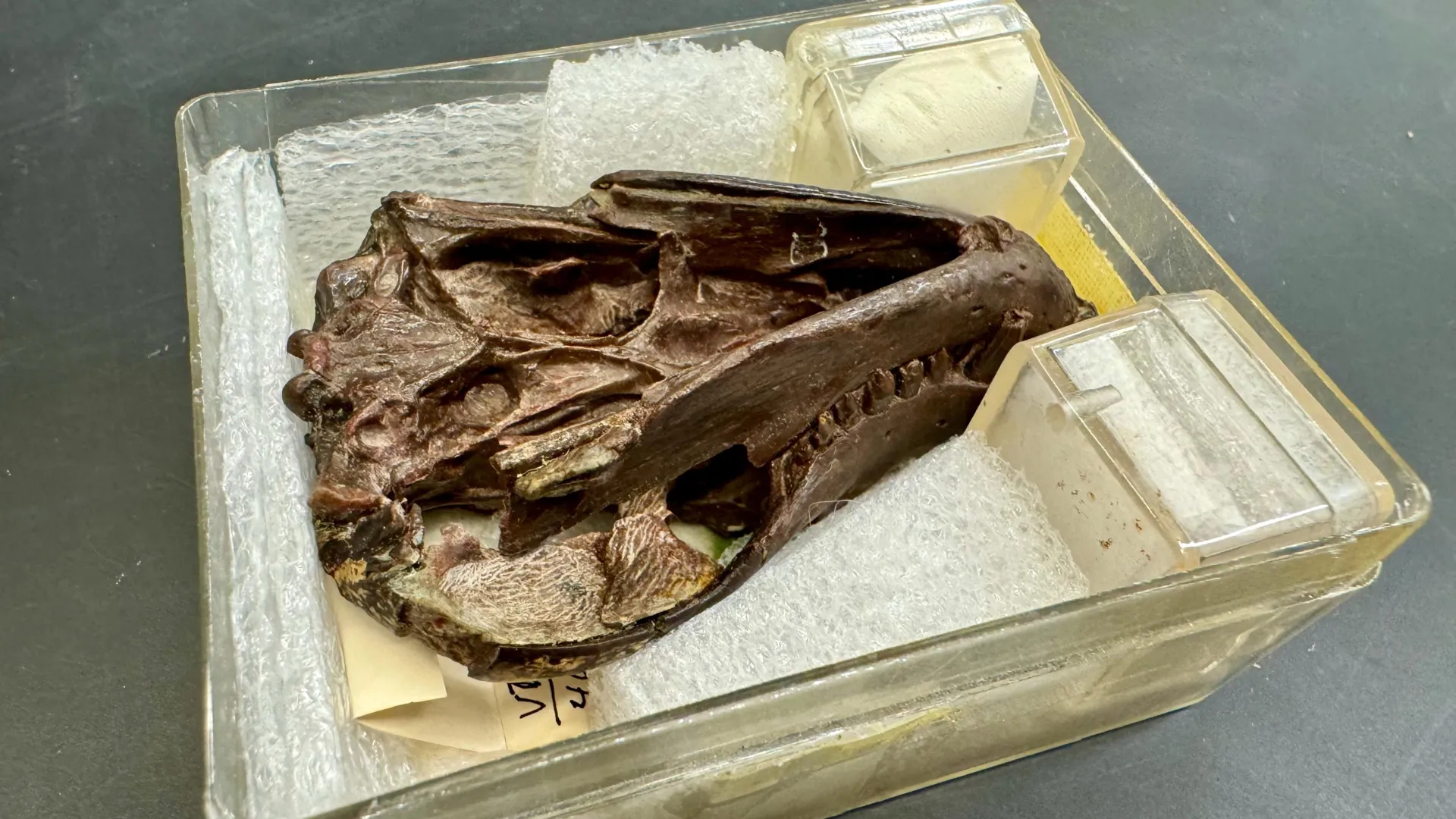
New Research Findings: Paleontologists at the University of Chicago revealed that this sophisticated hearing mechanism in the mammal ancestor Thrinaxodon liorhinus existed nearly 50 million years earlier than previously thought, based on CT scans and biomechanical simulations.
-
Key Anatomical Insights: Thrinaxodon, a cynodont from 250 million years ago, had an eardrum capable of detecting airborne sounds efficiently, shifting the understanding of early mammalian hearing from bone conduction to a more complex auditory system.
-
Innovative Methodology: The study employed advanced imaging and engineering simulations to affirm the role of the eardrum in sound detection, demonstrating the potential for modern technology to re-examine long-held scientific theories in paleontology.
Revisiting a Longstanding Idea About Early Mammal Hearing
Recent research has shattered long-held beliefs about the auditory capabilities of early mammals. Initially, scientists believed that creatures like Thrinaxodon relied primarily on bone conduction through their jawbones to detect sound. They thought these ancestors primarily utilized simple vibrations felt through the ground. However, new biomechanical analyses suggest otherwise. Specifically, researchers now hypothesize that Thrinaxodon had a developed eardrum capable of detecting airborne sounds. This advancement marks a significant leap in our understanding of how mammals evolved and adapted to their environments, especially during a time when dinosaurs dominated.
This crucial ability likely gave early mammals a survival edge, particularly at night. Enhanced hearing helped them navigate predatory challenges and locate food efficiently. Innovations in imaging technology, such as CT scans, allow scientists to recreate the intricate details of ancient fossils. With these advanced methods, researchers produced detailed 3D models of Thrinaxodon’s skull and jaw. This modeling indicated that its partially developed ear could hear sounds in ways previously not considered. Transitioning from old theories to new evidence highlights the dynamic nature of scientific inquiry and the importance of continual research in understanding evolutionary processes.
Turning Ancient Fossils Into Digital Test Subjects
The application of modern engineering techniques to paleontological research opens exciting avenues for discovery. Utilizing finite element analysis, researchers can simulate how sound traveled through Thrinaxodon’s anatomy, assessing how effectively it could have heard. This innovative approach transforms ancient fossils into subjects for virtual testing, bridging the gap between past and present. The implications are vast. Understanding the mechanisms of early mammal hearing illuminates not only the evolutionary journey of mammals but also their survival strategies in a prehistoric world.
Furthermore, this unveils the role of technology in advancing academic disciplines. As paleontology adopts engineering tools, it becomes increasingly interconnected with other fields, showcasing interdisciplinary collaboration. Such partnerships contribute to a broader understanding of life’s evolutionary canvas. This study reminds us of the ongoing journey of discovery. Each revelation about our past provides essential context for the present. As we learn more about our ancestors, we also deepen our understanding of life’s intricate web.
Continue Your Tech Journey
Explore the future of technology with our detailed insights on Artificial Intelligence.
Stay inspired by the vast knowledge available on Wikipedia.
TechV1
