

Fast Facts
-
Rare Preservation: Soft-bodied organisms like the Ediacara Biota, which thrived 570 million years ago, were exceptionally preserved in sandstone—a rare occurrence for creatures without hard shells or bones.
-
Ediacaran Significance: The Ediacara Biota represents a critical evolutionary phase before the Cambrian Explosion, suggesting a long buildup towards complex life rather than a sudden emergence.
-
New Fossilization Insights: Recent studies reveal that environmental factors and specific ancient seawater chemistry, rather than biological toughness, played a key role in the exceptional preservation of these organisms.
-
Broader Implications: Understanding the fossilization process for the Ediacara Biota could reshape our views on the evolution and disappearance of early complex life forms, allowing insights into similar fossils worldwide.
The Enigma of the Ediacara Biota
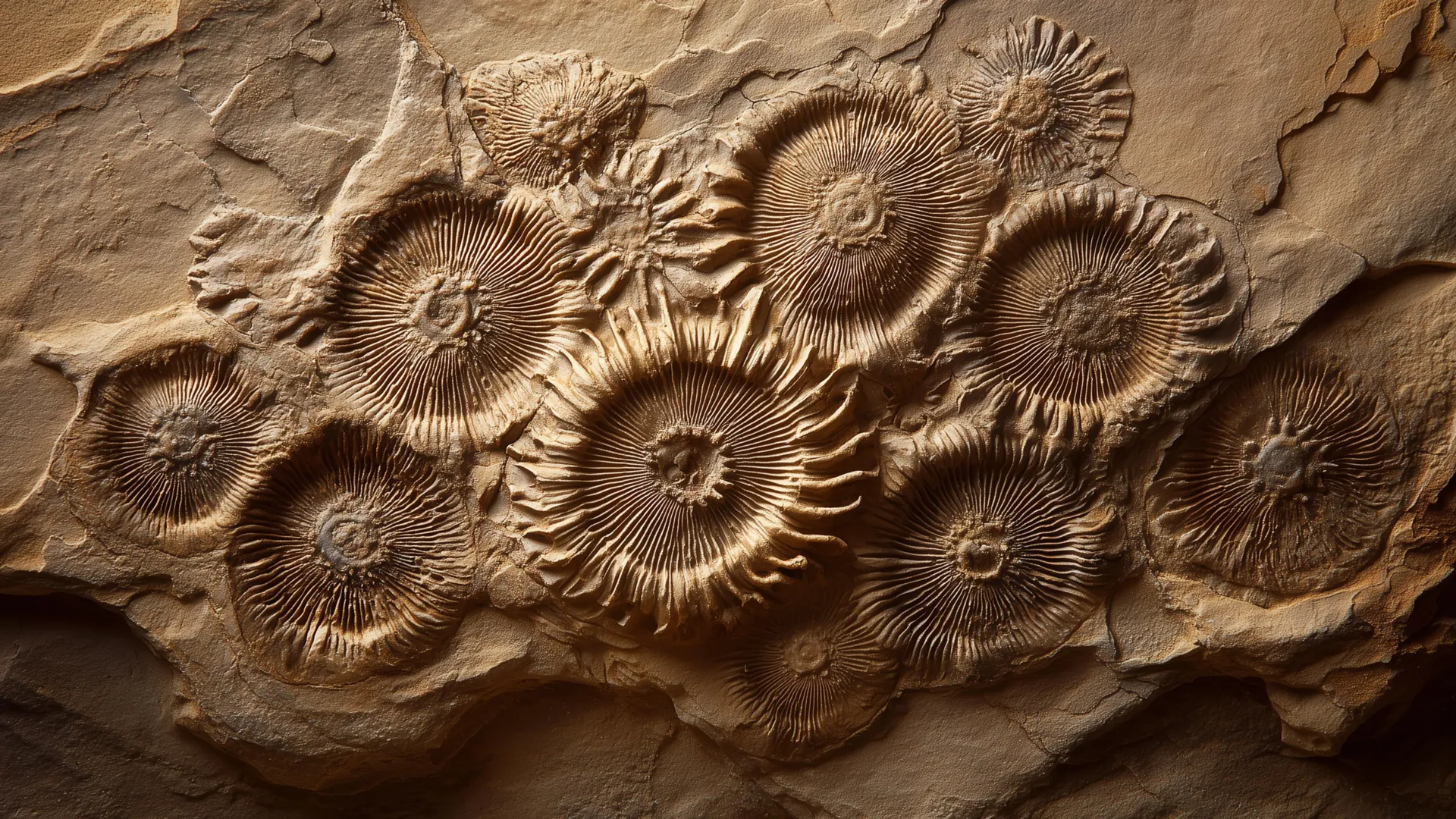
Scientists have finally unraveled the mystery surrounding Earth’s strangest fossils: the Ediacara Biota. These soft-bodied organisms thrived approximately 570 million years ago. Typically, such fragile life forms do not leave a trace in the fossil record. Environmental conditions like turbulent waters erase delicate remains before they can fossilize. However, during the Ediacaran period, something unusual occurred. A unique combination of geological processes allowed these organisms to be buried in sandstone. This sandstone, unlike many other types, captured intricate details of their anatomy, defying the odds. Researchers describe them as bizarre; they display triradial symmetry and fractal patterns that challenge classifications in the tree of life.
This discovery highlights the significance of these fossils. They provide a crucial link to understanding the events leading up to the Cambrian Explosion. This period marked a rapid increase in animal diversity. Initially, scientists viewed it as a sudden breakthrough. Now, they see it as the result of a longer evolutionary buildup. Thus, the Ediacara Biota might represent an essential stage in this gradual process.
The Role of Ancient Chemistry in Fossilization
The preservation of the Ediacara Biota involves more than just the organisms themselves. Recent studies reveal the importance of ancient chemistry in fossilization. Instead of relying on biological resilience, the survival of these fossils stemmed from environmental factors. Researchers utilized lithium isotopes in their analysis. These isotopes helped identify the mineral composition of the sediments covering the organisms. Findings showed that clay minerals played a significant role. They acted as a natural cement, binding the sand grains and preserving details of the soft tissues.
Understanding this complex process leads to broader implications. It encourages scientists to evaluate other regions and periods for similar fossilization methods. Ultimately, this knowledge deepens our understanding of Earth’s evolution. By grasping how soft-bodied organisms transitioned into more complex life forms, we enrich our perspective on the history of life itself. The exploration of the Ediacara Biota illustrates the intricate interplay of biology and geology. It invites us to reconsider our assumptions and embrace a more nuanced view of Earth’s ancient past.
Discover More Technology Insights
Explore the future of technology with our detailed insights on Artificial Intelligence.
Access comprehensive resources on technology by visiting Wikipedia.
TechV1
