

Fast Facts
-
NURTURE Mission Overview: NASA scientists launched the North American Upstream Feature-Resolving and Tropopause Uncertainty Reconnaissance Experiment (NURTURE) to enhance understanding of severe winter storms and improve storm forecasting models.
-
Data Collection Strategy: Utilizing a Gulfstream III aircraft, the team will collect atmospheric data over regions impacted by winter weather, including moisture, clouds, and ozone, over a month-long campaign starting from January 24.
-
Future Plans with NASA’s New Lab: A follow-up mission aboard a Boeing 777 will cover extensive areas across Europe and the Arctic, using advanced instruments to gather comprehensive atmospheric observations.
-
Global Collaboration and Impact: NURTURE is part of a broader effort involving international partners to better predict severe weather events, aiming to provide timely data to first responders and enhance public safety regarding storm-related hazards.
NASA Science Flights Venture to Improve Severe Winter Weather Warnings
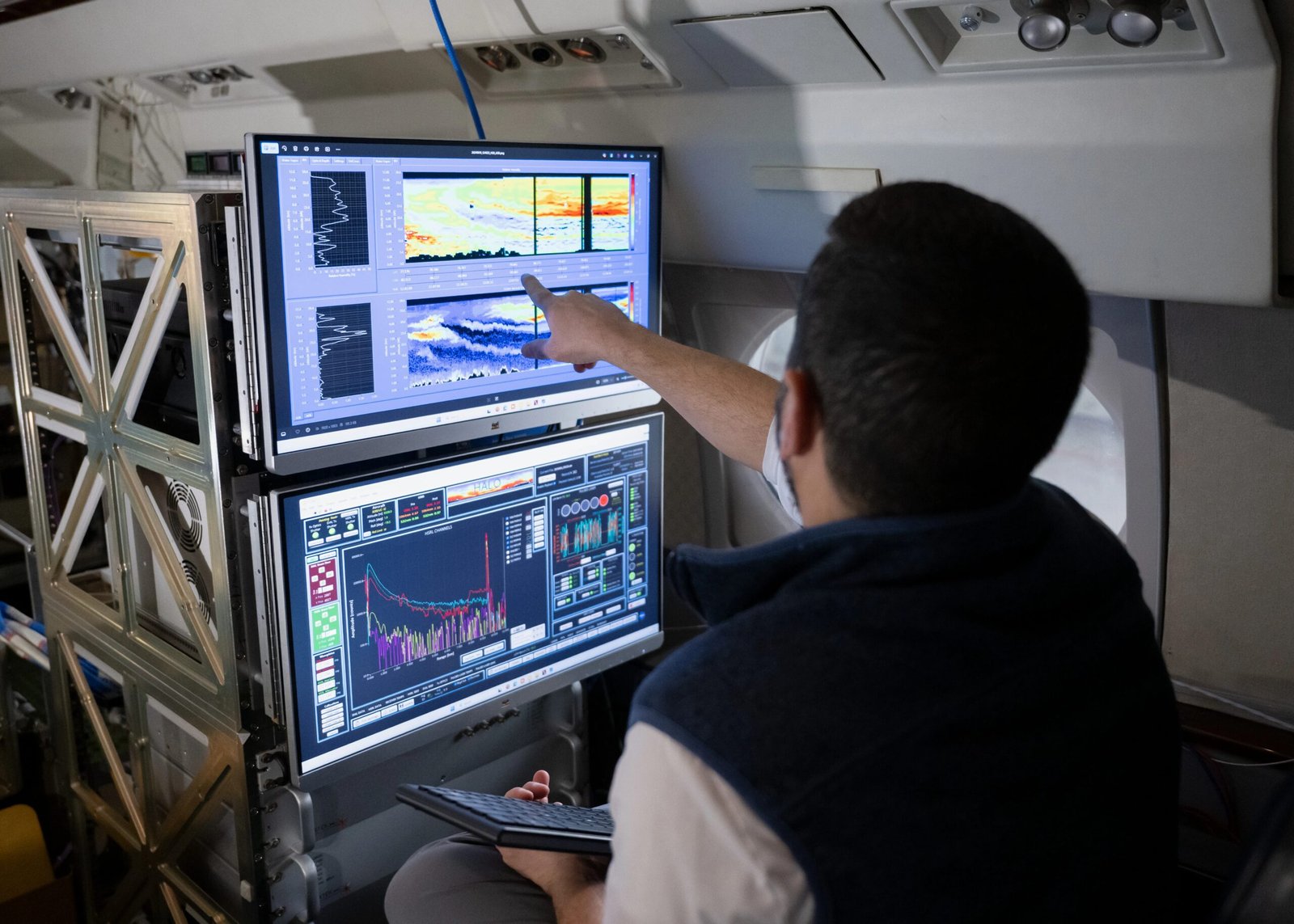
NASA scientists have embarked on an important mission to enhance winter weather forecasting. The North American Upstream Feature-Resolving and Tropopause Uncertainty Reconnaissance Experiment, or NURTURE, is an airborne campaign utilizing advanced remote sensing instruments. These tools aim to collect critical atmospheric data, ultimately improving the accuracy of storm forecasts.
On Jan. 24, the research team took off from NASA’s Langley Research Center in Hampton, Virginia. They boarded the Gulfstream III aircraft headed for Goose Bay, Canada. For nearly a month, the plane will traverse the Northern Atlantic Ocean, Canada, and the Northeast United States. During these flights, it will measure moisture, clouds, and ozone as winter storms develop.
Next year, the campaign will enter its second phase. This phase marks the inaugural mission of NASA’s new airborne science laboratory—a Boeing 777. These flights will cover an expansive 3,100 miles, utilizing a broader array of instruments. The research team plans to gather detailed observations over Europe, Greenland, and much of the Arctic Ocean.
NASA emphasizes its commitment to public safety and innovation. The NURTURE campaign exemplifies these values, equipping aircraft with unique instruments designed to improve the understanding of severe weather events. Insights gathered during these missions will aid first responders and decision-makers.
As the G-III operates over Canada, an international team conducts a parallel mission called the North Atlantic Waveguide, Dry Intrusion, and Downstream Impact Campaign from Shannon, Ireland. Additionally, NOAA will study moisture transport from the tropics to the Western U.S. By combining data across these efforts, scientists can track weather systems on a global scale and analyze how they interact.
Currently, forecasting severe winter weather remains a challenge. Observations in the Arctic often lack the sensitivity needed for accurate data collection. By applying advanced technologies typically unavailable in space, researchers can better understand atmospheric dynamics.
Severe winter weather includes cold air outbreaks, windstorms, and heavy snowfall. The data from NURTURE aims to enhance public warning systems, potentially saving lives and minimizing disruptions. Severe weather events incur significant costs, impacting supply chains and infrastructure.
Funding for the NURTURE mission comes from NASA’s Earth Science Division. Researchers from NASA Langley and Ames, alongside the University of Oklahoma, manage the project. This innovative approach not only addresses immediate weather forecasting needs but also paves the way for future space-based weather observation technologies.
For more information about the NURTURE mission, visit NASA’s NURTURE page.
Expand Your Tech Knowledge
Stay informed on the revolutionary breakthroughs in Quantum Computing research.
Stay inspired by the vast knowledge available on Wikipedia.
SciV1
