

Top Highlights
-
A severe winter storm impacted the U.S. from Southwest to New England in late January 2026, causing dangerous travel conditions, power outages, and school closures due to heavy snow, sleet, and ice.
-
Snow accumulations reached up to 12 inches in parts of Oklahoma and 20 inches in several Northeast states, with St. Louis and Pittsburgh experiencing record daily snowfall of 5.1 and 11.2 inches, respectively.
-
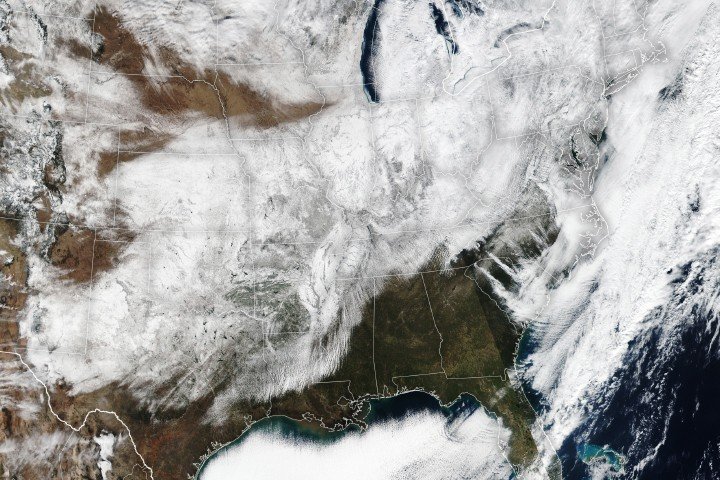
NASA’s VIIRS satellite captured extensive snow coverage across the affected regions, providing valuable data and imagery to monitor the storm’s effects.
-
The NASA Disasters Response Coordination System has been activated to assist responding agencies, with ongoing updates and maps available through its open-access portal.
Snow Buries the U.S. Interior and East
A powerful winter storm blanketed the U.S. from the Southwest to New England in late January 2026. This storm brought snow, ice, and frigid temperatures, creating hazardous travel conditions across many states. Reports indicated widespread school closures and significant power outages.
On January 26, satellite images showed a broad area covered in fresh snow. The VIIRS satellite captured both natural and false-color images. The false-color image effectively highlighted snow in blue, making it easier to observe the storm’s impact.
Preliminary data from the National Weather Service revealed snow accumulations reaching up to 12 inches in Oklahoma. Meanwhile, the Northeast reported totals around 20 inches in several states. St. Louis experienced a record daily accumulation of 5.1 inches on January 24. Additionally, Pittsburgh saw 11.2 inches fall on January 25. Unusually, parts of North Texas also received several inches of snow and sleet.
With temperatures remaining below freezing, the snow and ice are likely to linger. Local transportation officials urged caution for drivers in affected areas. Many communities rallied to clear roadways and ensure safety.
NASA activated its Disasters Response Coordination System in response to the storm. This team will provide maps and data on its open-access portal as more information surfaces. Such efforts illustrate how technology plays a crucial role in disaster response, helping officials assess damage and allocate resources effectively.
This storm serves as a reminder of winter’s power. It also highlights the importance of preparedness and efficient responses. While challenging, heavy snowfall can inspire communities to come together and adapt. People across the affected regions remain resilient, ready to face the next challenge.
Discover More Technology Insights
Dive deeper into the world of Cryptocurrency and its impact on global finance.
Access comprehensive resources on technology by visiting Wikipedia.
SciV1
