

Summary Points
-
Impact Influence: Asteroid strikes have significantly shaped the Moon’s surface since its formation, creating craters and altering its landscape and chemistry, but their deep effects remain less understood.
-
Chang’e-6 Findings: A team led by Prof. Hengci Tian analyzed basalt samples from the South Pole-Aitken Basin, revealing a distinctive heavier potassium isotopic signature that suggests a record of the colossal impact event.
-
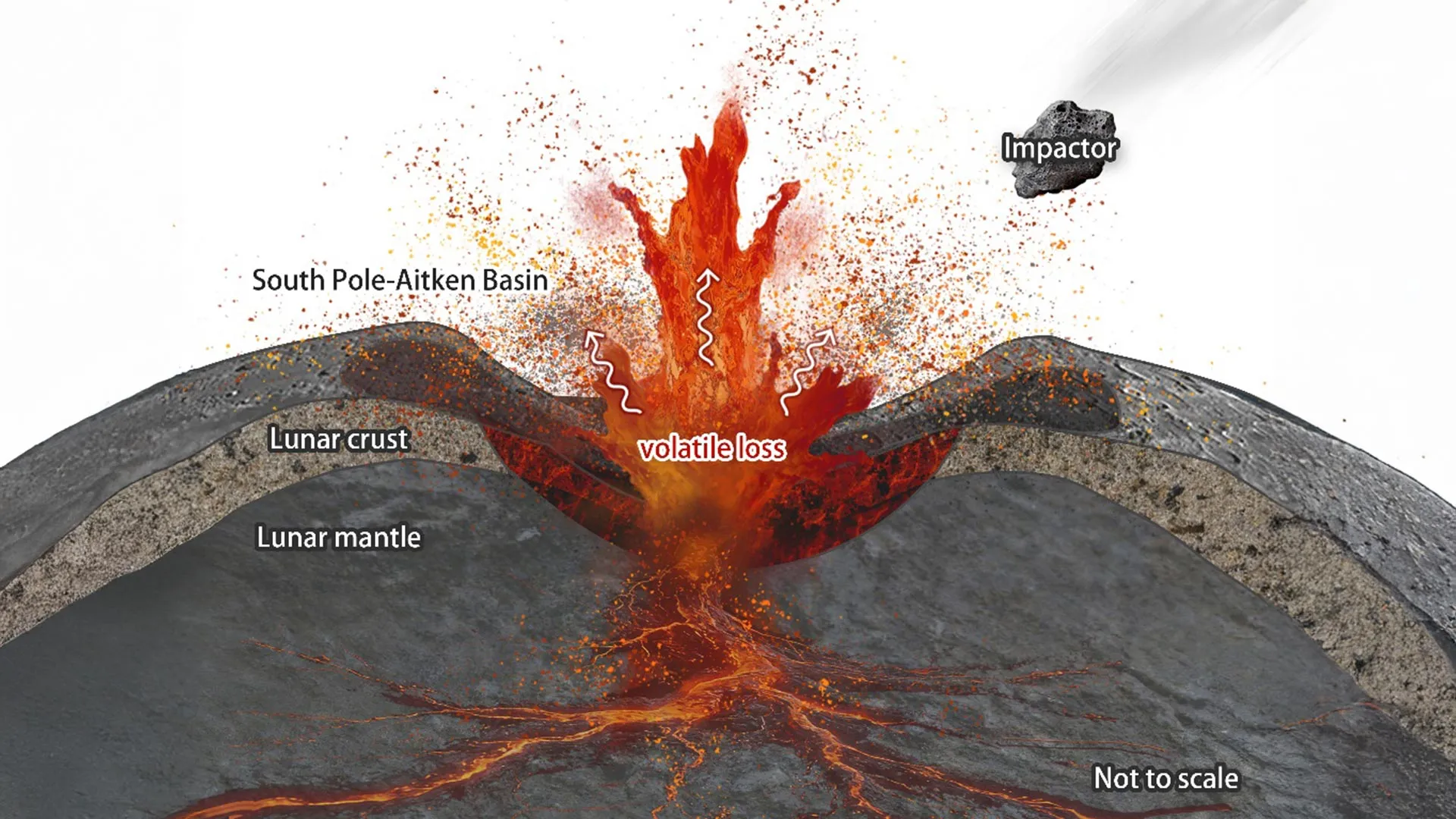
Volatile Loss: The unusual potassium enrichment in the samples indicates substantial loss of volatile elements during the impact, potentially contributing to reduced magma production on the Moon’s far side compared to the near side.
-
Broader Implications: The research highlights how major impacts can influence the internal chemistry and evolution of rocky bodies across the solar system, with the SPA formation playing a crucial role in the Moon’s volcanic history.
Decoding Ancient Impacts Through Lunar Samples
The Moon’s surface tells a tale of asteroid strikes. These collisions have shaped its craters and basins for billions of years. However, scientists lacked clarity on how these impacts influenced the Moon’s interior. Recently, a team led by researchers from a prominent geological institute took a significant step forward. They analyzed basalt samples collected by Chang’e-6 from the South Pole-Aitken Basin. This area is the largest and oldest known impact basin on the Moon.
They discovered something intriguing. The potassium isotopes in these samples were different from those found in earlier lunar samples. Specifically, the isotopic composition was heavier than any previously recorded by the Apollo missions. This anomaly raises questions and offers insights into the Moon’s history. Understanding how potassium behaves under extreme conditions can unveil details about the ancient impacts that shaped the Moon’s geology.
Implications for Lunar and Planetary Science
The research findings hold broader significance. The elevated potassium levels suggest that the enormous impact that formed the South Pole-Aitken Basin had a lasting effect on the Moon’s interior. The team ruled out other possible explanations for this potassium shift, confirming that high temperatures during the impact led to substantial vaporization of volatile elements.
This depletion likely influenced volcanic activity on the Moon. The results imply that the far side experienced reduced magma production, which may explain the lack of volcanic features compared to the near side. By modeling this process, researchers showed that the impact’s heat drove convection in the Moon’s interior, further altering its chemistry.
Overall, the study enhances our understanding of how massive impacts shape not just the Moon but other rocky bodies in our solar system. In detecting these changes, we gain insights into the evolution of planetary interiors—knowledge that could also aid future lunar exploration and possibly facilitate understanding of other celestial bodies. As we look to the stars, each finding brings us closer to unraveling the mysteries of our cosmic neighborhood.
Discover More Technology Insights
Learn how the Internet of Things (IoT) is transforming everyday life.
Explore past and present digital transformations on the Internet Archive.
TechV1
