

Top Highlights
-
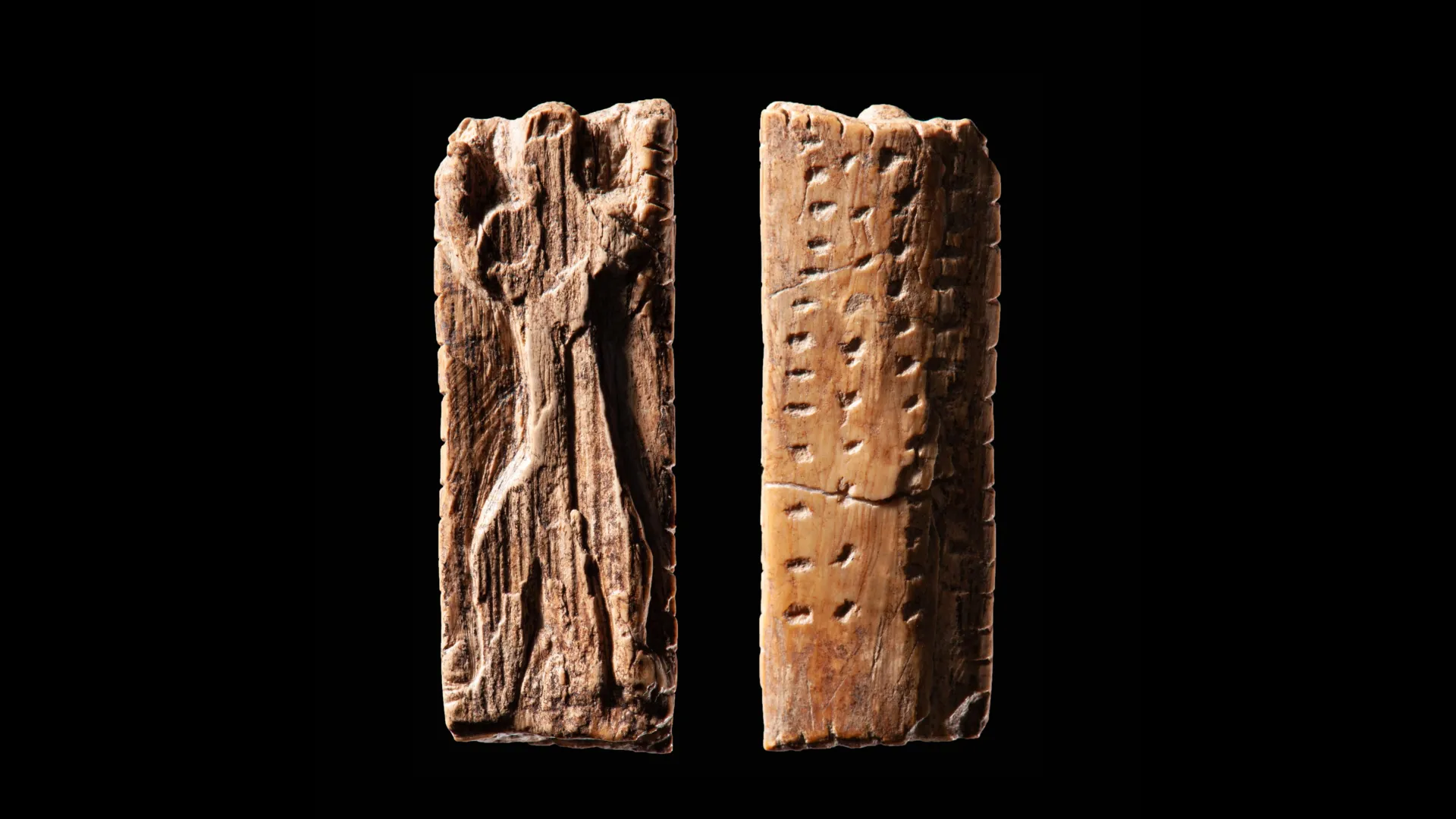
Ancient Significance: Over 40,000 years ago, early humans were inscribing symbols on tools and figurines, suggesting these weren’t random designs but communicative markings with structural complexity comparable to proto-cuneiform, the earliest known writing.
-
Research Findings: Analysis of 3,000 signs on Paleolithic artifacts revealed these markings exhibit information density and repetitive patterns similar to those found in early writing systems, indicating a sophisticated form of symbolic communication predating formal writing.
-
Regional Insights: The Swabian Jura region in Germany is a key area for discovering these symbols, with various artifacts suggesting an intentional method of information encoding among prehistoric peoples, highlighting their cognitive capabilities.
-
Long-term Evolution: This research sheds light on a gradual development of information encoding, with early signs laying the groundwork for modern writing systems, underscoring the enduring human drive to record and communicate knowledge.
Ancient Symbols: A Glimpse into Early Human Communication
Over 40,000 years ago, early humans engaged in marking tools and figurines with symbols. Recent research reveals these engravings were not mere decorations. They contained complex sequences of signs that suggest a sophisticated method of encoding information. This finding challenges the prevailing notion that writing began only around 3,000 B.C.E. Proto-cuneiform is often cited as the earliest writing system, yet these Paleolithic symbols present comparable information density. The work of linguistic and archaeological experts shows that early humans likely used these markings to communicate or store essential information.
Through computational analysis of over 3,000 signs, researchers found surprising similarities to modern writing systems. They discovered repetitive patterns among the Paleolithic symbols, indicating intentional communication. This challenges previous assumptions about the development of writing. As researchers investigate further, they uncover a vast network of symbols across various European regions, hinting at a widespread Stone Age tradition. The complexity of these signs may have aided early humans in organizing their societies and navigating their environments, establishing a foundation for the intricate communication systems we rely on today.
The Evolution of Encoding Information
This research contributes to a deeper understanding of how early humans encoded information visually. By employing digital tools and statistical models, researchers revealed that the information density of these ancient symbols resembles that of proto-cuneiform. Despite the long time gap, the patterns suggest a gradual evolution of encoding systems. The ability to record information may have been crucial for the survival and social organization of early human groups. Portable artifacts demonstrate that these skilled craftspeople likely carried them for practical uses, further bridging the gap between their time and our own.
As technology continues to evolve, the fundamental ability to encode information remains relevant. From a historical perspective, these findings shed light on the cognitive capabilities of early humans, which were comparable to ours. This exploration of ancient sign systems not only enriches our understanding of human history but also paves the way for future advancements in communication technology. Ultimately, we find that the instinct to document and share knowledge is an enduring aspect of being human, linking our past with our ongoing journey of discovery.
Continue Your Tech Journey
Learn how the Internet of Things (IoT) is transforming everyday life.
Discover archived knowledge and digital history on the Internet Archive.
TechV1
