

Top Highlights
-
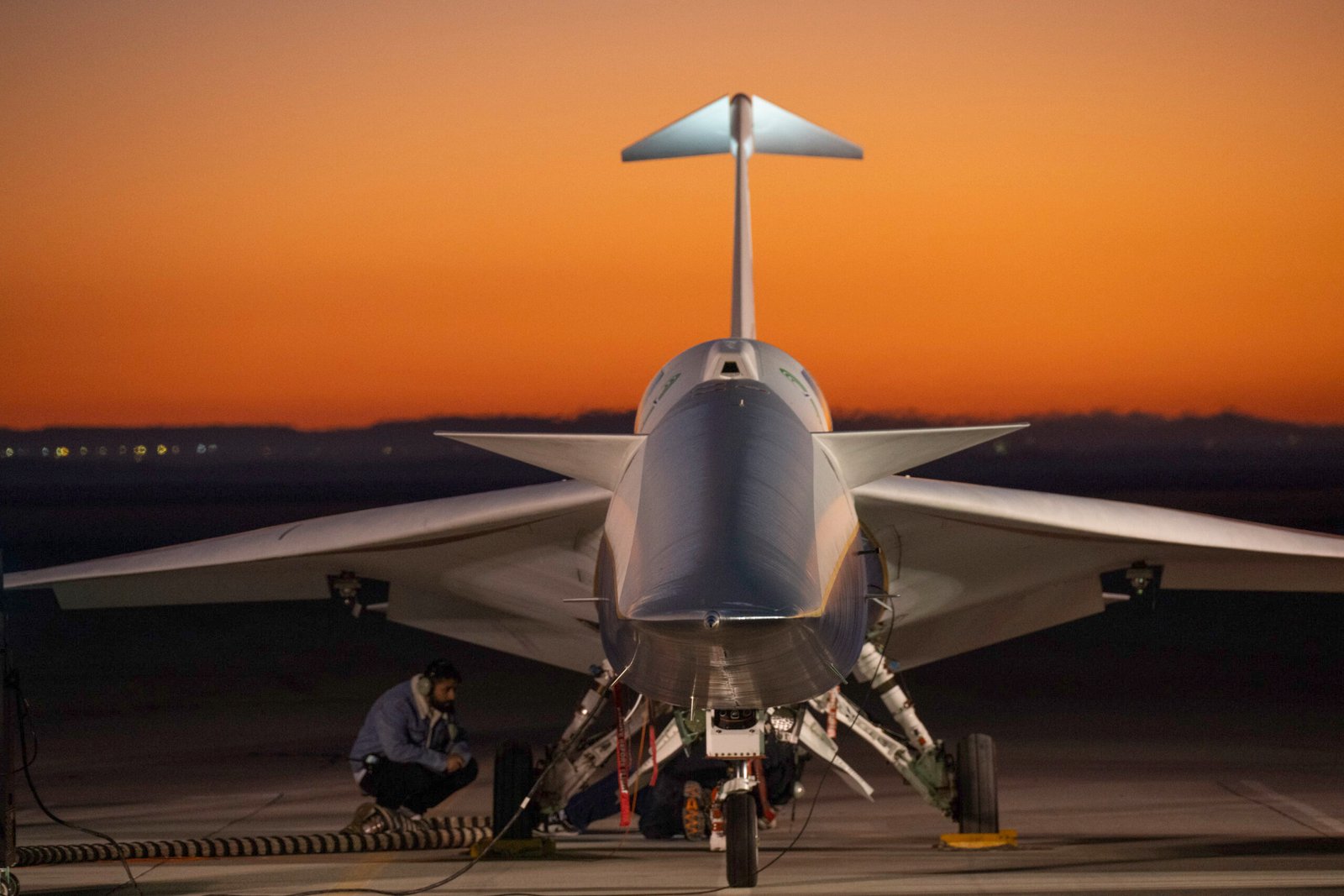
Second Flight Preparation: NASA’s X-59 experimental aircraft gears up for its second flight, critical for envelope expansion tests to validate safety and performance in 2026.
-
Pilot Insights: Test pilot Jim “Clue” Less will control the X-59, emphasizing focus on accurate testing, while accompanied by Nils Larson in an F/A-18 observing the flight.
-
Incremental Testing: Following successful first flight maintenance, the upcoming flight will progressively test speeds and altitudes, aiming for a target of approximately 925 mph at 55,000 feet.
-
Quesst Mission Goals: The X-59 aims to demonstrate quiet commercial supersonic flight, minimizing sonic booms, with Phase 1 focusing on flight performance and Phase 2 on acoustic validation over populated areas.
NASA’s X-59 Prepares for Second Flight
NASA’s X-59 experimental aircraft is gearing up for its second flight, and this marks a pivotal step for future supersonic travel. In the coming months, the X-59 will soar higher and faster, helping to validate its safety and performance. This process, known as envelope expansion, will serve as the foundation for more extensive flight testing planned for 2026.
Test pilot Jim “Clue” Less will lead the flight, taking off and landing at Edwards Air Force Base in California. “I think I’ll mostly focus on getting the test cards done correctly,” Less said regarding his new role as an X-plane pilot. He will collaborate closely with fellow pilot Nils Larson, who will monitor the X-59’s performance from a nearby F/A-18 aircraft.
The X-59 first took to the skies on October 28, 2025. Since then, the team undertook significant maintenance and inspections. They removed key components, including the engine and tail section, to ensure everything was in peak condition. This meticulous process allowed them to reinstall over 70 panels and make necessary adjustments.
The excitement builds as the team completed a crucial ground test on March 12, firing up the aircraft’s modified engine. “It’s always thrilling to see the X-59 come to life,” said the project’s lead propulsion engineer. This moment signifies a major milestone, emphasizing the dedication and skill of the team involved.
During the second flight, the X-59 will start at the same conditions as its first flight. Following this, the team will begin testing higher and faster speeds. Initial tests will focus on achieving 230 mph at 12,000 feet before progressing to 260 mph at 20,000 feet. This gradual approach ensures safety and thorough analysis.
The ultimate goal of the X-59 is to reach approximately 925 mph, or Mach 1.4, at around 55,000 feet. As Less pointed out, “We will increase speed and altitude in small, measured chunks.” Each flight presents an opportunity to refine the aircraft’s capabilities while working toward a groundbreaking mission.
The X-59 is central to NASA’s Quesst mission. This initiative seeks to transform commercial aviation by reducing sonic booms to a less disruptive thump. Following the envelope expansion phase, the aircraft’s acoustic performance will undergo further validation. This involves studying how its design influences shock wave dispersion.
Ultimately, NASA plans to test the X-59 over select U.S. communities. This stage will gather feedback on how residents perceive its quieter sound signature, aiming for a new era of quiet supersonic flight over land. By collaborating with U.S. and international regulators, the findings will play a crucial role in shaping the future of air travel.
Stay Ahead with the Latest Tech Trends
Learn how the Internet of Things (IoT) is transforming everyday life.
Discover archived knowledge and digital history on the Internet Archive.
SciV1
