

Essential Insights
-
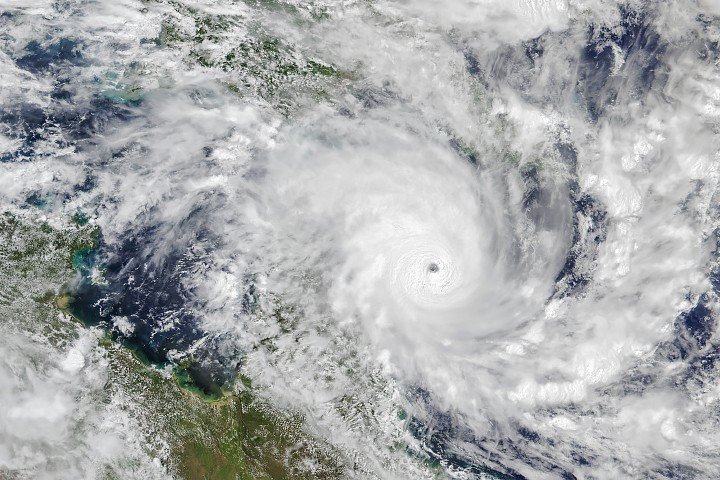
Cyclone Narelle Impact: The tropical cyclone made landfalls in three Australian states from March 20 to 23, 2026, delivering damaging winds and significant rainfall to already saturated regions.
-
Intensification and Strength: Narelle reached category 5 status with wind speeds up to 225 km/h (140 mph) while traveling over unusually warm sea surface temperatures, although its damaging winds were localized.
-
Severe Rainfall and Flooding: Accompanying Narelle’s passage, more than 100 mm (4 inches) of rain fell in the Northern Territory, causing warnings of minor to major flooding amid an already severe wet season.
-
Potential Re-Intensification: After crossing into Western Australia as a tropical low, Narelle may re-intensify into a cyclone, with forecasts suggesting a track toward Perth, marking it as a rare “triple-strike” event for Australia.
Tropical Cyclone Narelle Crosses Australia
Tropical Cyclone Narelle has carved a significant path across the northern edge of Australia. It made multiple landfalls between March 20 and 23, 2026, impacting three states and territories. This cyclone brought damaging winds and heavy rain to areas already facing saturation from previous storms.
Initially, Narelle achieved category 5 strength as it approached Queensland. Wind speeds reached a maximum of 225 kilometers (140 miles) per hour, comparable to a high-category hurricane. Its compact structure meant that the most intense winds affected a relatively small area. However, the storm’s initial landfall occurred near the Cape York Peninsula, which is sparsely populated.
After crossing into the Gulf of Carpentaria, Narelle weakened but still posed dangers. By the afternoon of March 21, the cyclone made its second landfall in the Northern Territory, bringing maximum winds of 148 kilometers (92 miles) per hour. Reports indicated over 100 millimeters (4 inches) of rain fell across a wide area, raising concerns about minor to major flooding in several rivers. This added to the challenges of a severe wet season already impacting the region.
After moving through the Northern Territory, Narelle transitioned into a tropical low in Western Australia. Although weakened, meteorologists believe it may re-intensify as it approaches the coast. The Bureau of Meteorology has issued alerts regarding the potential for further development off the coast of Western Australia.
Cyclones like Narelle, with multiple landfalls, are rare in Australia. Past storms, such as Ingrid in 2005, have shown similar patterns but often with less intensity. This cyclone serves as a reminder of the evolving nature of climate systems and the importance of advanced meteorological technology.
Ongoing research in weather prediction helps communities prepare for such storms, ultimately improving resilience to extreme weather. As scientists study Narelle’s impacts, they hope to refine predictive models and enhance the ability to protect lives and property in the future.
Expand Your Tech Knowledge
Explore the future of technology with our detailed insights on Artificial Intelligence.
Explore past and present digital transformations on the Internet Archive.
SciV1
