

Top Highlights
-
Spawning Season: Pacific herring congregate from mid-February to early May in British Columbia’s coastal waters, particularly in Barkley Sound, creating observable spawning events noted by satellites.
-
Habitat Preferences: Herring prefer protected, shallow areas with rocky substrates for spawning, influenced by factors like salinity, predation, and historical patterns of spawns.
-
Increased Wildlife Activity: Spawning triggers heightened wildlife presence, including whales, sea lions, and land predators, reflecting the ecological importance of herring as a forage fish.
-
Advanced Monitoring: Satellite observations, such as those from Landsat, enhance the understanding of herring spawning locations, contributing to marine ecosystem insights and supporting First Nations and commercial fishing practices.
Satellite Spots Pacific Herring Spawning Activity Off Vancouver Island
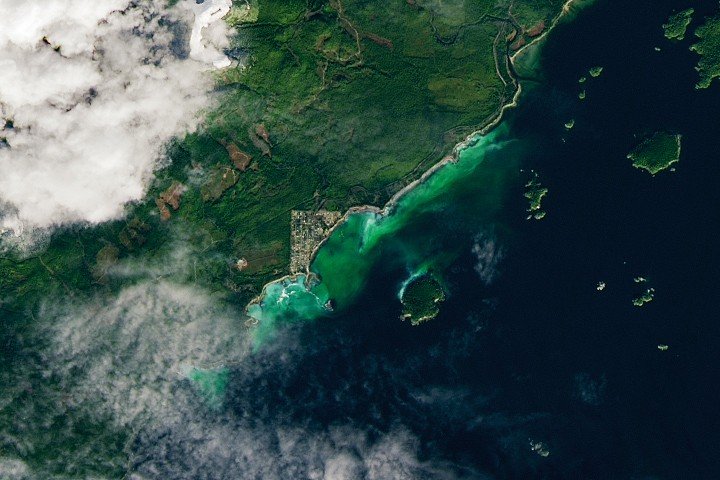
Pacific herring have begun their spawning season in the coastal waters of British Columbia. From mid-February to early May, these small, silvery fish gather in shallow areas around Vancouver Island, creating a thrilling spectacle visible from space.
On February 19, 2026, NASA’s Landsat 9 satellite captured images of this spawning activity near Forbes Island. Female herring lay eggs on surfaces like kelp and seagrass, while males release milt, creating a cloudiness in the water. This vibrant display signifies the start of a critical life cycle for the species.
Spawning events near Forbes Island have occurred regularly since the 1970s. Fisheries and Oceans Canada reports that herring prefer protected, rocky locations with lower salinity to spawn. “Barkley Sound hits the sweet spot,” noted a local biologist. The region’s unique conditions support these fish, ensuring successful reproduction.
Observers noted staging fish as early as February 13 in 2026, with reports of activity spanning from February 19 to 21. Along with the spawning, increased wildlife presence typically accompanies these events. Whales, sea lions, eagles, and bears gather nearby, showcasing nature’s interconnectedness during this vital period.
Historically, monitoring these spawning activities faced challenges due to limited aerial surveys and hard-to-reach locations. However, satellite technology provides a new perspective. Researchers at the University of Victoria use satellite observations to fill gaps in historical records and streamline future monitoring of herring activity.
Herring and their eggs are essential both culturally and economically. First Nations communities harvest them, while the fish serve as a key food source for salmon and other marine species. Understanding spawning locations offers valuable insights into changes in the marine ecosystem and supports sustainable fisheries management.
This innovative approach exemplifies how technology enhances our understanding of marine life. As satellite data continues to evolve, scientists can better protect vital fish populations and their habitats. The role of Pacific herring emphasizes the need for ongoing research and collaboration within communities and the scientific community alike.
Stay Ahead with the Latest Tech Trends
Learn how the Internet of Things (IoT) is transforming everyday life.
Explore past and present digital transformations on the Internet Archive.
SciV1
