

Essential Insights
-
Immersive Experience: The Ministry of Awe in Philadelphia is a six-story immersive art installation that creatively blends surrealist art and interactive technology, akin to Meow Wolf and the Museum of Jurassic Technology.
-
AI Integration: Utilizing subtle AI elements, the installation allows visitors’ interactions—like spoken words and gestures—to dynamically change art projections and murals, enhancing the experience without replacing the artists’ work.
-
Exploration of Themes: The installation explores the themes of banks and their power, incorporating a storyline with hands-on experiences such as audio messages and interactive exhibits.
-
Collaboration and Evolution: Created by Meg Saligman with over 100 artists and tech experts from Spatial Pixel, the installation serves as a public test-bed for evolving artistic interactions, aiming to foster a perpetual dialogue between visitors and the artwork.
Art Meets AI in a Surreal Philadelphia Experience
Philadelphia’s latest installation, the Ministry of Awe, is a unique fusion of art and technology. Nestled in a former bank building, this immersive space invites visitors to explore a narrative woven through surrealist art and interactive AI.
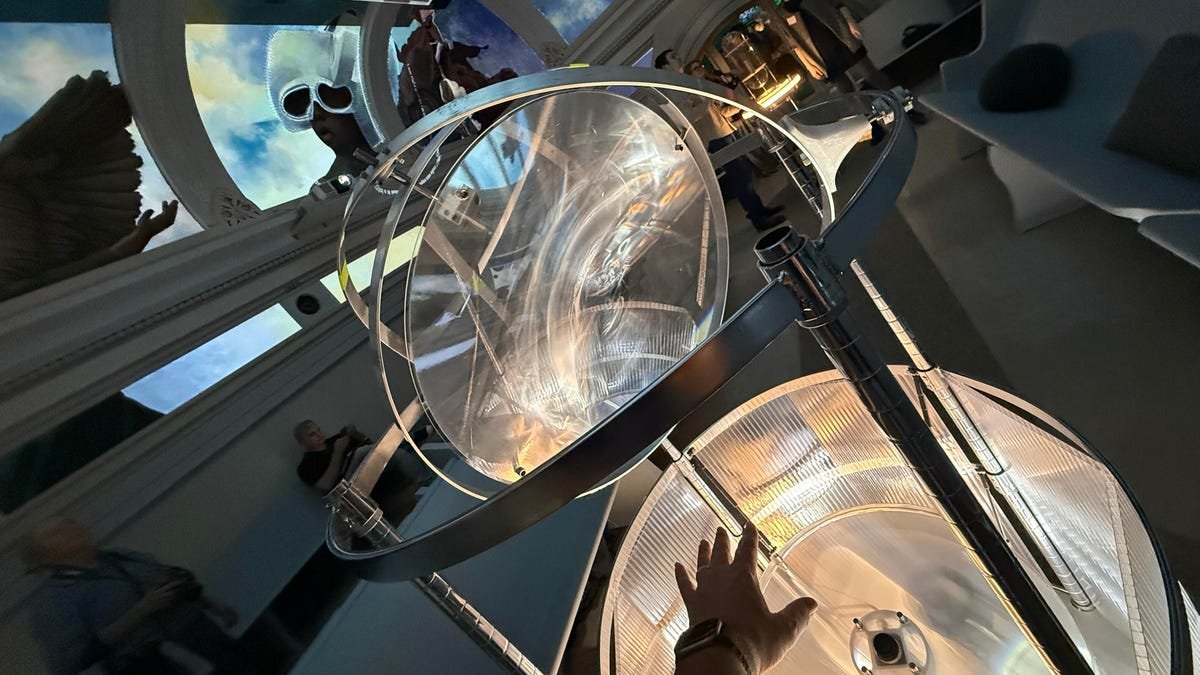
Upon entering, I encounter flights of stairs leading to rooms filled with vibrant murals and curious exhibits. Notably, one room boasts a domed ceiling adorned with a breathtaking mural that I can engage with using nearby instruments. Using a microphone, I see my words appear along the mural’s edges. As my hands reach into a chamber, their movement illuminates sections of the art. Suddenly, AI-generated descriptions reflect the interaction, enhancing the experience.
The installation features contributions from Meg Saligman and over 100 artists. This six-story venue draws comparisons to Meow Wolf and the Museum of Jurassic Technology with its imaginative atmosphere.
In one basement corner, a “skin horse” lurks, symbolizing the hidden narratives behind the art. Most impressively, every corner encourages exploration. Visitors can interact with objects, answer phones that share stories, or discover audio messages in unexpected places.
A significant highlight is the mural known as The Heavens, created by Saligman. This giant artwork dominates the fifth floor. Visitors can relax in angled seats while using tools designed by Spatial Pixel, a tech company focused on spatial computing. Their goal is to blend AI subtly into art without overshadowing the artists’ intentions.
As I delve deeper, I learn that Spatial Pixel was founded by innovators Violet Whitney and William Martin, who combine their expertise in design and architecture to redefine how we experience art. Their platform, Procession, allows for a dynamic interaction between visitors and the artwork. Whitney explains that their aim is to capture visitors’ spoken contributions, potentially transforming the mural based on audience engagement.
This evolving dialogue between visitors and art represents a shift in how we perceive both creativity and technology. Currently, many interactions are fleeting, with words and highlights fading after their initial moment. However, plans for the future aim to create lasting repositories of ideas, enriching the artwork over time.
Visitors can ponder fascinating questions: What if you could converse with a painting? How would that change our engagement with art? These inquiries extend beyond the Ministry of Awe, echoing broader discussions about ownership and agency in the AI art space.
In essence, The Ministry of Awe serves as a public laboratory for exploring these concepts. It emphasizes art’s role in developing technology while redefining how we interact with both. The experience leaves participants pondering deeper meanings of creativity, interaction, and the intricate dance between human expression and artificial intelligence.
Continue Your Tech Journey
Explore the future of technology with our detailed insights on Artificial Intelligence.
Stay inspired by the vast knowledge available on Wikipedia.
FashionTechV1
