

Quick Takeaways
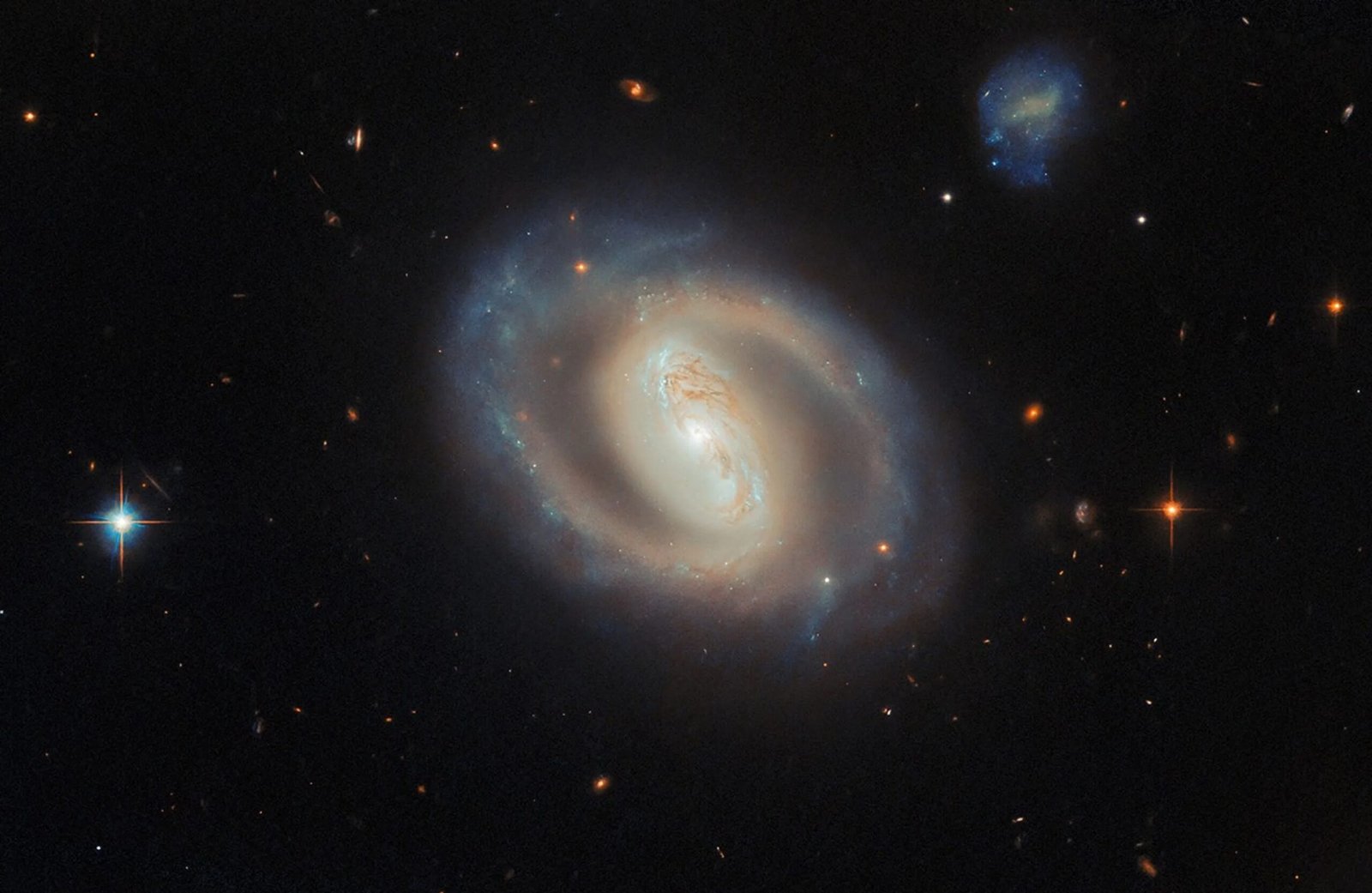
- NASA’s Hubble captured a stunning image of galaxy IC 486.
- IC 486 is located 380 million light-years away in Gemini constellation.
- It’s classified as a barred spiral galaxy with a central bar.
- Scientists study galaxies like IC 486 using advanced observational techniques.
A Gently Glowing Galaxy – NASA
A luminous swirl set against the deep black of space, the barred spiral galaxy IC 486 captivates observers with its soft, ethereal light. This stunning image, captured by the NASA Hubble Space Telescope on April 13, 2026, showcases the intricate beauty of the universe. IC 486 lies on the edge of the constellation Gemini, approximately 380 million light-years from Earth.
Understanding Barred Spiral Galaxies
IC 486 is classified as a barred spiral galaxy. Its most distinguishing feature is the bright central bar-shaped structure. This bar serves as a pivotal point from which its spiral arms unfurl. The arms wrap around the core in a smooth, almost ring-like pattern. This structure is not just visually striking; it plays a crucial role in the dynamics and evolution of the galaxy. The gravitational forces at work in the bar can help funnel gas and dust toward the center, potentially igniting new star formation.
Scientists study galaxies like IC 486 to gain insights into the cosmos. These observations contribute significantly to our understanding of galaxy formation and evolution. The shapes and structures of these celestial bodies can influence how stars and planetary systems develop over time.
The Role of Technology in Astronomical Discoveries
The remarkable clarity of the Hubble Space Telescope’s images demonstrates the impact of advanced technology on astronomical research. Each detailed observation allows scientists to gather crucial data. These data points enhance our understanding of the universe and prompt further questions.
Technological innovations improve not only the quality of the images we see but also the depth of analysis we can perform. As scientists refine their methods, they become capable of studying more distant galaxies and gathering more information about their characteristics. This ongoing research enables a broader understanding of the universe’s vast expanse and its many mysteries.
Through images like that of IC 486, we can appreciate not only the beauty of the cosmos but also the profound knowledge it holds. Each observation serves as a reminder of how much there is to learn as we gaze into the depths of space.
Stay Ahead with the Latest Tech Trends
Stay informed on the revolutionary breakthroughs in Quantum Computing research.
Stay inspired by the vast knowledge available on Wikipedia.
Space
