

Fast Facts
- NASA partners with Eta Space to test cryogenic fluid management in space.
- LOXSAT aims to develop in-space propellant depots for deep space missions.
- The mission will demonstrate 11 key cryogenic technologies over nine months.
- Data collected will enhance future spacecraft refueling for lunar and Mars missions.
Advancing Cryogenic Technology for Deep Space Missions
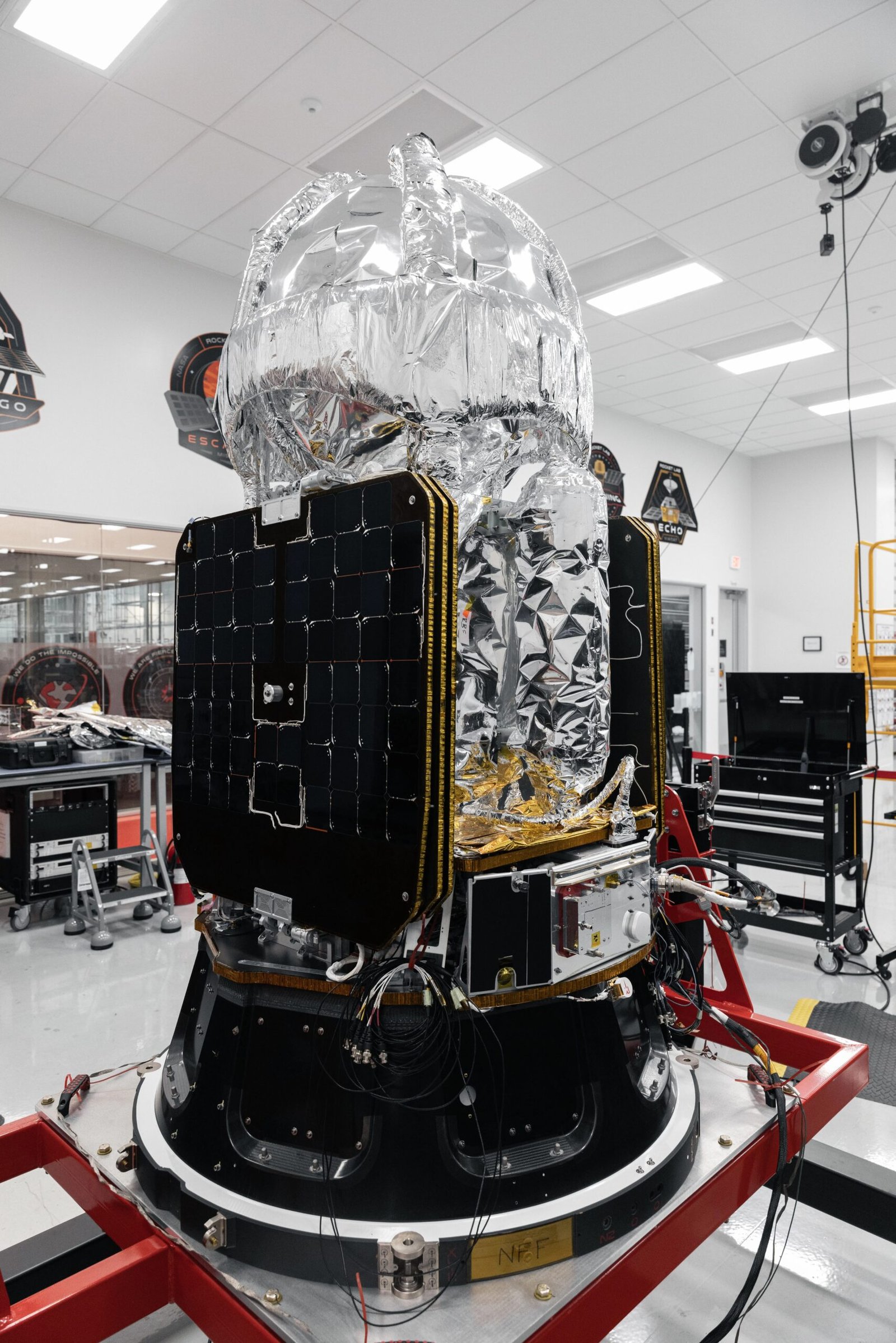
NASA is joining forces with Eta Space of Rockledge, Florida, to push the boundaries of deep space exploration through an innovative project called the Liquid Oxygen Flight Demonstration, or LOXSAT. This in-orbit technology demonstration aims to enhance the capability for future missions by testing advanced cryogenic fluid management technologies. The ultimate goal is to develop in-space propellant depots—akin to gas stations in space—that will support long-term exploration of the Moon, Mars, and beyond.
LOXSAT is set to embark on a nine-month mission to validate 11 unique cryogenic fluid management technologies. These technologies are crucial for overcoming the challenges associated with handling super-cold propellants in microgravity environments. Issues such as controlling boil-off, transferring propellant efficiently, maintaining tank pressure, and accurately gauging propellant levels must be resolved. The data collected during this mission will provide valuable insights for future in-space refueling systems.
Eta Space constructed LOXSAT under a NASA Tipping Point opportunity. The spacecraft will be launched aboard Rocket Lab’s Electron rocket, which will take off from Launch Complex 1 on New Zealand’s Mahia Peninsula, potentially starting as early as July 17.
The Collaborative Team Behind LOXSAT
A dedicated team from NASA is spearheading the LOXSAT initiative. The team includes members from the Cryogenic Fluid Management Portfolio Project, which spans across the Marshall Space Flight Center in Huntsville, Alabama; the Glenn Research Center in Cleveland; and the Kennedy Space Center in Florida. This collaborative effort reflects a comprehensive approach to advancing cryogenic technology as part of NASA’s Space Technology Mission Directorate. The portfolio includes over 20 distinct technology development activities aimed at enhancing capabilities for deep space exploration.
While the promise of in-space propellant depots offers exciting opportunities, it also brings practical challenges. The technology needs to prove its reliability and efficiency in demanding environments. Continued advancements in cryogenic fluid management will be critical in developing the infrastructure necessary for sustained human presence on other celestial bodies.
NASA’s LOXSAT stands at the forefront of this endeavor, underscoring a commitment to pioneering technology that can extend humanity’s reach into the cosmos. By investing in these capabilities today, NASA aims to lay the groundwork for a new era of space exploration.
To learn more, visit: NASA LOXSAT
Stay Ahead with the Latest Tech Trends
Dive deeper into the world of Cryptocurrency and its impact on global finance.
Stay inspired by the vast knowledge available on Wikipedia.
Space
