

Essential Insights
- A new giant dinosaur species, Nagatitan chaiyaphumensis, was discovered in Thailand.
- This species is the largest dinosaur found in Southeast Asia to date.
- Nagatitan lived during the Early Cretaceous, around 100-120 million years ago.
- Ongoing research aims to enhance global understanding of Southeast Asian dinosaurs.
The Discovery of Nagatitan: A Milestone in Southeast Asian Paleontology
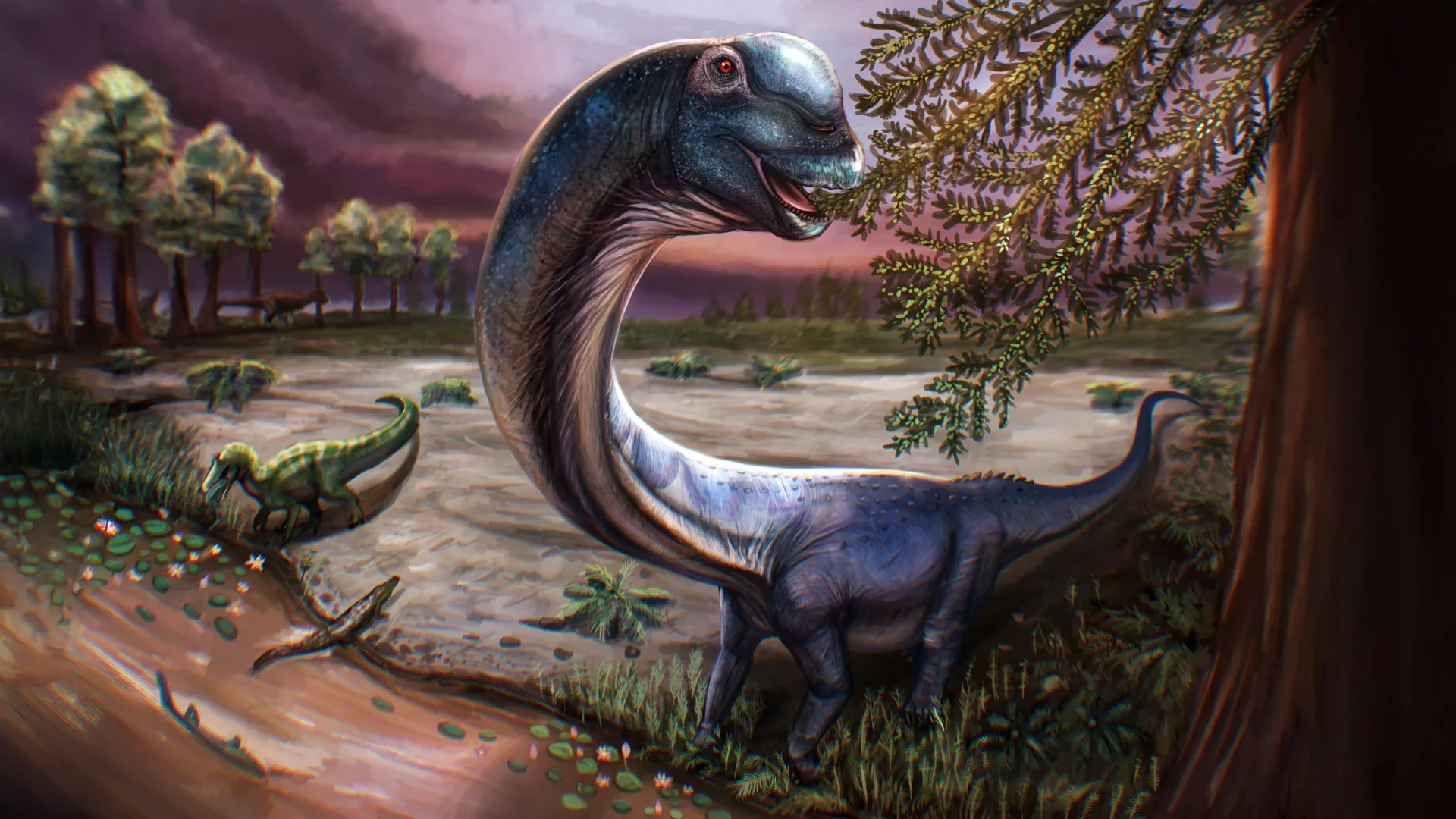
Researchers recently unveiled a remarkable discovery in Thailand: a gigantic new species of long-necked dinosaur named Nagatitan chaiyaphumensis. This dinosaur, measuring approximately 27 meters long and weighing around 27 tonnes, is now considered the largest ever found in Southeast Asia. The collaborative effort involved experts from University College London, Mahasarakham University, Suranaree University of Technology, and Thailand’s Sirindhorn Museum. They described the new species in the journal Scientific Reports, highlighting the significance of the find for understanding the region’s prehistoric fauna.
Fossils originating from a site near a pond in northeastern Thailand reveal much about this ancient creature. Researchers meticulously analyzed vertebrae, ribs, and limb bones. One front leg bone measured 1.78 meters, comparable to the height of a human. The name “Nagatitan” pays homage to the legendary Naga serpent in Thai mythology while emphasizing its status as a titan among dinosaurs. Scientists suggest that it lived during the Early Cretaceous period, about 100 to 120 million years ago, in what was likely a dry to semi-dry environment, ideal for these majestic herbivores.
Implications for Paleontology and Future Research
Nagatitan represents a significant addition to our understanding of sauropod diversity. This dinosaur belongs to the somphospondylan group and is classified within a lesser-known subgroup exclusive to Asia. Its discovery highlights the unique evolutionary path of dinosaurs in Southeast Asia, a region rich in fossil history but often overlooked.
The research surrounding Nagatitan indicates a growing interest in dinosaurs from Thailand. The country boasts a high diversity of dinosaur fossils, and researchers are committed to international collaboration. This dynamic not only enhances local expertise but also enlivens the global conversation on paleobiology. The future looks promising for many more discoveries, as other sauropod fossils await formal description, potentially leading to the identification of additional new species.
Scientists envision that the collaboration and advancements in research techniques, such as 3D scanning, will continue to propel their work forward while minimizing environmental impact. This commitment to innovation ensures that Southeast Asia remains a key player in the field of paleontology, fostering a new generation of researchers keen on unraveling the mysteries of the past.
Stay Ahead with the Latest Tech Trends
Dive deeper into the world of Cryptocurrency and its impact on global finance.
Stay inspired by the vast knowledge available on Wikipedia.
TechV1
