

Fast Facts
- New evidence shows early humans lived in rainforests 150,000 years ago.
- Findings challenge belief that humans only thrived in open environments.
- Advanced dating techniques reveal a previously unknown rainforest habitat.
- More research may uncover older sites and deepen understanding of human adaptability.
Breaking the Myths of Human Survival
Dense tropical rainforests once seemed unwelcoming to early humans. Researchers believed our ancestors primarily inhabited open grasslands and coastal areas. They thought early Homo sapiens avoided the thick African forests until much later in history. Recent discoveries challenge this long-held belief. Evidence from Côte d’Ivoire shows that humans thrived in rainforests about 150,000 years ago. This finding nearly doubles the previously accepted timeline for rainforest habitation.
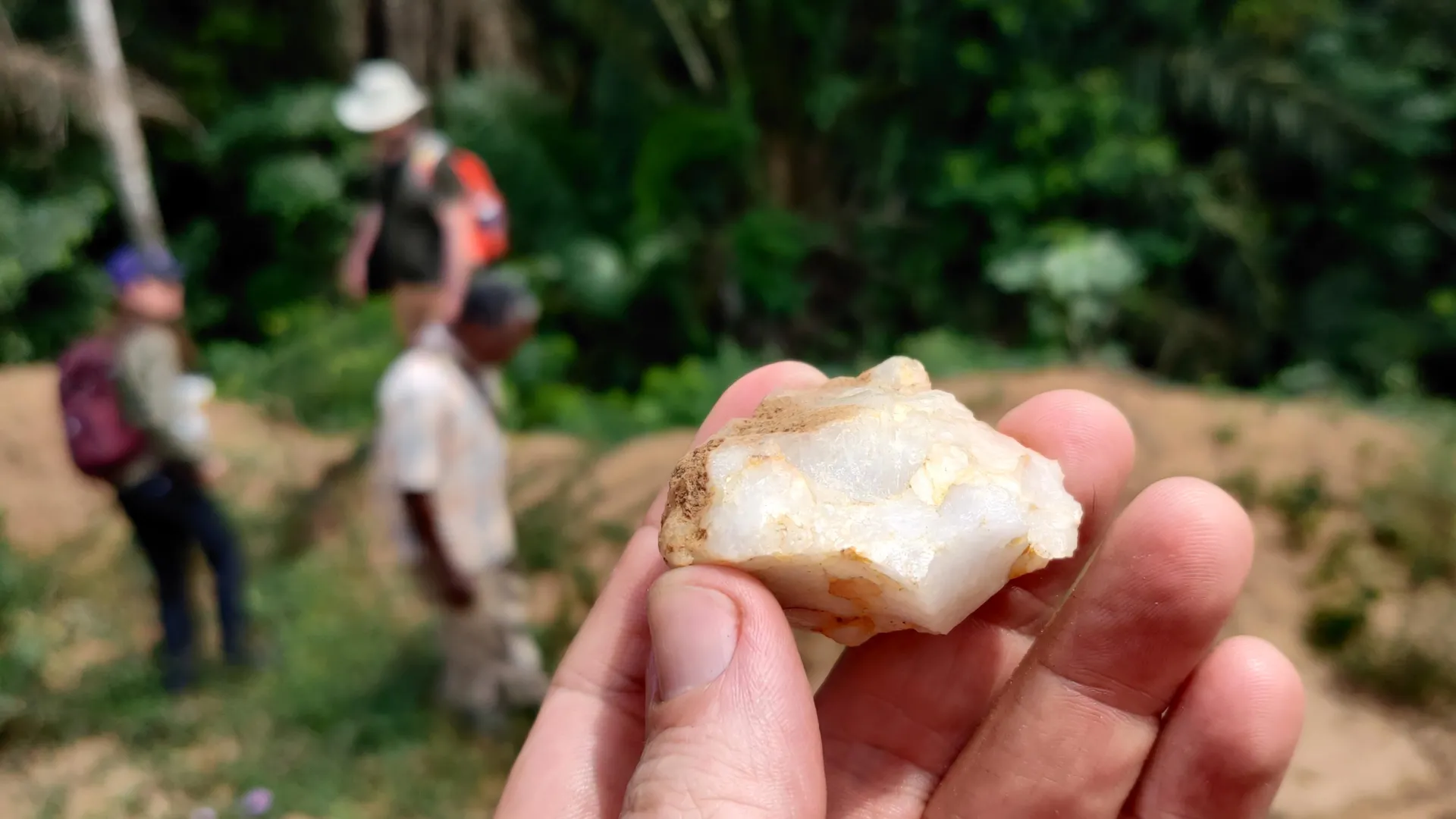
The excavation at Bété I produced layers of ancient stone tools. As early as the 1980s, scientists recognized the site’s potential but lacked the technology to date the tools accurately. Today’s methods—such as Optically Stimulated Luminescence and Electron-Spin Resonance—allowed researchers to pinpoint human activity far earlier than thought possible.
This discovery opens the door to new questions. What other rainforest sites might lie undiscovered in Africa? Many scientists suspect there is far more to learn about ancient human adaptation and survival.
Rethinking Human Diversity and Adaptability
The findings suggest that early humans were ecological generalists. They could adapt to various environments, from deserts to dense forests. This adaptability may have propelled Homo sapiens towards global dominance while other human relatives faltered. Researchers are also investigating how early populations affected tropical ecosystems. Did they cultivate land, hunt, or utilize fire in ways that shaped their environment?
The challenges of rainforest archaeology play a significant role in this research. Fossils rarely survive in warm, humid settings. Dense vegetation complicates excavation efforts. Many potential sites remain unexplored, raising hopes for older evidence of rainforest habitation.
As the understanding of human evolution evolves, the discovery in Côte d’Ivoire becomes critical. This research compels experts to reconsider long-standing theories about early human life. The findings underscore the importance of ecological diversity in shaping our species. More excavation and study may uncover additional chapters of our complex history.
Discover More Technology Insights
Stay informed on the revolutionary breakthroughs in Quantum Computing research.
Access comprehensive resources on technology by visiting Wikipedia.
TechV1
