

Fast Facts
Researchers uncovered details about Koharalepis jarviki, an ancient fish. Advanced imaging techniques revealed its skull and brain anatomy. The fish showed adaptations for life near the water’s surface. Findings enhance understanding of vertebrate evolution from water to land.
Unlocking Ancient Mysteries with Modern Technology
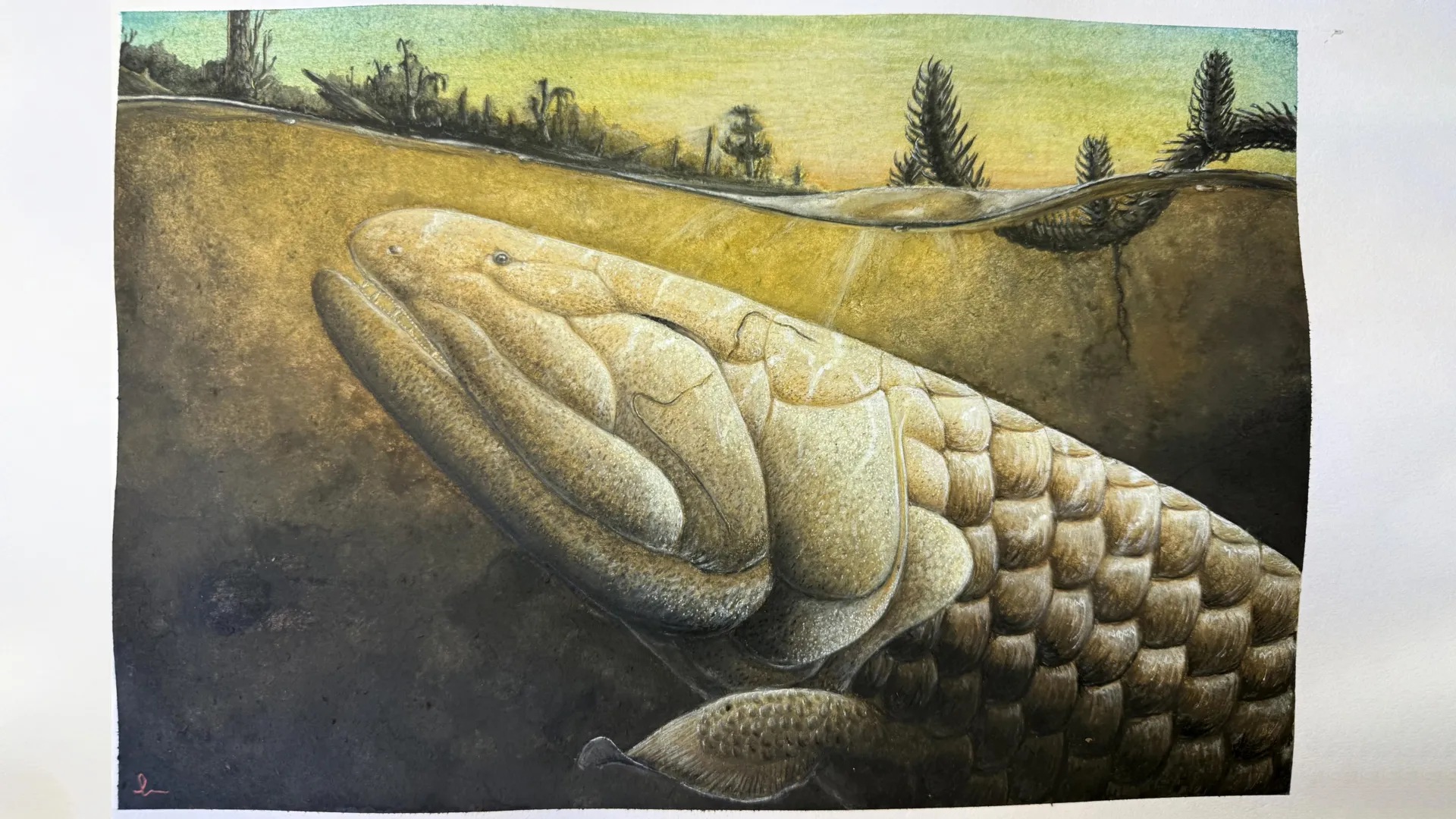
Recent research from Flinders University shines a light on a prehistoric fish that may provide crucial insights into our evolutionary past. The fossil of Koharalepis jarviki, a large predatory fish from the Devonian Period, offers a unique opportunity to explore how early vertebrates transitioned from water to land more than 380 million years ago. This single specimen, found in Antarctica’s Lashly Mountains, holds the key to understanding how some features of its anatomy closely relate to land animals, or tetrapods.
Researchers employed advanced neutron imaging technology to examine the internal structures of this ancient fish without damaging it. They uncovered vital information detailing the braincase and neuroanatomy of Koharalepis. These findings indicate that its brain shared characteristics with fish known to have made the shift to terrestrial life. Features such as openings in the skull for enhanced air intake and a light-detecting organ within its brain suggest that Koharalepis thrived in shallow waters, where oxygen availability was critical. Such adaptations may have played a pivotal role in its survival and eventual evolution.
The Importance of Fossil Studies for Understanding Evolution
Koharalepis, reaching around 1 meter in length, likely acted as an ambush predator in its freshwater habitat. Researchers highlighted that the fish’s relatively small eyes necessitated reliance on other senses, shaping its hunting strategies and behaviors. This insight fosters a deeper appreciation for how these early creatures interacted with their environment. The high-tech imaging techniques that enabled this research also illustrate the evolving role of technology in paleontology. By allowing scientists to examine fossils non-destructively, advanced imaging broadens our understanding of ancient life forms.
Such studies provide a critical context for the evolutionary narrative, showing how fish began to navigate their environments in ways that would ultimately lead to the emergence of land-dwelling animals. Koharalepis connects dots between ancient ecosystems and current evolutionary theory. Every new piece of evidence, such as this fossil, enhances our grasp of life’s trajectory on Earth, shedding light on the complex journey from water to land.
Discover More Technology Insights
Explore the future of technology with our detailed insights on Artificial Intelligence.
Access comprehensive resources on technology by visiting Wikipedia.
TechV1
