

Fast Facts
- A bright green fireball appeared near Mount Mayon, likely a meteor.
- Experts believe it burned up in the atmosphere, not impacting the volcano.
- The event coincided with volcanic lava flows, creating a rare spectacle.
- Such meteors remind us of Earth’s violent geological past and protections.
A Rare Encounter Between Land and Sky
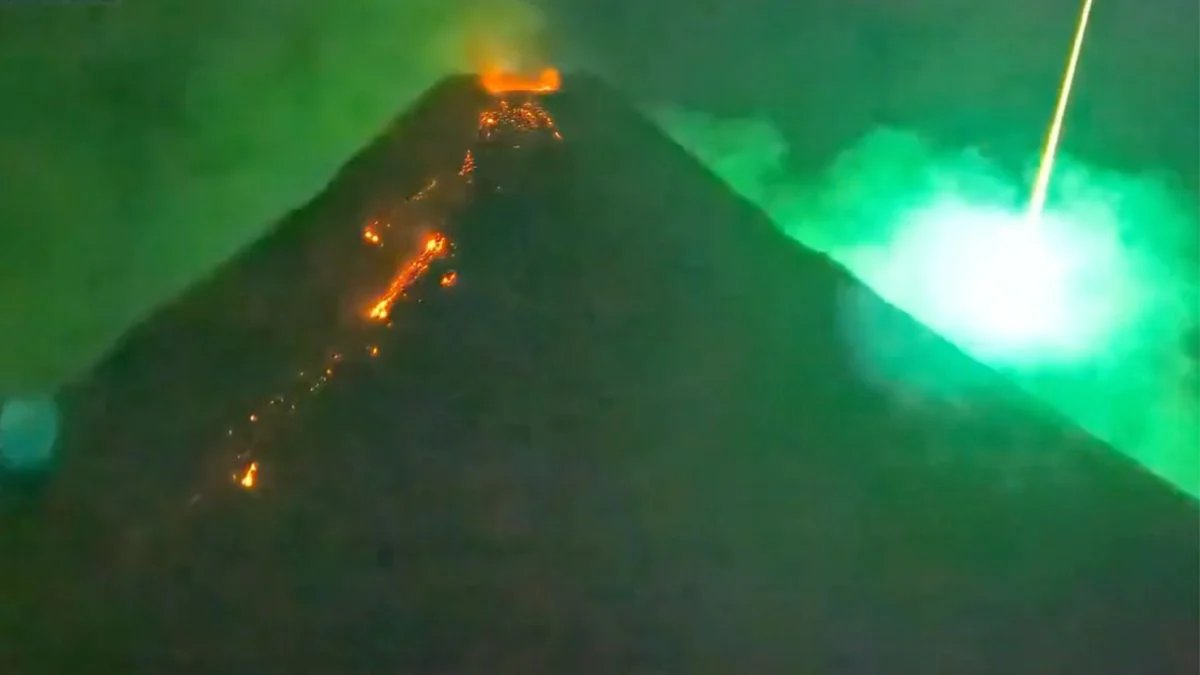
This week, a fascinating event occurred in the Philippines. As Mount Mayon, one of the world’s most active volcanoes, erupted with bright red lava flowing down its slope, a mysterious green fireball streaked across the night sky. Many people watched live footage from CCTV, dashcams, and nearby cameras. The Philippine Space Agency called it a “suspected meteor,” and experts examined the evidence. They concluded that the fireball likely burned up in Earth’s atmosphere before reaching the ground. If it had crashed into the volcano, it could have caused large rockslides and destruction. Instead, the atmosphere acted as a shield, vaporizing the object before it could impact Earth. This coincidence left onlookers both shocked and awed by the simultaneous display of fire from both the lava and the sky.
What This Event Tells Us About Earth’s Past and Present
The sight of the meteor and volcano provides a glimpse into Earth’s volatile history. More than 4 billion years ago, Earth was a hot, fiery place filled with volcanoes and rocky debris from the early solar system. Ancient volcanic activity and meteor impacts helped shape the planet we know today. The famous asteroid impact 66 million years ago, which led to the extinction of the dinosaurs, likely involved countless fireballs lighting up the sky. The recent meteor event, though small, serves as a modern echo of those dangerous times. While scientists keep track of large asteroid threats, most meteors burn up in our atmosphere. This natural process offers some protection, reminding us of Earth’s resilience against space hazards.
Continue Your Tech Journey
Stay informed on the revolutionary breakthroughs in Quantum Computing research.
Discover archived knowledge and digital history on the Internet Archive.
QuantumV1
