

Quick Takeaways
- NASA satellites detect numerous wildland fires in Australia’s Northern Territory each year.
- Fires may appear larger in afternoon images due to smoke plumes.
- Land managers use prescribed burning to reduce destructive fires during dry season.
- Ongoing research shows prescribed burning lowers high-intensity fires and emissions.
Fighting Fire With Fire: NASA Science in Action
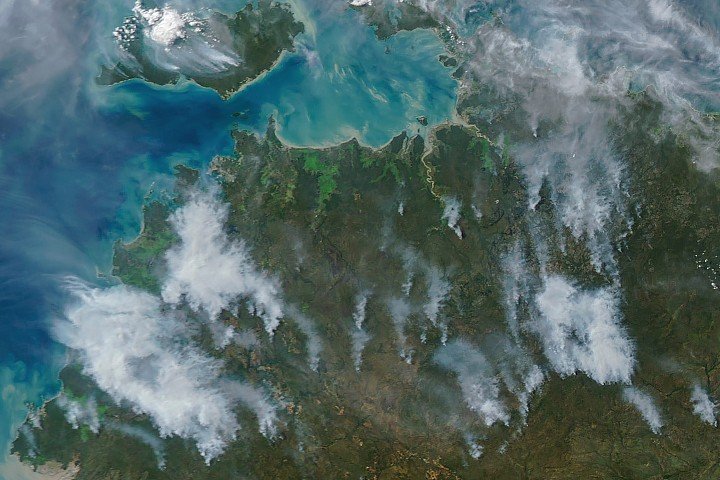
In Australia’s Northern Territory, wildfires are a natural part of the landscape. Each year, from May to June, NASA satellites detect numerous wildland fires in regions like the Top End and Arnhem Land. During this time, satellite imagery shows expansive smoke plumes and wide-reaching blazes, especially in the afternoons. However, these fires are often part of a strategic firefighting technique known as prescribed burning.
The Science of Prescribed Burning
NASA’s Aqua satellite captured an image on May 28, 2026, revealing significant smoke and fire activity in this area. But this isn’t just random wildfire; it is a carefully planned approach to managing the land. Land managers light fires intentionally, often in the mornings. As the day progresses, updrafts and moderate winds carry the smoke away, creating the impressive plumes seen from space.
The goal is to burn fire-adapted grasses, underbrush, and scattered trees in a controlled manner. This management practice draws on both Indigenous traditions and modern science. Programs like the West Arnhem Land Fire Abatement and Arnhem Land Fire Abatement exemplify this fusion. By intentionally reducing fuel loads and creating firebreaks early in the dry season, these efforts aim to prevent more severe fires later on.
The Impact of Technology and Tradition
Research indicates that prescribed burns are successfully shifting fire activity from late to early in the dry season. Studies show a reduction in high-intensity fires and associated emissions. This positive outcome stems from the integration of traditional Indigenous knowledge with satellite monitoring technologies. These advancements allow land managers to make informed decisions about when and where to burn.
While controlling fire may seem paradoxical, it’s a practical solution for managing Indigenous landscapes. The combined knowledge from decades of land stewardship and cutting-edge technology creates more resilient ecosystems. As climate change intensifies fire risks, the importance of such strategies increases. The practical benefits of prescribed burning extend beyond fire control; they contribute to biodiversity conservation and community livelihood stability.
Through this responsible approach, managing fire through fire itself proves to be a pivotal strategy in the fight against destructive wildfires.
Continue Your Tech Journey
Explore the future of technology with our detailed insights on Artificial Intelligence.
Access comprehensive resources on technology by visiting Wikipedia.
Space
