

Fast Facts
- Biotechnology thrives on discoveries from Yellowstone’s hot springs and extremophiles.
- Thomas Brock’s research on Thermus aquaticus led to revolutionary PCR technology.
- PCR has enabled advances in disease testing, drug development, and environmental monitoring.
- NSF continues funding innovations, leading to breakthroughs like CRISPR and sustainable products.
From Yellowstone’s Heat: The Origins of Biotechnology
The biotechnology sector has deep roots in unexpected places. When most people think of biotechnology, they image advanced labs developing life-saving drugs. They picture agricultural innovations created to feed a growing world. Yet a considerable part of this story starts in the geothermal heat of Yellowstone National Park.
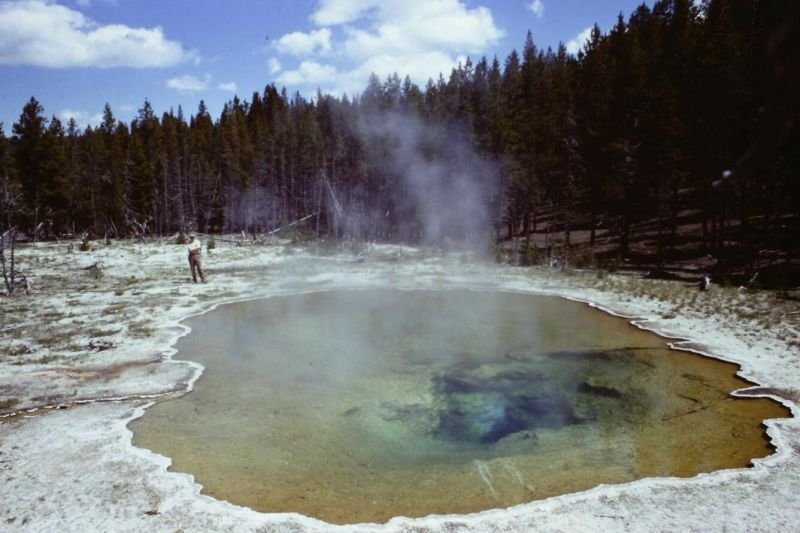
In 1964, microbiologist Thomas Brock stumbled upon vibrant blue-green algae thriving in Yellowstone’s hot springs. His curiosity led him to investigate how life managed to survive in such extreme conditions. Funded by a grant from the National Science Foundation, Brock discovered a heat-loving bacterium named Thermus aquaticus.
This discovery triggered global interest in extremophiles—microorganisms that thrive in harsh environments. Brock’s research opened doors for other scientists, leading to advancements in DNA replication techniques. The isolation of a highly efficient DNA polymerase from T. aquaticus paved the way for the polymerase chain reaction (PCR) method. Kary Mullis, at Cetus Corporation, used these enzymes to develop PCR, revolutionizing molecular biology and diagnostics. This chain of events set the foundation for groundbreaking developments across medical and environmental fields.
Driving Innovation in Biotechnology
Today, the biotechnology market continues to flourish. The global valuation reached nearly $800 billion in 2021, with projections surpassing $1.68 trillion by 2030. The impact of this sector extends from health care to agriculture and environmental monitoring. PCR technology has enabled accurate disease testing and identification across various domains, including criminal justice and conservation efforts.
Federal investment, particularly from the NSF, plays a crucial role in fostering innovations. Their support ensures ongoing research into biotechnologies, including groundbreaking methods like CRISPR. This gene-editing technology has applications that range from developing drought-resistant crops to medical advances in treating genetic disorders. The NSF also funds startups, providing vital resources to transform scientific discoveries into practical applications.
Yellowstone remains a focal point for discoveries. Recent findings, such as unique bacteria that convert sunlight into energy, highlight the park’s potential as a wellspring for future technological innovations. As researchers continue to explore Yellowstone’s geothermal ecosystems, they may unearth the next big breakthrough in biotechnology.
The ongoing story of biotechnology reflects the importance of curiosity and exploration. Current and future developments will depend on continued support for scientific inquiry, reminding us that groundbreaking innovations often emerge from the most unexpected places.
Continue Your Tech Journey
Stay informed on the revolutionary breakthroughs in Quantum Computing research.
Discover archived knowledge and digital history on the Internet Archive.
TechV1
