

Summary Points
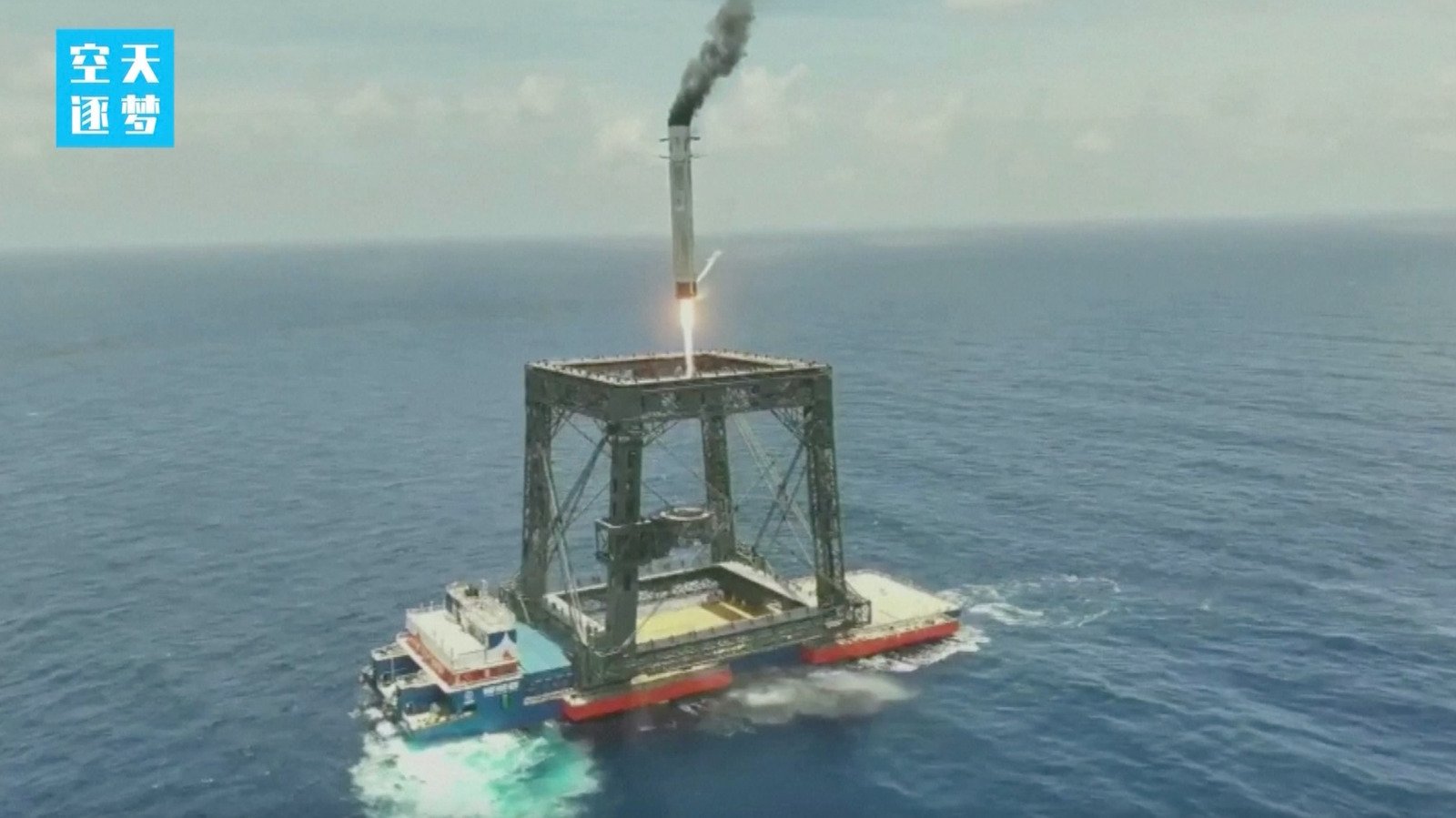
- China successfully caught a Long March 10B rocket booster at sea using a novel net system—a world first—marking a major milestone in reusable rocket technology.
- The maiden flight of the rocket, developed by CALT, was captured intact, with plans to reuse it in another flight by year’s end.
- This achievement positions China as the second country globally to recover a reusable rocket, aiming to bolster its space ambitions by 2030.
- Despite this progress, China’s launch frequency remains behind the US, which conducted 193 orbital launches last year, highlighting ongoing challenges in scaling space operations.
China Achieves a Major Space Milestone
China has taken a big step forward in space technology. It has become just the second country in the world to successfully recover a rocket booster. This achievement was made during the launch of the Long March 10B rocket, which was launched into the sea. The booster was caught using a net, a first in space history. The event was televised and showed the rocket slowly descending until it was captured. This success is important because it shows China’s growing ability to repair and reuse rocket parts.
This breakthrough was made possible by China’s space team, called CALT. They used a new method to catch the rocket. Instead of using landing legs or mechanical arms like some other space companies do, CALT used a net with hooks. The rocket was caught intact and is ready to be used again. They hope to reuse it in another flight by the end of this year. This demonstrates China’s commitment to becoming a space superpower.
Some experts see this as a sign of China’s stronger future in space. Despite launching fewer rockets than the US, China is making quick progress. Its approach helps cut costs and could speed up space missions. The success also offers hope that more space companies worldwide will adopt reusable rocket technology.
How Reuse Changing Space Travel
Reusing rocket parts is a game-changer for space travel. It reduces costs because companies don’t need to build a new rocket for each trip. This makes space missions more affordable and accessible. For example, SpaceX, a private US company, made a splash with its Falcon 9 rocket, which can land and be used again. China’s new method adds to this progress with a different and innovative approach using a net.
The use of a net to recover a rocket is a historic moment. It shows that space agencies are exploring many ways to make recovery easier and more efficient. CALT’s success, on its first try, proves that different ideas can work well. This kind of innovation pushes the entire industry forward and opens up new options for future space efforts.
Despite the advancements, China still launches fewer rockets than the US. Last year, the US launched 193 times, while China only attempted 92. However, China’s faster development of new technologies may help it catch up. The ability to quickly reuse boosters offers long-term benefits and strengthens China’s plans to become a global space leader by 2030. The new achievements suggest better, more cost-effective space travel is on the horizon.
What Reusability Means for the Future
Recreases costs and environmental impact because fewer rockets need to be built for each mission. It also boosts sustainability in space exploration. As China and other countries develop better recovery methods, space travel could become more frequent and less expensive.
China’s use of the net for booster recovery presents an interesting alternative to traditional landing methods. It offers new possibilities, especially in challenging environments like open seas. This innovation could inspire other space agencies to try different recovery systems, leading to more safety and efficiency.
The progress made by CALT and other companies shows that reusable rockets are becoming the norm. As technology improves, we can expect more frequent and affordable space missions. This will benefit scientific research, commercial ventures, and even future voyages to the Moon and Mars. Reusable technology holds the promise of making space more accessible for everyone, not just government agencies. China’s recent success on the global stage marks an exciting chapter in space exploration’s future.
Expand Your Tech Knowledge
Explore the future of technology with our detailed insights on Artificial Intelligence.
Access comprehensive resources on technology by visiting Wikipedia.
CellphonesV1
