

Summary Points
- NASA astronaut Chris Williams returned after an eight-month ISS mission.
- The crew safely landed in Kazakhstan, orbiting Earth 3,856 times.
- Williams conducted scientific research aiding cancer treatment and space manufacturing.
- The ISS enhances understanding of long-duration human spaceflight for future missions.
Return from an Eight-Month Mission
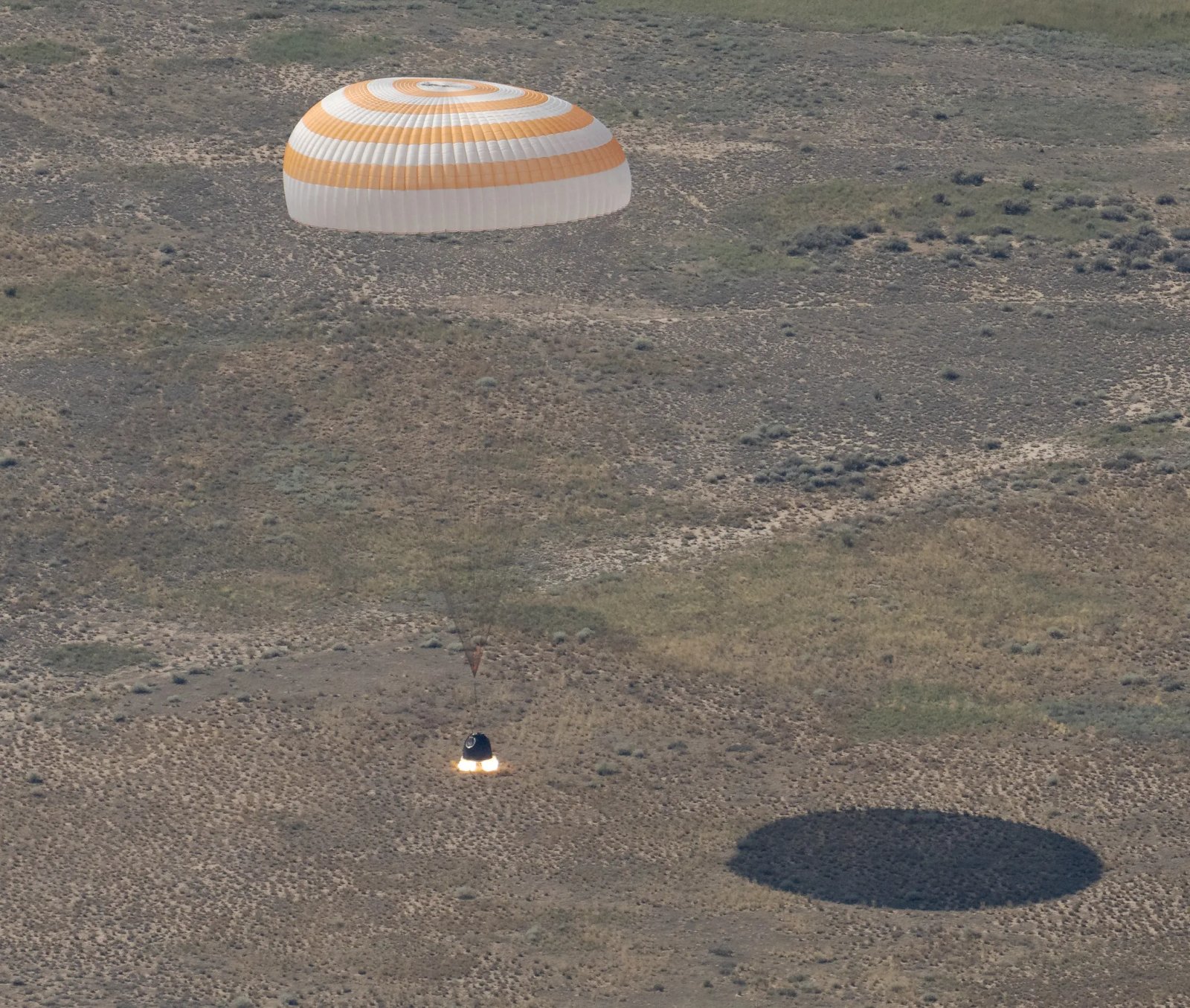
NASA astronaut Chris Williams, along with Roscosmos cosmonauts Sergey Kud-Sverchkov and Sergei Mikaev, safely returned to Earth after an impressive eight-month mission aboard the International Space Station (ISS). Their Soyuz MS-28 spacecraft landed at 5:27 a.m. CDT on Sunday, southeast of Dzhezkazgan, Kazakhstan. The crew’s journey began with their launch on November 27, 2025, marking an extensive stay marked by scientific advancement and international collaboration.
During their 241 days in space, the crew orbited Earth 3,856 times, covering over 102 million miles. This mission was Williams’s and Mikaev’s first, while Kud-Sverchkov completed his second mission. Their work aboard the ISS focused on critical scientific research and technology demonstrations that have the potential to benefit life on Earth and beyond.
Scientific Endeavors and Future Missions
Williams played a significant role in various scientific investigations, including pioneering research aimed at developing new cancer treatments. He also contributed to advancements in in-space manufacturing, particularly for materials essential to high-performance computers and electronics. Notably, Williams conducted two spacewalks, vital for preparing power system upgrades and repairing the Canadarm2 robotic arm’s joint.
The continuous human presence aboard the ISS for over 25 years has led to significant scientific breakthroughs unattainable on Earth. This ongoing research is crucial for understanding and addressing the challenges of long-duration space missions. It also lays the groundwork for future explorations to the Moon, as part of NASA’s Artemis program, and eventually to Mars.
Following post-landing medical checks, the crew will be transported by helicopter to Karaganda, where NASA recovery teams are stationed. Williams will then embark on a flight back to the Johnson Space Center in Houston. For more details on the ISS and its research, visit www.nasa.gov/station.
Discover More Technology Insights
Explore the future of technology with our detailed insights on Artificial Intelligence.
Stay inspired by the vast knowledge available on Wikipedia.
Space
