

Essential Insights
- Memory chip production has transformed, driven by AI’s demand for data.
- SK Hynix, a leading memory producer, faces stock market volatility challenges.
- Despite recent sell-offs, Hynix’s revenue and profits have soared significantly.
- Tech giants continue investing in AI, raising concerns about future memory supply.
Memory Chips Reinvented for the A.I. Age
For decades, the business of making memory chips felt like mining raw materials. Companies sunk massive investments into factories, bracing for boom-and-bust cycles. Most hoped that over time, good years would outnumber bad ones. Memory chips often sat in the shadows, overshadowed by the glamorous data-processing brains of computers. But everything shifted with the rise of artificial intelligence. Its hunger for massive datasets transformed the memory chip market, changing its stature and profitability.
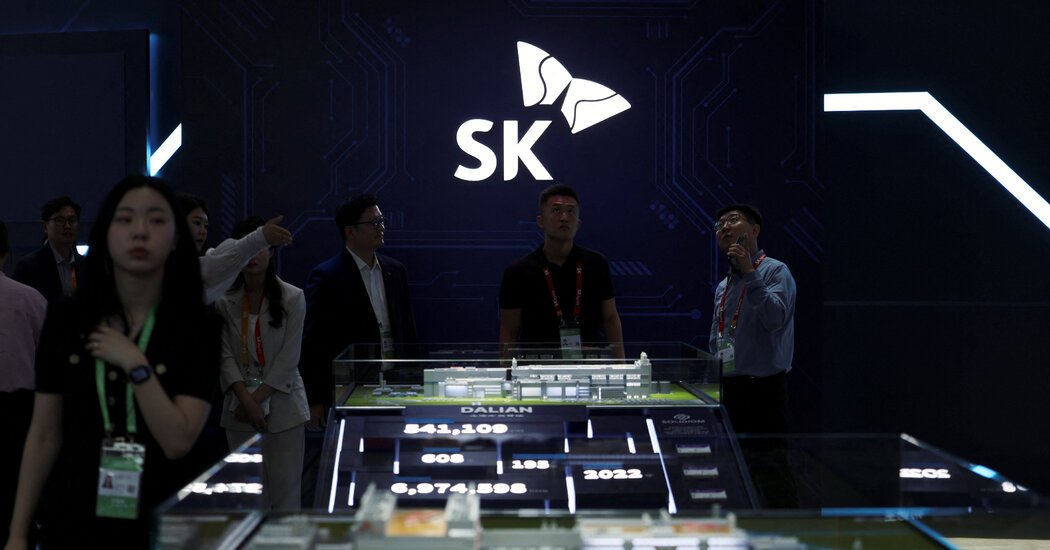
SK Hynix stands as the prime example of this transformation. As a leading producer of high-speed memory, it plays a crucial role in A.I. technology. Recently, skepticism surrounded the A.I. market, sending Hynix shares plunging nearly 50 percent from their recent peak. Still, investors see potential. Hynix raised $26.5 billion in the largest-ever U.S. share sale by a foreign company. Its latest quarterly report, showing a staggering 557 percent boost in operating profit, further solidifies hope within the sector.
In contrast, forecasts slightly missed expectations, leading to a sharp drop in stock prices. Analysts remain wary of the wild stock-market fluctuations affecting tech giants, especially with growing competition from China. A slow-down in A.I. investments would leave Hynix particularly vulnerable. Nevertheless, company executives report that orders from major clients remain strong. They see no signs of a slowdown.
The Road Ahead: Challenges and Opportunities
Despite some concerns, Hynix boasts a robust financial foundation. With over $60 billion in cash reserves and operating profit margins reaching 76 percent, the company remains well-positioned. Executives attribute any shortfalls in expected profits to ambitious investments aimed at staying competitive in A.I. chipmaking. These investments are likely to yield higher sales and profits down the road.
The journey to Hynix’s success has not been easy. Founded in 1983, the company faced insolvency and ownership changes. It only gained meaningful traction after joining the SK Group, a major South Korean conglomerate. Competing against much larger Samsung fueled Hynix’s quest for innovation. Developing advanced stacking techniques has allowed quicker data transfer between chips and processors. As A.I. technology gained momentum, those efforts matured just in time to position Hynix as a key supplier for Nvidia’s processors.
Today, the A.I. boom ripples across the memory chip market, raising prices and profits for all. However, the most lucrative demand comes from high-speed chips essential for A.I. applications. Hynix leads this market, holding 58 percent of high-bandwidth chip sales. However, it sees Samsung closing the gap.
Major tech companies worry about supply shortages jeopardizing A.I. progress. Many are locking in long-term contracts regardless of high prices. Some analysts speculate about a potential “supercycle,” where rising demand keeps driving prices higher for years to come. Others remain skeptical, warning of challenges if the A.I. bubble bursts.
The current landscape showcases both profound opportunities and potential pitfalls. Hynix thrives at a time of unprecedented demand, yet the road ahead could hold uncertainties. Balancing the aggressive push for innovation with market realities will be vital for maintaining its leading position in the evolving semiconductor field.
Continue Your Tech Journey
Dive deeper into the world of Cryptocurrency and its impact on global finance.
Access comprehensive resources on technology by visiting Wikipedia.
TechV1
