

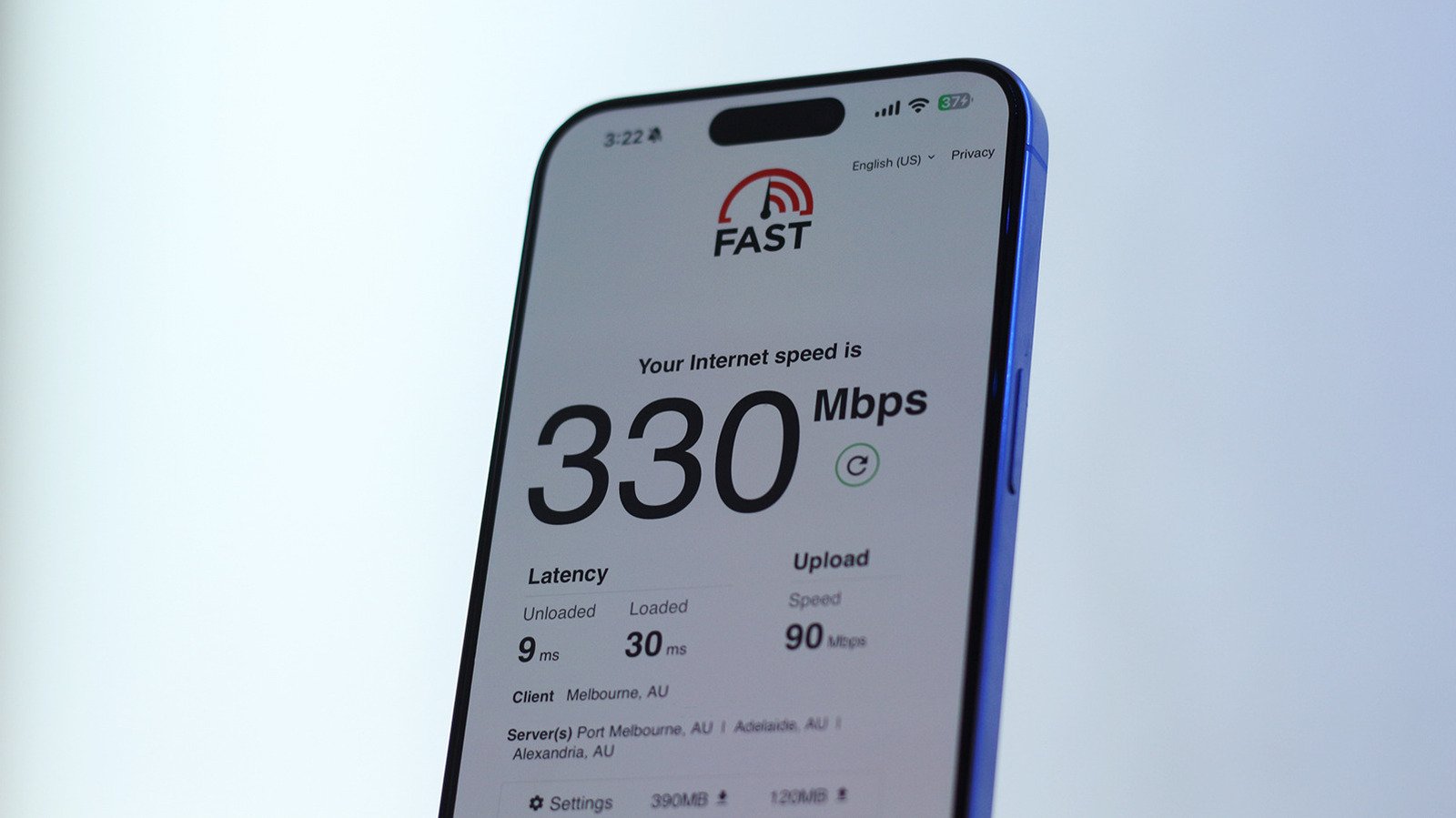
Fast Facts
- Poor Wi-Fi signal can significantly slow down your internet experience.
- Central router placement and antenna adjustments can improve coverage and speed.
- Using the 5GHz Wi-Fi band enhances download speeds compared to 2.4GHz.
- Enable Smart Queue Management to reduce delays from multiple device usage.
You don’t have to live like this.
### Optimize Device Placement and Connection
Slow downloads drive frustration. You can pinpoint issues affecting your internet performance. First, consider your router’s location. Move it to a central area in your home. Avoid placing it near appliances like microwaves or cordless phones, which can interfere with the signal.
For devices that support it, always connect to the 5GHz band if available. This band often delivers faster speeds than the more common 2.4GHz band. Ensure your devices can tap into the higher potential of gigabit speeds.
### Manage Network Traffic Efficiently
Bufferbloat can ruin online experiences. This issue arises when many devices use bandwidth simultaneously. Video streaming, large downloads, or online gaming can lead to latency problems. Identify if bufferbloat affects your performance by using an online latency test.
If you notice spikes, enable Smart Queue Management (SQM) on your router. This feature optimizes data flow, keeping latency low during high usage. Access it through your router’s settings, usually found under Quality of Service (QoS).
Don’t overlook routine maintenance. A simple power cycle can clear glitches and improve performance. Check for firmware updates regularly to ensure optimal functionality. If persistent issues remain, a factory reset might be necessary. Just remember, doing this will erase all settings, requiring a fresh configuration.
Expand Your Tech Knowledge
Explore the future of technology with our detailed insights on Artificial Intelligence.
Explore past and present digital transformations on the Internet Archive.
TechV1
