

Top Highlights
- NASA’s Moon Base progress includes collaborations with commercial partners for lunar landers.
- Multiple robotic missions are deploying scientific instruments and testing systems for human habitation.
- Key landers from Blue Origin, Firefly, Intuitive Machines, and Voyager are in advanced testing stages.
- These efforts aim to establish a resilient, sustainable, and scientific lunar outpost.
Progress in Lunar Cargo Landers and Robotic Missions
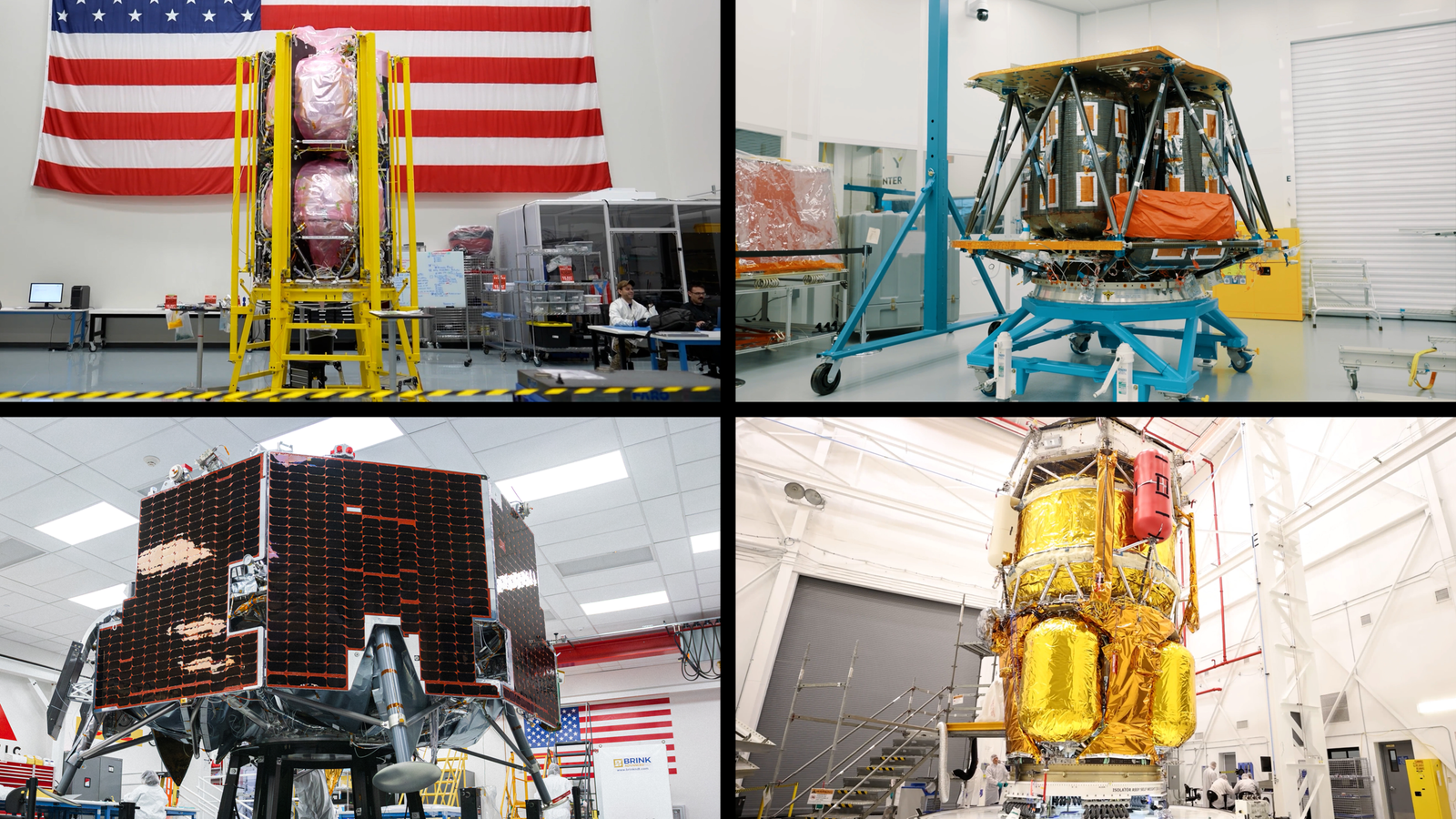
NASA is making significant strides toward establishing a sustainable human presence on the Moon. Central to this effort are cargo landers developed by commercial partners like Blue Origin, Firefly Aerospace, Intuitive Machines, and Voyager Lunar Systems. These companies aim to deliver essential infrastructure to the Moon’s South Pole by 2028, forming the backbone of the upcoming Moon Base. Their progress marks a major breakthrough in commercial lunar delivery, setting the stage for long-term lunar exploration.
Blue Origin’s Blue Moon MK1 lander is currently undergoing rigorous testing, including a thermal-vacuum assessment at NASA’s Johnson Space Center. The goal is to ensure it can operate under lunar-like conditions. The lander’s structure, propulsion, and avionics are fully assembled, with upcoming tests to verify wiring and payload integration. Once complete, Blue Moon will showcase its ability to land precisely, characterize the lunar environment, and test autonomous systems for future missions.
Firefly Aerospace is advancing its Blue Ghost Mission 2, which builds upon its earlier success. This mission involves a larger, dual-spacecraft setup designed for operations on the far side of the Moon. Carrying three NASA payloads, it aims to explore a quiet lunar region, study far side geology, and investigate the early universe during the cosmic Dark Ages. Firefly’s reusable subsystems and autonomous landing technology strengthen its capability to support ongoing and future Moon Base missions.
Intuitive Machines is progressing on its IM-3 lunar mission, which includes deploying its Nova-C lander along with Altus-1, its lunar data-relay satellite. This mission is part of a broader effort to develop regular cargo and scientific deliveries. The company recently completed thermal vacuum tests to prepare for lunar descent, with engine integration and hot fire testing on the horizon. The IM-3 mission will explore the mysterious magnetic anomalies called lunar swirls, helping expand scientific understanding of these unique features.
Voyager Lunar Systems is preparing its Griffin-1 lander for a late-2026 launch. Currently undergoing environmental testing at NASA’s Jet Propulsion Laboratory, the lander is designed to carry the largest commercial payload ever sent to the lunar surface. It will transport five NASA payloads mounted on the FLEX Lunar Innovation Platform rover, focusing on surface mobility and long-duration lunar operations. Final assembly is underway after successful mass property testing, with launch preparations ongoing at Cape Canaveral.
NASA is also collaborating with Northrop Grumman on three new technology demonstration payloads. These tests will explore survival systems for lunar night conditions, shared surface power infrastructure, and essential avionics. The demonstrations aim to advance the agency’s surface operations capabilities, supporting the long-term goal of human exploration with reliable technology that can endure the Moon’s extreme environment.
Together, these advances in lander development and robotic missions are key parts of NASA’s broader strategy. They create a steady supply chain for lunar materials, test new technologies, and build a reliable surface infrastructure. By 2029, these efforts will help lay a resilient foundation for a permanent, sustainable presence on the Moon.
Expand Your Tech Knowledge
Explore the future of technology with our detailed insights on Artificial Intelligence.
Explore past and present digital transformations on the Internet Archive.
Space
