

Top Highlights
- Lindsey Waitt, from Worcester, Massachusetts, fulfilled her childhood dream at NASA.
- She studied aerospace engineering and worked in defense before returning to NASA.
- Waitt watched Artemis I launch and now supports Artemis II as a test engineer.
- She is the only female among 14 test project engineers on the Artemis team.
The Journey from Childhood Dreams to Professional Reality
Lindsey Waitt grew up in Worcester, Massachusetts, dreaming of working for NASA. Her fascination with space started early, sparked by a memorable middle school visit to Worcester Polytechnic Institute (WPI). There, she met astronauts Michael Lopez-Alegria and Albert Sacco, Jr., who shared their experiences and discussed experiments on the Moon. She posed for photos and got autographs, feeling inspired by their stories. Little did she know, her own journey into space would begin with similar dreams.
Waitt pursued her passion by studying engineering at WPI. She earned a Bachelor of Science degree in Mechanical Engineering with a focus on aerospace. After college, she worked as a systems engineer on radar flight test missions for a defense contractor. Although she succeeded in this role, she realized her true desire was to work in space.
Her family life, including traveling around the world while her husband served in the U.S. Army, didn’t slow her down. She kept following NASA’s missions from afar. During this period, she earned a master’s degree in Space Operations from the University of Colorado. After twelve years, she made a bold decision: to pursue her first love—working for NASA—despite doubts from others about her timing.
Watching NASA’s astronauts soar into space, such as the launch of the first commercial crew mission in 2020, fueled her enthusiasm. Her family even staged pretend rocket launches from their yard. In 2022, she moved to Florida and joined a small satellite company, continuing her climb toward her goal.
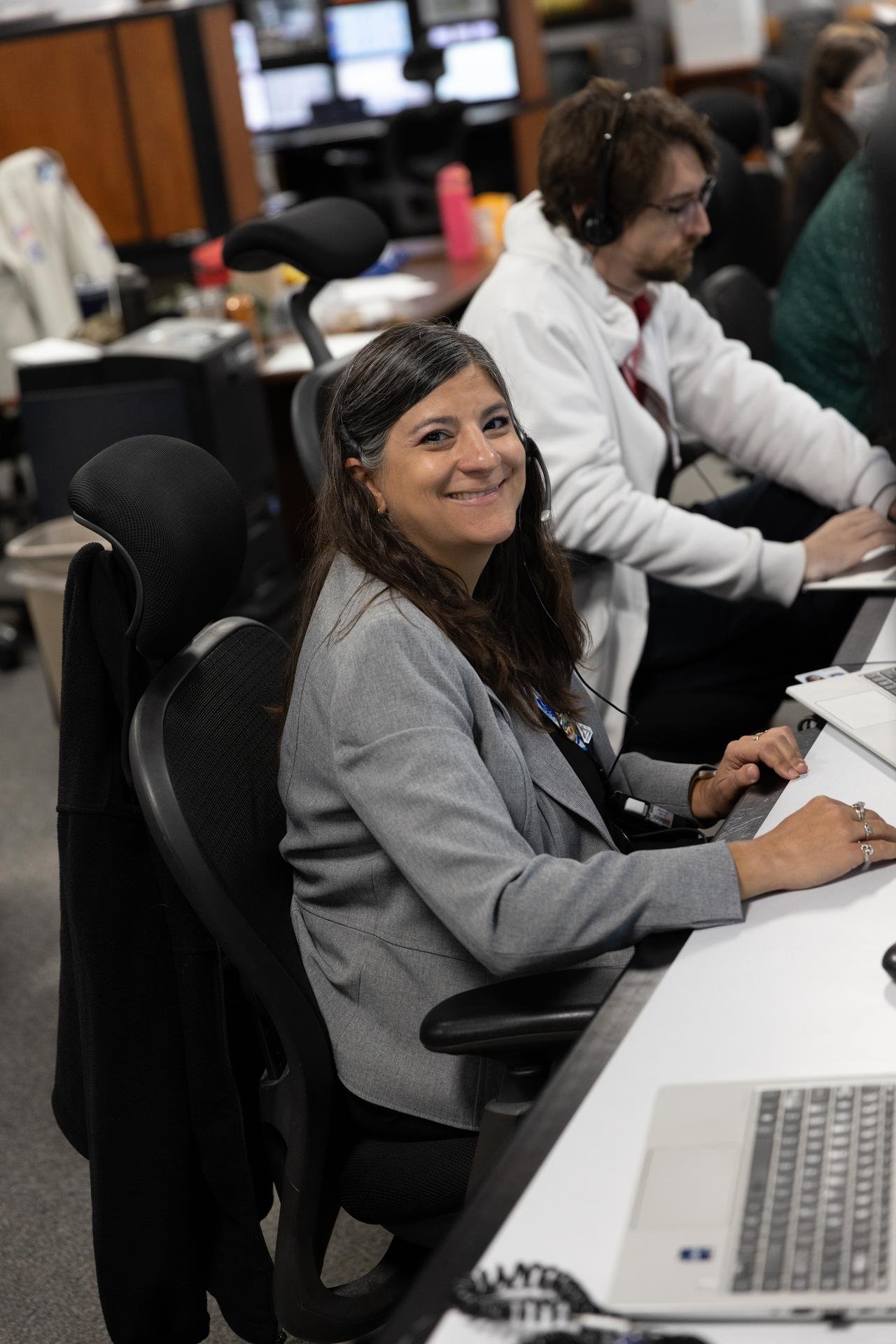
In 2024, her persistence paid off. She began working at Kennedy Space Center as a test project engineer during the Artemis II launch. This role puts her at the heart of NASA’s operations, coordinating technical tests and launch activities. She sat on the launch console during pre- and post-launch procedures for the Space Launch System and Orion spacecraft, witnessing history as humans returned to the Moon after over 50 years.
When NASA announced plans to bring more staff in-house, Waitt seized the chance. She applied and became a NASA civil servant supporting the Artemis launch team. She now plays a vital role in preparing for Artemis III, the mission that will send astronauts around the Moon once again. As the only woman among 14 test project engineers on the team, she has been welcomed warmly and feels proud of her contributions. Her story exemplifies determination and the power of pursuing a lifelong dream.
Turning Dreams into Reality on the Cosmic Stage
Waitt’s journey highlights the importance of persistence and adaptability. Her early inspiration came from meeting astronauts, but her path involved study, work, and thoughtful risk-taking. She balances practical career choices with her deep passion for space exploration. Her work as a test project engineer underscores the significance of technical expertise and teamwork in launching spacecraft safely and successfully.
The Artemis programs are central to NASA’s return to lunar exploration. They mark technological progress and represent a new chapter in human space travel. For professionals like Waitt, participating in these missions is more than a job; it’s a chance to be part of history. Her story encourages others to follow their interests, even if the path is long or uncertain. With dedication and focus, the pursuit of a dream—like working for NASA—can turn ambitions into lived reality. The universe may be the limit, but her journey shows that even the most distant dreams can come true with perseverance.
Expand Your Tech Knowledge
Explore the future of technology with our detailed insights on Artificial Intelligence.
Stay inspired by the vast knowledge available on Wikipedia.
Space
