

Top Highlights
- Stomp rockets are safe, affordable toys perfect for introducing kids to space hobbies.
- They operate manually, using simple air pressure, with no batteries or complex parts.
- These rockets promote outdoor activity and STEM learning for children aged three and up.
- While limited in complexity, they provide a fun, safe, and inexpensive way to explore rocketry.
When it comes to space exploration, rockets are probably one of the coolest things you’ll learn about as a kid. Zooming off into space, traveling to new planets, and searching for potential life—all these ideas feel like they belong in science fiction. For any space enthusiast, rockets evoke wonder. For children, they ignite curiosity and can mark the start of a lifelong fascination with science and engineering. While real rockets are complex and expensive, kids can begin exploring the fundamentals with model rocketry. Among the most child-friendly options are Stomp Rockets, which provide a safe, affordable, and engaging introduction to this exciting hobby.
Accessible and Educational Fun for Young Creators
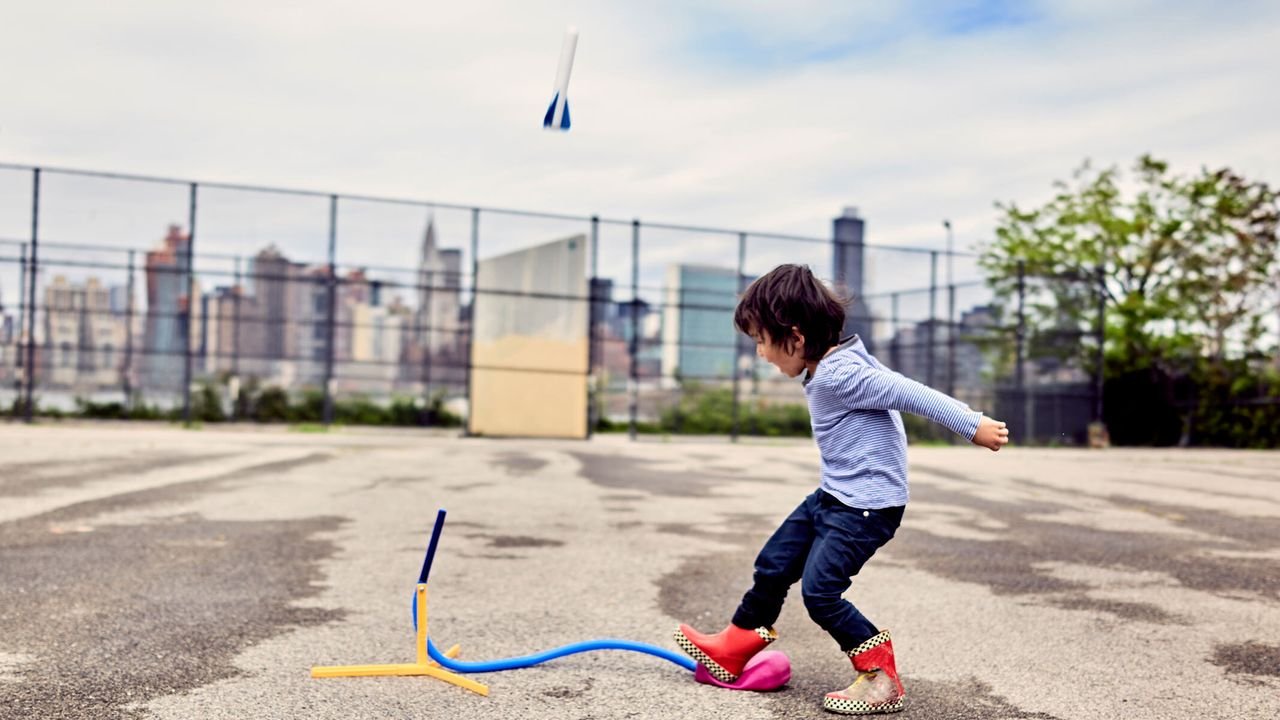
Stomp Rockets are simple devices propelled into the air by a child’s stomp on a launch stand. Usually composed of foam and plastic, they are attached to a flexible hose connected to a launcher. When you step down, compressed air shoots the rocket upward, sometimes reaching heights of up to 400 feet, depending on the model and the child’s effort. This straightforward mechanism requires no batteries, electronics, or assembly, making them ideal for outdoor play and quick setups. The minimal design emphasizes ease of use while still providing a high degree of fun.
These rockets are 100% kid-powered, encouraging children to practice independence and confidence. Each package typically includes multiple foam rockets, a launch stand, and a launcher, ensuring repeated play without the need for adult intervention. For parents and educators, their simplicity is reassuring; there are no ignition systems or hazardous fuels, and no complex parts to assemble or maintain. This makes Stomp Rockets accessible for children as young as three, depending on the model, introducing them gradually to concepts of physics, motion, and aerodynamics in an engaging manner.
Safety, Cost, and Future Opportunities
Safety is a major advantage of Stomp Rockets. Since they are propelled solely by children’s force, there’s no need for adult supervision during launch, aside from typical outdoor safety precautions, such as ensuring a clear landing area. Their design minimizes risk—no hot engines, no hazardous chemicals. The foam construction ensures gentle landings and reduces the chance of injury or damage if a rocket lands unexpectedly.
The affordability of Stomp Rockets enhances their appeal. Ranging from $15 to $30, they cost significantly less than traditional model rocket kits, which often require additional tools, engines, and building time. Refills are inexpensive, usually around $10–$20 for extra rockets. This low cost makes Stomp Rockets an attractive gift and a practical educational tool for classrooms and at-home learning.
However, their limitations should be acknowledged. Stomp Rockets cannot reach the heights of more advanced models, nor do they come with parachutes or other safety landing devices. They lack the ability to be modified or customized extensively. For children interested in more complex rocketry, NASA’s resources and controlled environments provide opportunities to learn about engineering, safety, and advanced propulsion. While Stomp Rockets serve as an excellent starting point, moving on to more sophisticated model or real rockets should involve adult guidance and safety protocols.
The simplicity, safety, and affordability of Stomp Rockets make them an excellent first step in exploring space exploration and engineering. They foster active play, curiosity, and foundational science understanding, all while keeping the experience fun and safe for young learners.
Discover More Technology Insights
Dive deeper into the world of Cryptocurrency and its impact on global finance.
Discover archived knowledge and digital history on the Internet Archive.
Space
