

Quick Takeaways
NASA is combining government and private efforts for future space stations. The ISS operations are expected to continue until around 2030. NASA’s Commercial LEO Destinations program aims to develop private space stations post-ISS. Mission Control at Johnson handles complex spacecraft operations and training.
Transforming NASA’s Astronaut Training with Commercial Space Stations
NASA’s astronaut training hub is one of the most advanced centers for preparing astronauts for space missions. Located at Johnson Space Center in Houston, it has historically focused on training for the International Space Station (ISS) and future lunar projects. But as the ISS approaches its retirement date around 2030, and private space stations become more prominent, the training facilities are evolving in significant ways.
The emergence of commercial space stations is set to reshape how NASA trains astronauts. Instead of relying solely on government-operated modules, NASA is increasingly partnering with private companies like Nanoracks, Blue Origin, and Northrop Grumman. These companies are developing their own space modules and stations, which will serve as new training grounds. NASA’s Commercial Low Earth Orbit Destinations (CLD) program offers grants and contracts to encourage the growth of these commercial stations.
Private modules and stations, like those being built by Vast Space and tested by Bigelow Aerospace, will offer real-world environments for astronauts. These stations are designed to be flexible, allowing NASA and other space agencies to train for different scenarios. As these commercial stations come online, NASA will adapt its training programs to include them. The goal is to teach astronauts how to operate in a wide range of new environments, ensuring safety and efficiency before crew members head into space.
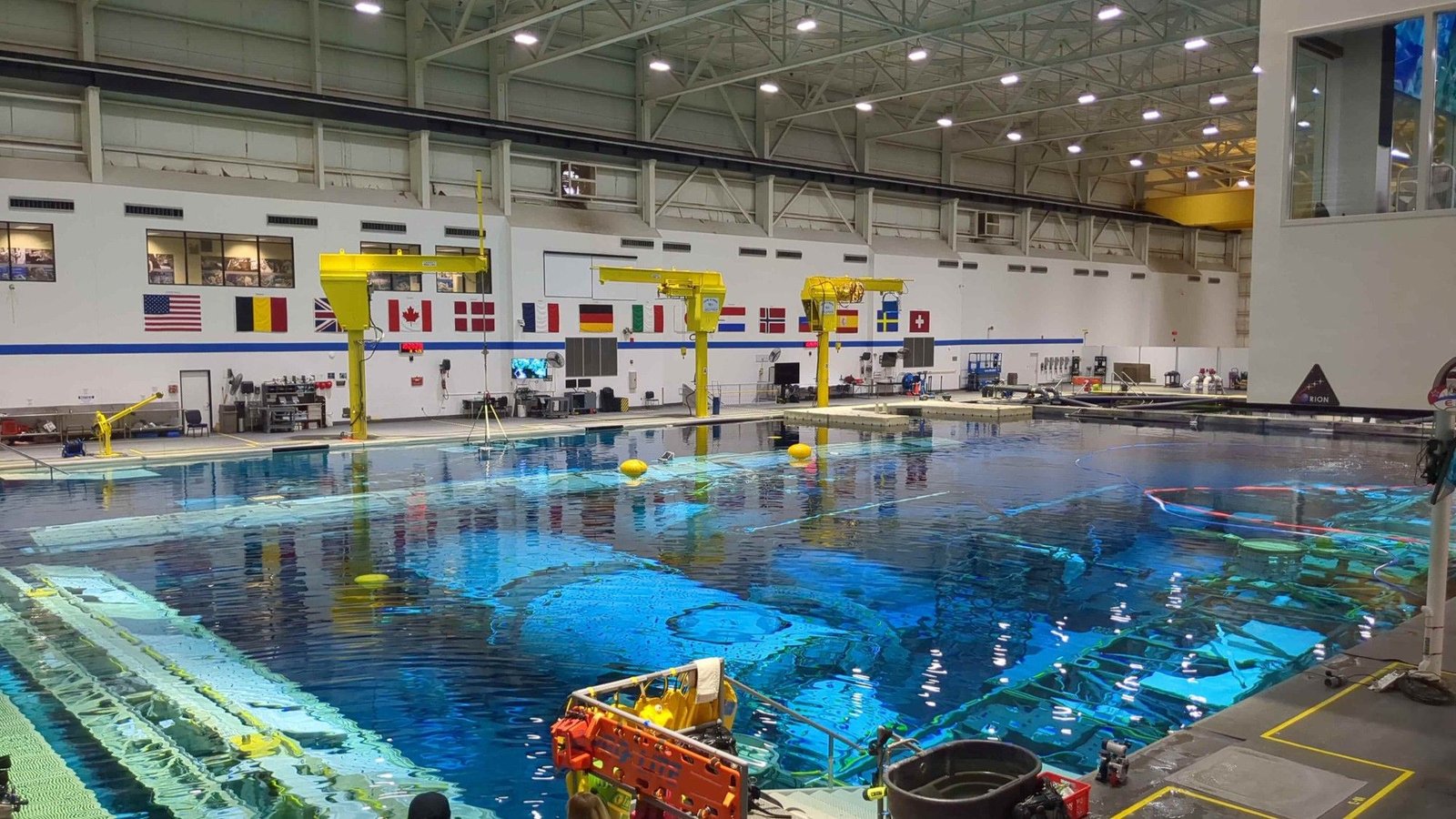
Building on current capabilities, NASA plans to continue offering training in existing facilities, such as the Neutral Buoyancy Laboratory and Mission Control at Johnson. However, as more private modules are added, the space agency will need to incorporate these new platforms into its training. This expansion will include simulations, emergency procedures, and mission rehearsals aboard commercial stations, providing astronauts with hands-on experience in the environments they will encounter.
The shift toward commercial stations also means adapting methodologies. For example, astronaut training for emergency procedures, like fire drills or medical incidents, will be tested on new hardware. Specialized facilities like Building 9, which supports astronaut prep and hardware testing, will host modules from different companies to test durability and operations. This collaborative approach not only broadens training options but also promotes innovation in how astronauts learn to navigate emerging space habitats.
As private space stations become part of NASA’s training landscape, the agency’s Mission Control will continue to play a vital role. It will oversee operations across various modules and stations, with controllers becoming experts in different environments. This division of labor is crucial for supporting crews on multiple platforms and ensuring mission safety. The facilities and personnel at Johnson Space Center are prepared to work across an expanding network of hybrid environments combining government and commercial assets.
The future of astronaut training is set to be more versatile. Facilities like Building 9 and the Neutral Buoyancy Laboratory are already supporting private industry and exploring new ways to simulate space conditions. As the ecosystem of space stations grows, NASA’s training hubs will become more adaptable, integrating new hardware and procedures. While the core goal remains the same—preparing astronauts for space—the methods and environments are poised for significant change.
Stay Ahead with the Latest Tech Trends
Learn how the Internet of Things (IoT) is transforming everyday life.
Discover archived knowledge and digital history on the Internet Archive.
Space
