

Fast Facts
- Astronomers discovered Elias 2-24 b, the youngest exoplanet, less than one million years old.
- The planet was found 450 light-years away using archival data and advanced telescopes.
- Findings challenge existing planet-formation models, revealing missing processes in how planets form.
- Future telescopes, like NASA’s Roman Space Telescope, will improve detection of newborn exoplanets.
Scientists Find Youngest Exoplanet on Record — A ‘Newborn’ Named Elias
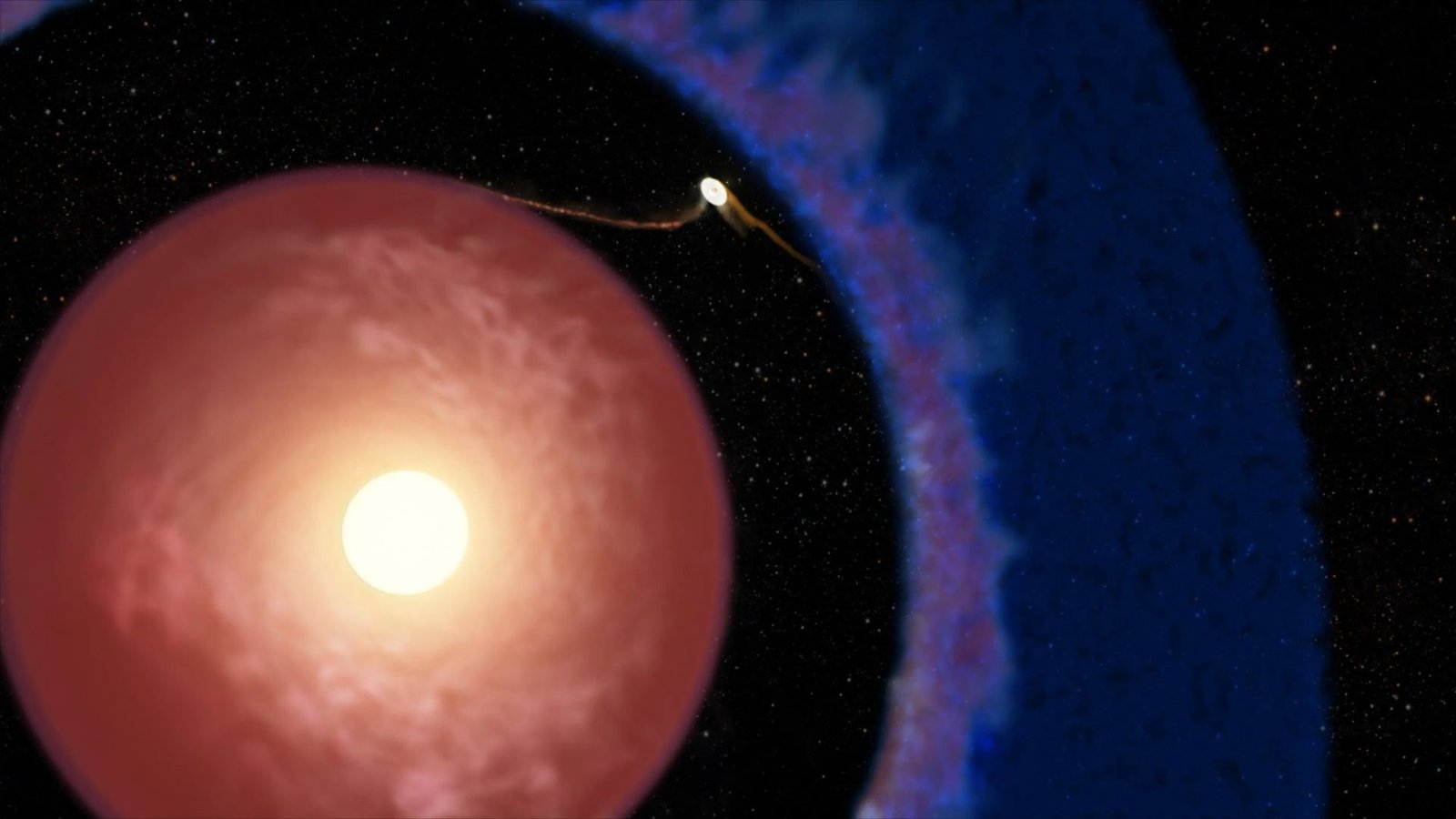
Astronomers have uncovered the youngest exoplanet ever found. This “newborn” world was hidden in old data archives. The planet, named Elias 2-24 b, is about as massive as Jupiter. Despite its size, it is remarkably young—less than a million years old. Elias 2-24 b lies 450 light-years away from Earth, still nestled in the dusty, swirling gas where it formed.
Previously, the record for the youngest exoplanet was shared by four planets, all over 5 million years old. Researchers found Elias 2-24 b to be a much younger world, providing new insights into planet formation. Experts say this discovery challenges current models, which already struggle to explain the older planetary babies.
How the Discovery Unfolded
A team led by Andrea Bernardi, a doctoral candidate at Universidad Diego Portales in Chile, combed through old data from the W.M. Keck Observatory in Hawaii. They targeted Elias 2-24, a star surrounded by a disk of material. This disk contains gas and dust — the raw materials for planet formation.
Their analysis confirmed earlier clues from the Atacama Large Millimeter/submillimeter Array (ALMA) and the European Southern Observatory’s Very Large Telescope. These observations showed a gap in the debris disk around Elias 2-24. Such gaps often indicate planets forming within the disk.
The team used Keck’s coronagraph to look deeper. Coronagraphs block out starlight, making it easier to see faint objects nearby. By examining multiple star systems with debris disks, they looked for planets hiding in the gaps. Their prediction was that planets should be present in those gaps, carving out the regions. This led to the discovery of Elias 2-24 b.
Bernardi explained, “The planets should be found within the gaps since they are carving them. And that’s exactly where we found Elias 2-24 b.” Finding a planet this early in its life offers scientists a rare glimpse into the earliest stages of planet formation.
Cieza added, “The galaxy keeps creating stars and planets. We can see this process in theory, but current telescopes miss many of these young planets. We are mostly blind to them right now.”
Implications for Future Discoveries
This breakthrough shows that even our best models need adjustments. Elias 2-24 b is at the limit of what current telescopes can detect, but new technology promises better detection in the future. Researchers are excited about upcoming instruments like NASA’s Nancy Grace Roman Space Telescope. Launched on August 30, it features the most advanced coronagraph ever sent to space. This tool aims to study exoplanets and their atmospheres more thoroughly.
Bernardi noted, “Most discoveries rely on combining data from multiple telescopes. With new tools like the Roman Space Telescope, detecting planets like Elias 2-24 b will become easier, opening doors to understanding planet formation in much more detail.” The recent study describing this work was published on September 16 in The Astrophysical Journal Letters.
The discovery of Elias 2-24 b marks a significant step forward. It offers an unprecedented look at a newborn planet and promises more such breakthroughs as technology advances. The universe continues to reveal its mysteries, one young planet at a time.
Continue Your Tech Journey
Learn how the Internet of Things (IoT) is transforming everyday life.
Explore past and present digital transformations on the Internet Archive.
Space
