

Top Highlights
- The 2026-2027 challenge focuses on integrating new energy systems in aircraft.
- Teams design LNG-powered cargo aircraft meeting specific performance and cargo requirements.
- Participants must develop a detailed Engineering Design Notebook without AI assistance.
- Submissions are evaluated for impact, originality, practicality, and clear communication.
2026-2027 DWU High School Engineering Challenge: Fueling Innovation in Aviation
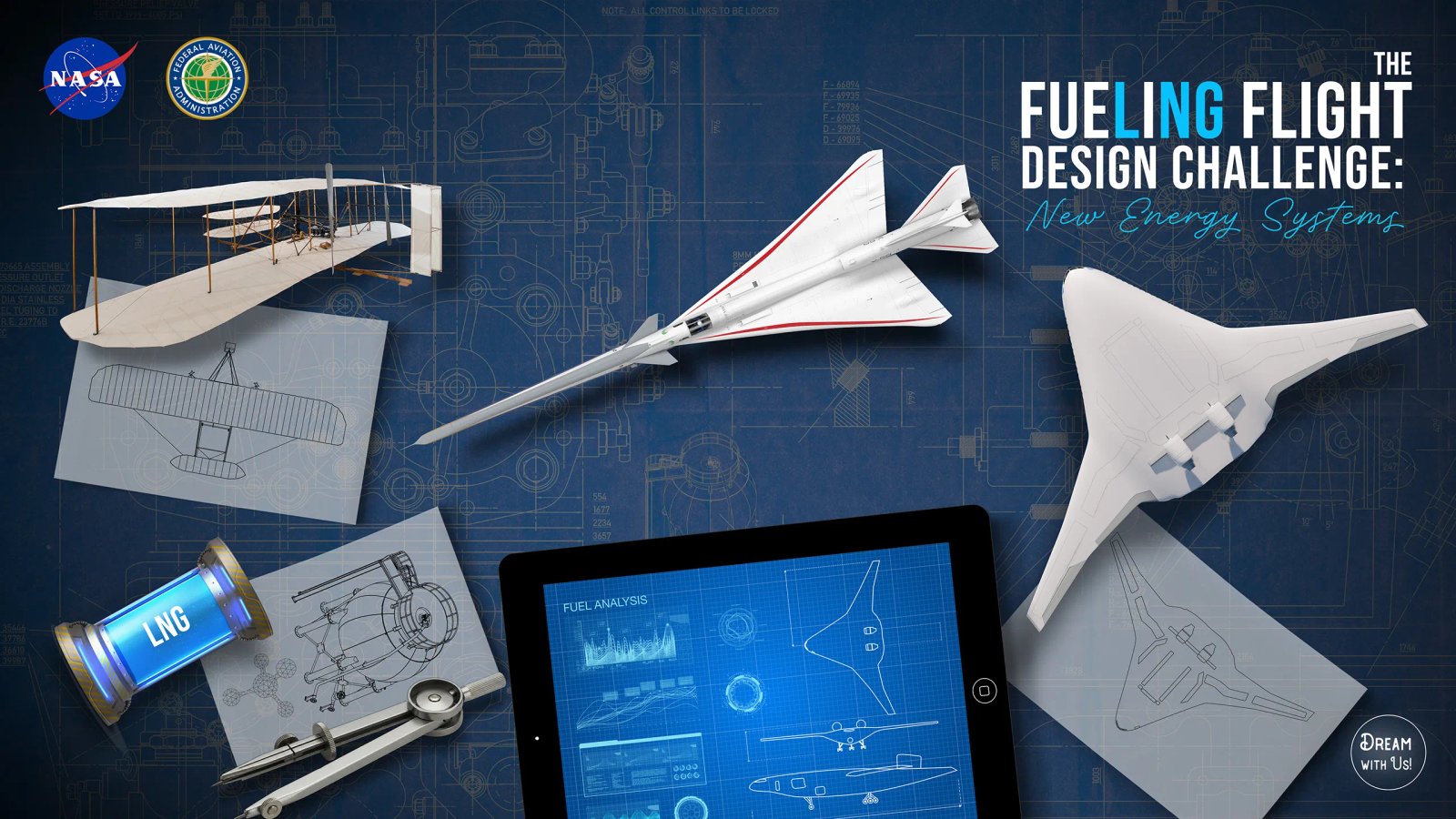
The 2026-2027 Dream With Us (DWU) High School Engineering Challenge centers around a compelling theme: “Fueling Flight Design Challenge: New Energy Systems.” As aircraft become more integrated into the U.S. National Airspace System (NAS), the aviation industry seeks innovative ways to improve safety, reduce costs, and expand fuel options. This year’s challenge pushes students to explore how emerging aircraft fuel sources—specifically liquefied natural gas (LNG)—could revolutionize aviation and impact airport infrastructure.
The challenge invites middle and high school teams across the U.S. to design concepts for aircraft that use LNG as a primary fuel. High school participants focus on adapting aircraft design to accommodate LNG storage and usage, considering how these changes influence aircraft efficiency, safety, and environmental impact. Teams are also asked to think about how airports need to adapt infrastructure to support LNG-fueled aircraft. This multi-faceted problem combines engineering, environmental science, and logistics, offering students a chance to develop real-world solutions for a future where alternative fuels play a larger role.
Designing for a New Energy Future
Participants must address several key requirements to create their aircraft concepts. For example, the aircraft must carry a cargo load of 125,000 pounds, span at least 15,000 cubic feet of space, and operate within specific takeoff and landing distances on dry pavement. They must also meet speed and range specifications—cruising at Mach 0.8, with a range of 3,000 nautical miles—while supporting a crew of two pilots and cargo standards using standard ULDs.
A major challenge is integrating LNG storage within aircraft design. Unlike traditional jet fuel tanks, LNG requires cryogenic storage that keeps the fuel in liquid form at extremely low temperatures. This creates unique challenges and opportunities, such as designing lighter, more aerodynamic fuel tanks or modifying aircraft aerodynamics to optimize fuel efficiency. Teams must consider materials that can withstand the cold temperatures and engineering solutions to ensure safety and reliability. These innovations could lead to more aerodynamically efficient aircraft, reducing fuel consumption and emissions.
In addition, students are encouraged to research how switching to LNG affects airport infrastructure. For LNG, airports might need new fueling stations, storage tanks, and safety measures. Gate configurations could change to handle different aircraft sizes and fueling needs. These infrastructure updates could also influence airport layouts, traffic flow, and safety protocols, prompting students to explore practical ways to implement these changes seamlessly.
Evaluation and Future Impact
Entries submitted through the Engineering Design Notebook will be judged on impact, practicality, originality, and clarity of communication. The challenge emphasizes hands-on research, creative problem-solving, and engineering integrity. High-scoring projects will demonstrate a balanced approach—considering the technological feasibility of LNG use, safety regulations, environmental benefits, and logistical considerations.
Selected finalists will participate in virtual presentations before a panel of industry experts and Blue Ribbon Judges. They will be asked to defend their designs, answer technical questions, and demonstrate their understanding of integrating new energy systems into aviation. The final goal is to inspire the next generation of engineers, pilots, and policymakers to consider sustainable fuels and innovative airport designs that support cleaner, safer, and more efficient air travel.
This challenge is a stepping stone toward a future where aviation depends less on traditional fossil fuels. It encourages students to think critically about how emerging technologies can drive industry change while balancing safety, practicality, and environmental responsibility. By participating, students contribute to shaping the future of flight—one innovative idea at a time.
Discover More Technology Insights
Dive deeper into the world of Cryptocurrency and its impact on global finance.
Explore past and present digital transformations on the Internet Archive.
Space
