

Essential Insights
- NASA selected three new lunar investigation payloads under the PRISM program.
- These missions aim to study lunar resources, hazards, and potential shelters.
- The payloads will support future Moon Base construction and astronaut safety.
- The investigations advance lunar science, technology, and human exploration goals.
NASA Adds New Science Investigations for Moon Base
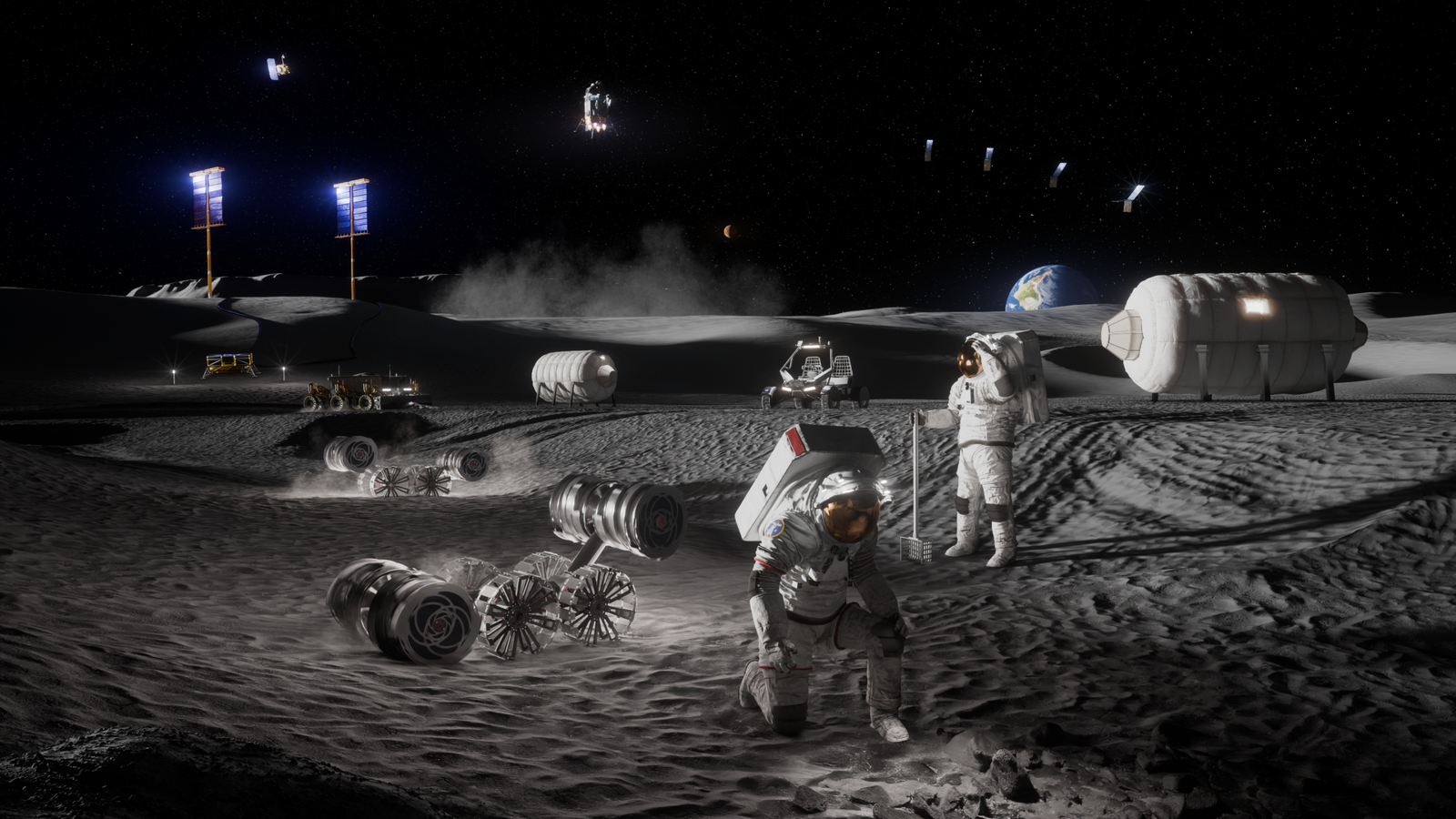
NASA is expanding its efforts to explore the Moon with the addition of three new science investigations. These investigations are part of the agency’s Moon Base Program, which aims to establish a long-term human presence on the lunar surface. The new payloads will gather vital data to help scientists understand the environment, resources, and terrain of the Moon. They will also play a key role in ensuring future astronaut safety and mission success.
The investigations were selected through NASA’s Payloads and Research Investigations on the Surface of the Moon (PRISM) program. The payloads will be delivered to the lunar surface using the Commercial Lunar Payload Services (CLPS) initiative. This approach partners NASA with American companies to send science and technology packages directly to the Moon. The mission support is part of NASA’s broader effort to prepare for building the first lunar outpost and eventually sending astronauts to Mars.
New Instruments for Lunar Environment and Subsurface Exploration
One of the new payloads is the Lunar Environment Monitoring Station – South Pole (LEMS-SP). This autonomous setup will act as a long-term station to monitor environmental hazards. It will track micrometeoroids falling to the Moon and measure gases, called volatiles, that drift into the lunar atmosphere. The station will also include a seismometer to detect seismic activity. Data from LEMS-SP will help assess potential risks and inform safety measures for future lunar habitats. This station aims to provide crucial insights into the Moon’s environment to support sustained human missions.
Another investigation focuses on mapping the Moon’s interior. The Geophysical Investigation for Mapping Lunar Interior (GIMLI) will be placed at the Marius Hills Pit. This site is interesting because it may contain underground lava tubes. GIMLI will scan beneath the surface to check if the pit leads into a large lava tunnel. If confirmed, these naturally occurring underground spaces could serve as protected shelters. They would shield future astronauts from extreme temperatures, radiation, and micrometeoroid impacts. Finding these natural caves could change plans for lunar habitats, helping NASA develop safer, more secure locations for people to live and work.
The third payload, the Depth Imager with Spectral and Color Optics (DISCO), will study the Moon’s surface in detail. It aims to locate underground ice trapped in the lunar dust—known as micro-cold traps. DISCO will also examine the ground’s behavior as it reacts to rocket exhaust and other disturbances. Its measurements will determine where ice is present and how much of it exists. This information is critical for resource utilization, as ice can provide water, fuel, and other materials for future lunar bases. The study will also help NASA design safer surface operations and mobility techniques for astronauts.
These three investigations are part of NASA’s efforts to expand lunar exploration. They help the agency understand the Moon’s environment better, discover useful resources, and identify safe areas for long-term human presence. Each payload supports NASA’s goal to build a sustainable lunar outpost that paves the way for future missions to Mars. Delivery of these instruments is made possible through partnerships with private companies under the CLPS program, reinforcing NASA’s commitment to innovation and international collaboration in space exploration.
Stay Ahead with the Latest Tech Trends
Explore the future of technology with our detailed insights on Artificial Intelligence.
Stay inspired by the vast knowledge available on Wikipedia.
Space
