

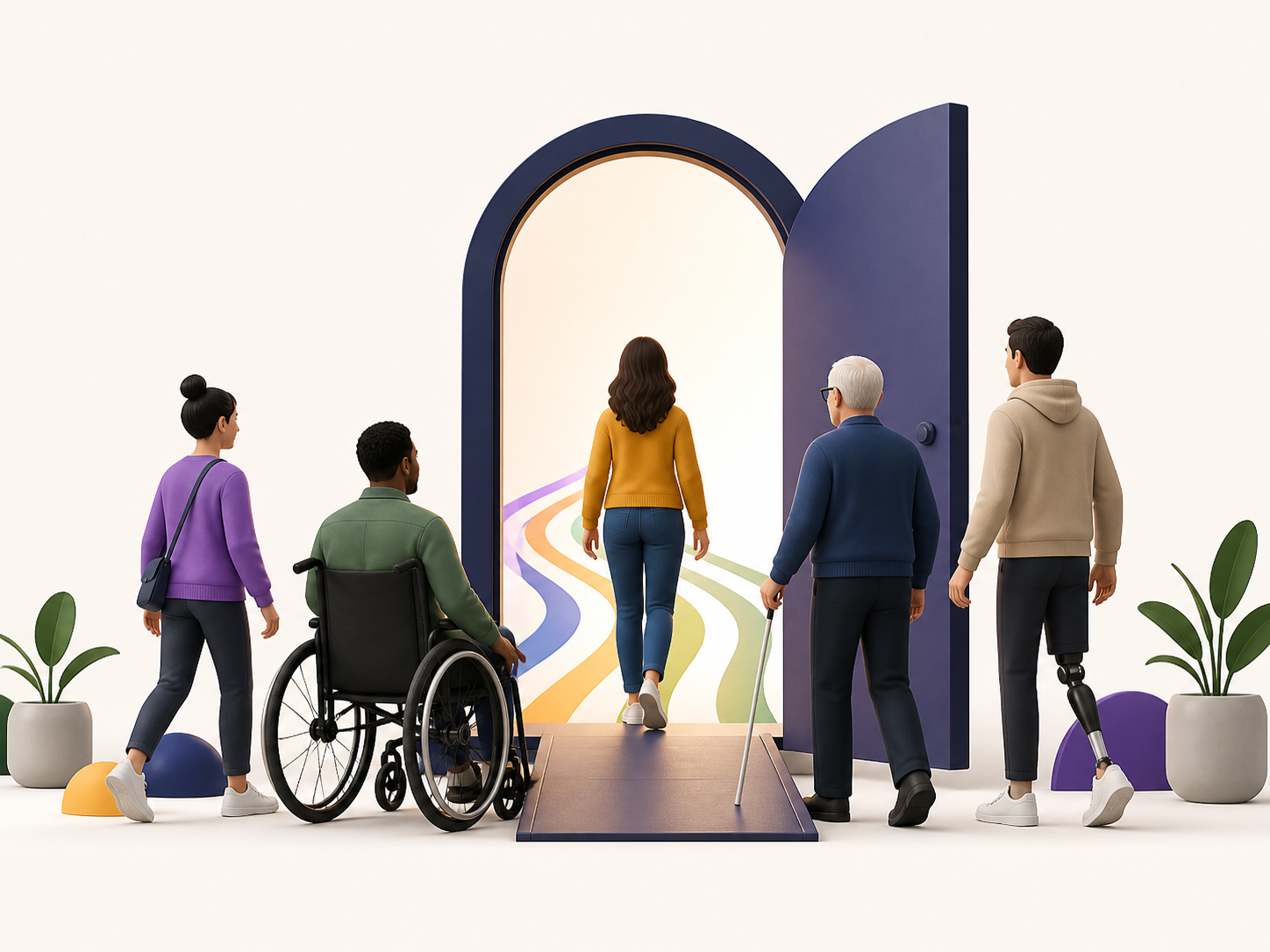
Inviting and Accessible: When a School’s Digital Door Will Not Open
In March 2013, Noel Nightingale wanted to check her son’s math homework. His teacher had reported that he lagged behind classmates in an online program. Nightingale, a blind parent in Seattle, tried to examine his progress. Instead, her screen reader repeated “flash, flash, flash,” she later told EdWeek Market Brief. The program offered her no useful way forward. (marketbrief.edweek.org)
This was an ordinary parental task. Yet the software placed an extraordinary obstacle between a mother and her child’s education.
Her experience raises a simple question: What does a school’s invitation to participate mean when its tools prevent participation?
The answer requires more than goodwill. A school must connect its welcome to something a family can actually do.
A Welcome Is a Message. Access Is a Possibility.
An inviting school communicates that families belong. An accessible school gives them practical ways to contribute. These aims support each other, but neither guarantees the other.
Consider a hypothetical school website. Its homepage greets every family warmly. However, its homework page offers buttons without useful labels. A parent hears “button” several times but cannot tell which control opens an assignment. The welcome remains clear. The route forward disappears.
A screen reader converts digital information into speech or supplies it to a device that displays Braille. It does not simply understand everything that a sighted person sees. Website creators must supply information that the software can interpret. The World Wide Web Consortium, which develops web standards, explains how meaningful text descriptions and keyboard controls help people use websites without relying on images or a mouse. (w3.org)
The distinction matters. A page can exist online without offering everyone a usable service.
Moreover, disability does not define every access problem. The consortium also identifies barriers involving slow connections, limited bandwidth, and expensive internet access. A school’s digital doorway therefore reaches beyond software design into household resources. (w3.org)
Other questions follow. Can a parent understand the instructions? Does the school explain unfamiliar terms? Can someone ask for help without feeling foolish?
These questions separate an invitation from a working opportunity.
Test the Task, Not Just the Promise
Seattle’s response eventually moved beyond a statement of welcome. In its 2015 settlement with Nightingale and the National Federation of the Blind, the district agreed to improve website access, appoint an accessibility coordinator, review its technology, and train staff. It also agreed to address accessibility through purchasing contracts, according to Education Week’s account of the agreement. (edweek.org)
Those commitments established responsibilities. They did not, by themselves, demonstrate that every parent could complete every task.
How should a school test that difference?
Start with something concrete. Ask participants to find an assignment, read a progress report, or send a teacher a message. Observe where they stop. Ask what caused confusion. Then change the design and try again.
The consortium’s guidance on user evaluation recommends combining checks against accessibility standards with testing involving people with disabilities. Standards help reviewers examine a broad range of requirements. Users reveal difficulties that those checks alone may miss. (w3.org)
Neither method offers complete certainty. The same guidance warns against treating one participant’s experience as evidence for everyone with a similar disability. People bring different skills, devices, and preferences. A small study can expose a serious obstacle without proving that every other route works. (w3.org)
Schools should therefore report results modestly. “Eight participants completed this task” says more than “Everyone can use our website.” It also claims less.
Task completion still leaves questions unanswered. Did someone need unwanted assistance? Did the process cause embarrassment? Would that person return?
A useful test should examine both independence and experience.
Who Pays for an Open Door?
The strongest practical objection concerns resources. Schools must balance technology, teaching, staffing, and other needs. Replacing a digital service can disrupt classrooms as well as budgets.
Nightingale encountered that constraint directly. She told EdWeek Market Brief that a district official pointed to another year remaining on the math program’s contract when explaining why a change seemed unlikely. (marketbrief.edweek.org)
That explanation deserves attention. However, delay also assigns a cost. In this case, a parent faced another year without a usable way to oversee the work.
The fair comparison does not place spending on one side and nothing on the other. It weighs the cost of repair against the consequences of continued exclusion.
Schools should make that comparison openly. Leaders could prioritize essential tasks, set repair deadlines, and require suppliers to demonstrate access before purchase. They should also give people who encounter barriers a meaningful role in those decisions, rather than merely invite complaints afterward.
Not every boundary demands removal. A school should protect student records. Access should let an authorized parent read a child’s progress, not expose that information to strangers. Likewise, shared participation need not require identical methods. A family might reasonably prefer an accessible website, a telephone conversation, or a private meeting.
Nightingale’s original task offers a manageable starting point. A school technology director could recruit and compensate parents who use different access tools. Together, they could test one complete journey: opening a math assignment and checking progress. The director could record obstacles, assign repairs, and repeat the test after each major update.
The next invitation would then carry something stronger than reassurance. It would rest on evidence that families could act on it.
Discover More Technology Insights
Explore the future of technology with our detailed insights on Artificial Intelligence.
Access comprehensive resources on technology by visiting Wikipedia.
OPEDV1
