

Fast Facts
- USB-C’s universal design replaced a jumble of proprietary ports, reducing charger switching and electronic waste.
- Motorola CE Bus and Nokia Pop-Port combined charging, data, or accessory features—but their bulky or fragile designs limited their lifespan.
- Apple’s 30-pin connector powered early iPods, iPhones, and iPads before Lightning and eventually USB-C replaced it.
- Sony Ericsson FastPort and HTC ExtUSB packed several functions into unconventional connectors, but both gave way to more standard ports.
5 Old-School Charging Ports You Probably Forgot Phones Had Before USB-C
When every phone brought its own plug
Today, one cable can charge a phone, move files and connect accessories. USB-C makes that routine feel almost effortless. Its reversible design means you can plug it in either way. It can also support fast data transfers and stronger power delivery. An EU mandate has helped push the connector closer to a universal standard.
But phone charging once looked far less uniform. Each maker had its own ideas about what a connector should do. Some ports carried power, audio and data through one opening. Others supported accessories that gave phones new tricks. The variety had charm. It also meant that switching phones could leave you searching for a different cable—and add another unused charger to the drawer.
Five connectors stand out from that more complicated era. Each reflects a different attempt to make a phone more useful, even when the plug itself tested a user’s patience.
Three connectors that packed in extra features
Motorola CE Bus: Motorola used this large, 17-pin connector on phones starting in 2000. Its hooks helped hold the plug in place. The connector handled power, data and audio, all through one port. That was ambitious for its time.
The CE Bus appeared on the well-known Motorola V60. It also featured on the Motorola ROKR E1, the first phone with iTunes support. Still, its size made it a poor fit for thinner designs. Motorola’s Razr V3 moved to Mini-USB instead. As other companies adopted Mini-USB, they also helped reduce reliance on costly, manufacturer-specific connectors.
Nokia Pop-Port: Nokia designed Pop-Port to work with accessories, including earphones, data cables, camera add-ons and car kits. The Nokia 7210, released in 2002, used the 14-pin connector. It offered a handy way to expand what a phone could do.
However, its plastic clips could wear down. The connection could loosen, which made listening to music while jogging a gamble. Pop-Port could charge a phone, too, but many Nokia devices used a separate, slim 2.0-millimeter barrel plug for power. As Mini-USB gained traction, Pop-Port gradually disappeared.
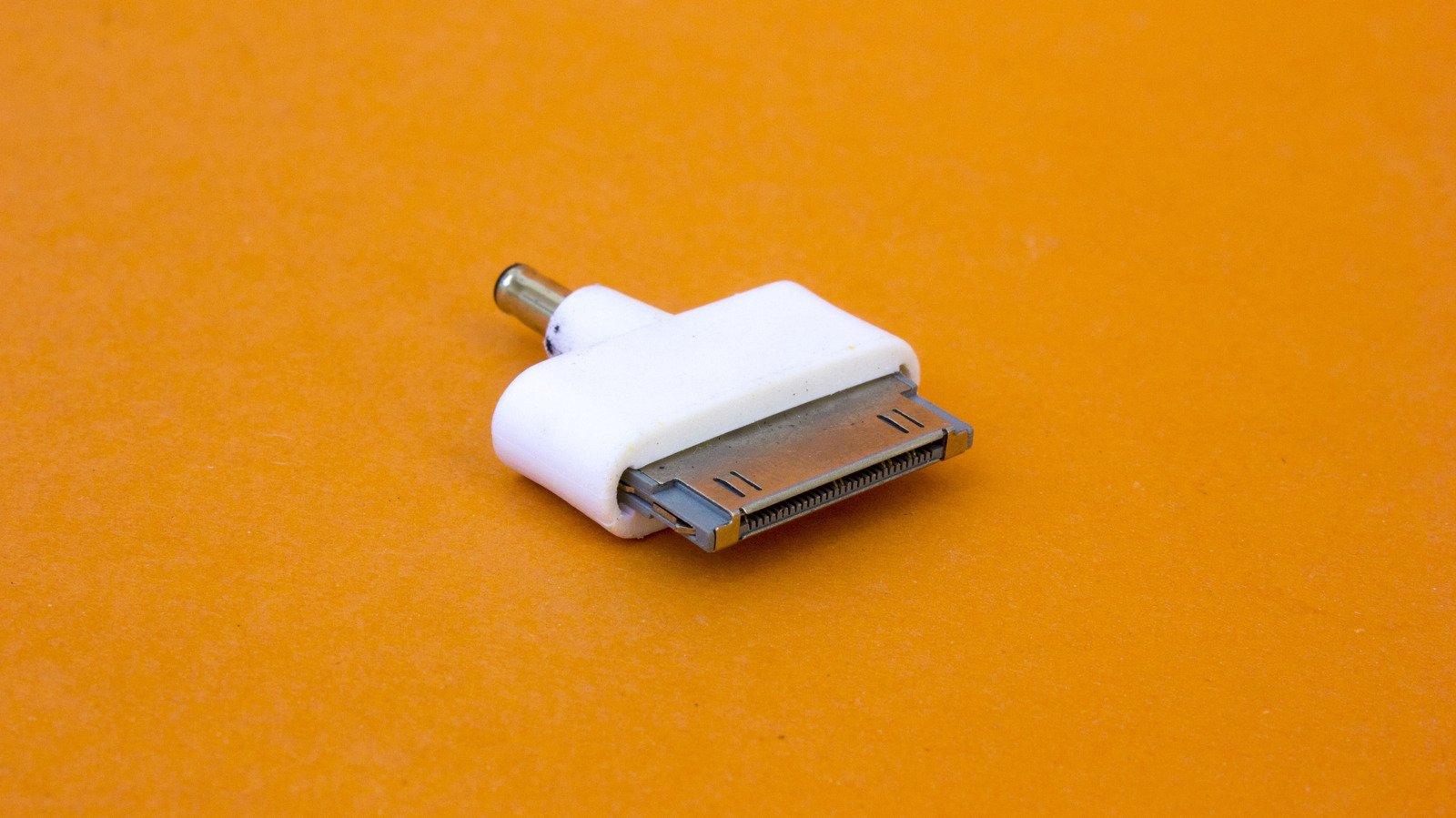
Apple 30-pin connector: Apple debuted this wide, flat connector on the third-generation iPod in 2003. It later served early iPhones and iPads. Speaker systems from Apple and Bose also used it, turning the port into a gateway for music docks and other accessories.
Its many pins supported several functions, including FireWire charging in early uses. That flexibility helped Apple build a broad accessory ecosystem. Yet the connector kept users within Apple’s orbit. Apple replaced it with the smaller, reversible Lightning connector in 2012. The company later moved the iPad Pro to USB-C in 2018 and the iPhone 15 lineup in 2023.
Two more ports, and the lesson they left behind
Sony Ericsson FastPort: Sony Ericsson brought FastPort to the K750i in 2005. The chunky, 12-pin connector handled charging, data transfers and audio output. Its hooks snapped into matching holes on the phone, which helped secure the plug—until a hook broke. Then, keeping the cable connected became a chore.
FastPort still pointed toward a useful idea: one connection could serve several needs. Sony Ericsson moved to Micro-USB and a separate 3.5-millimeter headphone jack in 2010. FastPort lasted about five years, but its unusual shape remains easy to recognize.
HTC ExtUSB: The HTC Dream, the first commercially available Android phone, featured this 11-pin connector. Also called Extended USB, it combined a five-pin Mini-USB connection with extra pins for audio and other functions. Its slanted corner gave it a distinctive look. More importantly, standard Mini-USB chargers could still plug into it.
HTC used ExtUSB on some early Android and Windows Mobile phones before moving to Micro-USB. Some models dropped the headphone jack, so owners needed an ExtUSB adapter to use wired headphones. That choice gave the connector another job, but it also gave users one more accessory to carry.
These old ports rarely matched USB-C for speed, charging power or convenience. They did, however, show how manufacturers tried to solve real problems with the tools they had. A single connector could link a phone to a speaker, a car kit or a computer. Yet every new design also risked creating a new cable standard.
USB-C makes everyday charging simpler, and that is a meaningful improvement. Still, those odd-shaped plugs tell a lively story about phones becoming more capable. For anyone who once kept a drawer full of chargers, they also offer a familiar reminder: progress feels especially good when the next cable finally fits.
Continue Your Tech Journey
Learn how the Internet of Things (IoT) is transforming everyday life.
Stay inspired by the vast knowledge available on Wikipedia.
CellphonesV1
