
Close Menu
    Facebook X (Twitter) Instagram
    Friday, November 20
    Top Stories:
    • New Study Redefines a Major Brain Speech Hub
    • Author Correction: Global Bispecific Antibody Patents and Therapies
    • Ancient Virus May Explain What Makes the Human Brain Unique
    Facebook X (Twitter) Instagram Pinterest Vimeo
    IO Tribune
    • Home
    • AI
    • Tech
      • Gadgets
      • Fashion Tech
    • Crypto
    • Smart Cities
      • IOT
    • Science
      • Space
      • Quantum
    • OPED
    IO Tribune
    Home » How to Find Tiny Primordial Black Holes How to Find Tiny Primordial Black Holes
    Quantum

    How to Find Tiny Primordial Black Holes How to Find Tiny Primordial Black Holes

    Staff ReporterBy Staff ReporterNovember 20, 2026No Comments2 Mins Read
    Share Facebook Twitter Pinterest LinkedIn Tumblr Reddit Telegram Email
    Share
    Facebook Twitter LinkedIn Pinterest Email

    Fast Facts

    Primordial black holes may constitute dark matter and survive as asteroid-mass relics.
    Companions could capture them, gradually drawing them into nearby stellar cores.
    Inside rapidly rotating stars, accretion disks may launch jets and trigger explosions.
    Those events could produce detectable blue, ultraviolet, gamma-ray, and X-ray flashes.

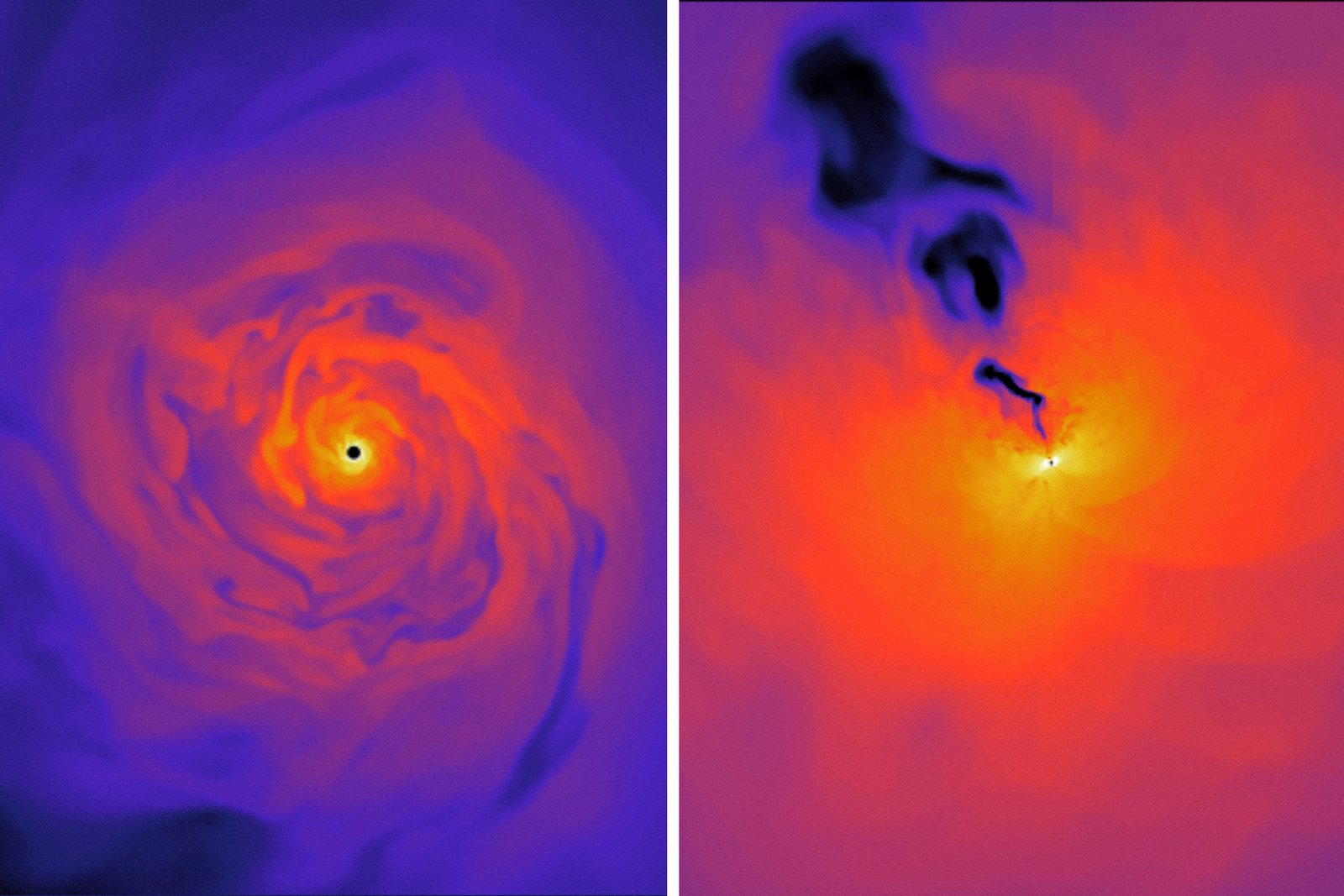
    Tiny primordial black holes may still haunt the universe. MIT researchers have modeled how astronomers might spot one: by watching what happens if an asteroid-mass black hole enters a star.

    These black holes, if they exist, could account for some of dark matter. The smallest ones would have evaporated through Hawking radiation, but heavier examples could persist. They would be roughly atom-sized, despite carrying the mass of an asteroid.

    From a close encounter to a stellar disaster

    A passing black hole would not usually be captured by a star’s gravity alone, the researchers found. A nearby companion, such as another star or a planet, could help trap it. Repeated trips through the star would then drain energy from the black hole’s orbit, drawing it toward the core over thousands to millions of years.

    Once inside, it would consume surrounding matter. The simulations suggest that after several million years, it could have swallowed about 1% of the star’s mass. If the star rotates fast enough, gas could form a disk around the black hole instead of falling straight in. Interactions between the disk and the black hole could launch jets that tear through the star.

    A possible signal, not a confirmed sighting

    The resulting explosion could produce blue and ultraviolet light, as well as X-rays and gamma rays. Researchers say current telescopes could detect such a flash. That makes stellar explosions a potential way to search for primordial black holes.

    The idea remains theoretical. The work uses calculations and simulations; it does not report an observed event. Astronomers would also need to distinguish a black-hole-driven explosion from other stellar events. Still, the predicted brightness offers a practical target for future searches—and a way to test whether these ancient objects exist at all.

    Continue Your Tech Journey

    Dive deeper into the world of Cryptocurrency and its impact on global finance.

    Explore past and present digital transformations on the Internet Archive.

    QuantumV1

    HPC MIT Kavli Institute MIT Physics Ore Gottlieb primordial black holes Quantum Sustainability VT1
    Share. Facebook Twitter Pinterest LinkedIn Tumblr Email
    Previous ArticleRun Claude Code in the Cloud: Always-On AI Agents
    Next Article Uber Kids Lets Parents Book Rides for Ages 10–12
    Avatar photo
    Staff Reporter
    • Website

    John Marcelli is a staff writer for IO Tribune, with a passion for exploring and writing about the ever-evolving world of technology. From emerging trends to in-depth reviews of the latest gadgets, John stays at the forefront of innovation, delivering engaging content that informs and inspires readers. When he's not writing, he enjoys experimenting with new tech tools and diving into the digital landscape.

    Related Posts

    AI

    Why Tech Bros Fear Honeypots

    November 20, 2026
    Gadgets

    Uber Kids Lets Parents Book Rides for Ages 10–12

    November 20, 2026
    AI

    Run Claude Code in the Cloud: Always-On AI Agents

    November 20, 2026
    Add A Comment

    Comments are closed.

    Must Read

    Why Tech Bros Fear Honeypots

    November 20, 2026

    Uber Kids Lets Parents Book Rides for Ages 10–12

    November 20, 2026

    How to Find Tiny Primordial Black Holes How to Find Tiny Primordial Black Holes

    November 20, 2026

    Run Claude Code in the Cloud: Always-On AI Agents

    November 20, 2026

    Chief AI Officers Need Boardroom Buy-In to Succeed

    November 20, 2026
    Categories
    • AI
    • Crypto
    • Fashion Tech
    • Gadgets
    • IOT
    • OPED
    • Quantum
    • Science
    • Smart Cities
    • Space
    • Tech
    Most Popular

    Florida’s New Highway: Charging Your EV on the Go!

    December 30, 2025

    Revealed: The Hidden Brain Shift Starting at Age 50

    August 7, 2026

    Udi Wertheimer Warns Lightning Network Is Fragile Against Quantum Threats

    April 6, 2026
    Our Picks

    Once I tried a Google TV projector, I’m sold!

    June 29, 2026

    Revolutionary Detector Set to Unravel Dark Matter Mysteries

    September 11, 2025

    Could This Be the XRP Killer Investors Need?

    September 20, 2025
    Categories
    • AI
    • Crypto
    • Fashion Tech
    • Gadgets
    • IOT
    • OPED
    • Quantum
    • Science
    • Smart Cities
    • Space
    • Tech
    • Privacy Policy
    • Disclaimer
    • Terms and Conditions
    • About Us
    • Contact us
    Copyright © 2025 Iotribune.comAll Rights Reserved.

    Type above and press Enter to search. Press Esc to cancel.