

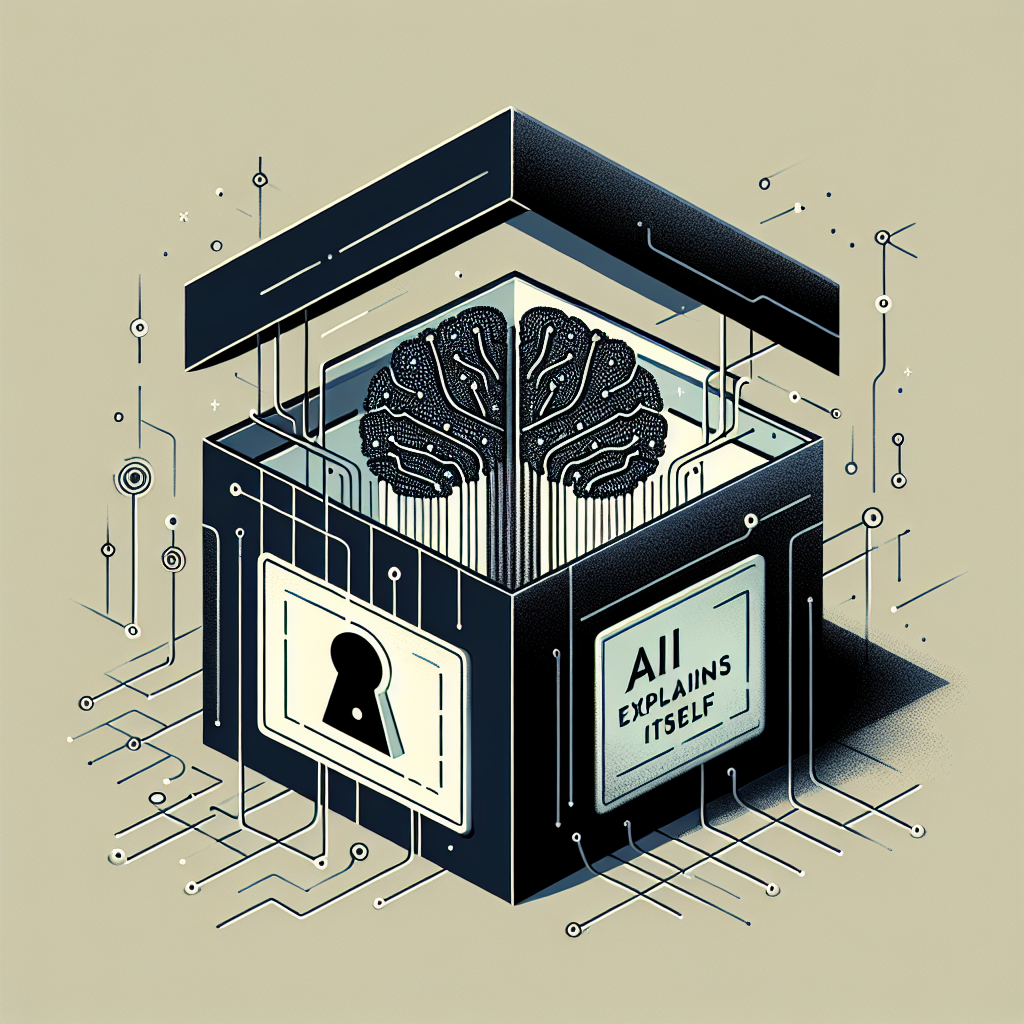
Behind the Black Box: How AI Explains Itself
A woman opens an email. A bank denies her loan. The message reads: “Decision based on internal model.” She stares. She asks: Why? She gets silence. Machines decide more of our lives. People now demand not just correct answers, but reasons they can understand and challenge.
Why this matters. This article walks through what “explainable AI” means, how engineers build explanations, and why those explanations change who holds power. It draws on real methods (LIME, SHAP, counterfactuals, model cards), policy debates (GDPR, EU AI Act), and researchers who warn about limits. Above all, it follows one simple claim: explainability proves a technical problem and a social necessity that reshapes trust, power, and responsibility.
What does “explainable AI” really mean?
Imagine a chef who cooks a dish without sharing the recipe. The dish tastes good. You trust it—or you do not. Explainability acts like the recipe and a taste test. It shows the ingredients and verifies the result.
AI often feels like that secretive chef. Engineers train models on mountains of data. Those models then recommend parole, approve loans, or flag tumors. People call opaque models “black boxes.” They give outputs but not reasons.
An explanation answers two questions: what parts of the input drove the decision, and what would change the outcome. Explanations can show which features mattered, highlight parts of an image, or tell a person what to change to get a different result. Researchers and policymakers now ask: can systems give such reasons in forms humans can trust and contest?
How machines build explanations
Engineers use several concrete tools. Each tool gives a different kind of answer.
– Feature importance (LIME, SHAP). Tools like LIME (Ribeiro et al., 2016) and SHAP (Lundberg & Lee, 2017) act like a detective. They test which ingredients matter most. For a loan model, these methods say: “Income, number of late payments, and employment length contributed most.” Example: LIME perturbs inputs and watches how the output changes, then reports which features most influenced that prediction.
– Saliency maps. For images, saliency maps highlight pixels the model used. Imagine a photo of a skin lesion. A saliency map paints the patch the model focused on. Doctors then inspect that patch. Researchers created these tools to open visual black boxes. They show attention, not proof.
– Counterfactual explanations (Wachter et al., 2017). These answers tell you what would change the decision. The model replies: “If your annual income had been $5,000 higher, the loan would have approved.” Counterfactuals feel practical. They map to real actions a person might take. They also reveal the model’s decision boundaries.
– Model cards and documentation (Mitchell et al., 2019). Engineers publish “model cards.” These short reports say what data trained the model, where it works well, and where it fails. Think of them as nutrition labels for algorithms.
Each method helps. Each method also hides things. Feature importance highlights correlations, not causation. Saliency maps show focus, not reasoning. Counterfactuals depend on what changes the model allows. Model cards summarize, but rely on honest, careful reporting.
Why explanations change lives
Explanations matter where decisions matter. They change law, ethics, and daily life.
Consider a loan denial. A family applies for a mortgage. The bank’s model rejects them. A counterfactual explanation says: “If you had two fewer late payments, the outcome would have changed.” The family learns a specific hurdle. They can correct errors in their credit report. They can appeal. That changes power. The bank cannot hide behind “automated decision” any longer.
Think about hospitals. An AI flags a scan as likely cancer. A saliency map points to a region. Doctors use the map to focus tests. They ask: does the map highlight a tumor or an imaging artifact? The map prompts questions. It does not replace judgment.
Think about self-driving cars. A car swerves. The driver asks: why? A good explanation might say: “The radar detected an obstacle ahead and predicted a high collision risk.” That answer helps people learn when to trust the system and when to take control.
These stories show the stakes. Explanations give people recourse. They let regulators audit systems. They shape who bears responsibility when things go wrong. When an explanation reveals bias, people ask: did the designers, the deployers, or the institution fail?
Scientific and policy communities already act. DARPA launched an XAI program to make models explainable (DARPA XAI, 2016). Lawmakers debate the EU AI Act and the GDPR’s “right to explanation.” Scholars also argue over the right approach. Some, like Cynthia Rudin (2019), insist we build interpretable models from the start for high-stakes uses. Others develop explanation tools to open complex models.
Trade-offs matter. Designers need to balance transparency with privacy and trade secrets. Regulators must choose which value wins in which context. Who audits the model? Who gets the explanation?
Impacts also ripple into human skill. If workers accept machine explanations without critique, they lose practice asking the right questions. If communities lack access to explanations, they lose power.
Why does all this matter? Because explanations shape trust. They allocate responsibility. They determine whether people can contest decisions that shape work, health, and rights.
Implications and counterpoints
Explanations can help. They can also mislead. Researchers such as Lipton (2016) and Rudin (2019) warn that some post-hoc explanations give a comforting story without matching the model’s true logic. Studies find that simple explanations sometimes fool humans into trusting models that make errors. Engineers must test explanations for honesty and usefulness, not only aesthetics.
Transparency also faces limits. Firms cite privacy and security when they refuse to publish model details. Governments worry about revealing techniques to bad actors. These concerns force trade-offs. Democracies must decide who gets audit access and how to protect vulnerable data.
Policymakers must design rules that demand meaningful, usable explanations in high-stakes cases. Engineers must build explanations that people can use. Citizens must learn to ask questions and read model cards. All three must work together.
A closing thought and what you can do
Explainability changes who holds power. It makes algorithms answerable. It forces people to fix errors and to rethink responsibility.
Ask for explanations when something affects you. Read model cards when companies publish them. Support transparency rules that require clear, usable reasons in decisions about money, health, and liberty.
Curiosity helps. Ask: Did the system tell the whole story? If not, who can help tell it? The answers will shape how we live with machines.
Discover More Technology Insights
Stay informed on the revolutionary breakthroughs in Quantum Computing research.
Discover archived knowledge and digital history on the Internet Archive.
OPED_V1
