

Essential Insights
-
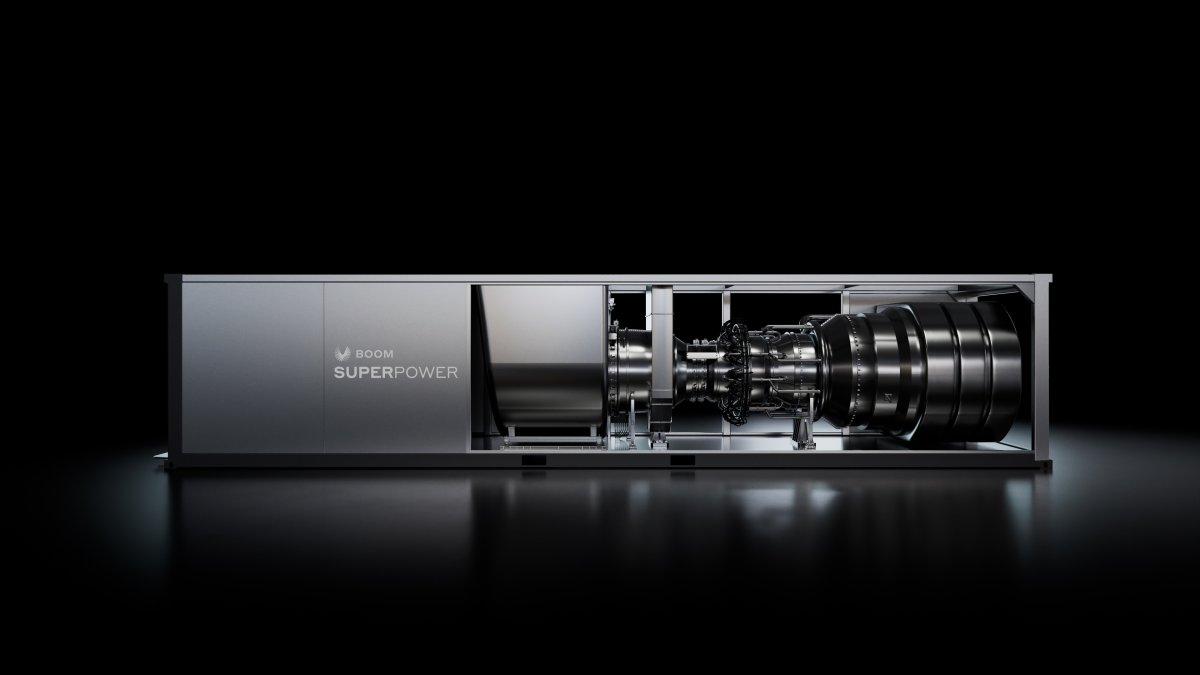
New Venture: Boom Supersonic is launching its Superpower turbine engine as a stationary power plant, with data center startup Crusoe as the first customer purchasing 29 turbines for $1.25 billion.
-
Funding for Innovation: The $300 million raised from investors will support ongoing development of Boom’s Overture supersonic aircraft, mirroring SpaceX’s approach with Starlink.
-
Cost Structure: Crusoe will pay $1,033 per kilowatt for the turbines, but total costs could exceed $2,000 per kilowatt due to additional infrastructure and controls required.
-
Production Goals: Boom aims to scale turbine production rapidly, targeting 1 gigawatt in 2028, 2 gigawatts in 2029, and 4 gigawatts in 2030, amid challenges typical for hardware startups.
Innovative Moves in Energy Generation
Boom Supersonic’s recent announcement reflects a bold step into the energy sector. The company plans to sell a stationary version of its turbine engine, named Superpower, to Crusoe, a data center startup. Crusoe’s investment of $1.25 billion for 29 turbines signals confidence in Boom’s technology. These turbines aim to produce a substantial 1.21 gigawatts of power, critical for meeting the rising energy demands of data centers. Boom’s decision to develop this technology closely parallels SpaceX’s strategic use of revenue from Starlink to propel its rocket development. This commitment to diversifying revenue streams could bolster Boom’s future in both energy and aviation.
Despite the promising prospects, the cost of these turbines raises questions about practicality and economic viability. Priced at $1,033 per kilowatt, Boom’s Superpower is relatively high compared to traditional turbines. Many factors contribute to this cost, including the responsibility that falls on Crusoe for pollution control and infrastructure. Furthermore, the efficiency of 39% aligns with current industry standards but remains lower than combined-cycle turbines that exceed 60%. As Boom endeavors to scale its production, it must navigate various challenges. The success of this venture may not only impact Boom’s future but could also pave the way for greater adoption of innovative energy solutions in various sectors.
Challenges Ahead for Expansion
Boom’s ambitious goals for turbine production reflect a vision for large-scale deployment. By 2030, the company aims to output 4 gigawatts of energy. Achieving this will demand effective management of manufacturing processes and supply chains. Early-stage companies often face difficulties in transitioning from prototype to mass production. This “valley of death” can hinder the ambitions of many tech startups. As Boom tries to overcome these obstacles, focus and strategic planning will be crucial.
The company’s approach to manufacturing turbines in shipping containers offers flexibility for developers like Crusoe. However, delivery timelines and installation complexities introduce additional layers of uncertainty. As Boom works on building a larger facility to meet demand, the market will closely watch its progress. Ultimately, the journey of Boom Supersonic underscores a significant evolution in energy generation technology, potentially transforming how industries approach sustainability while enhancing our ability to meet future power demands.
Continue Your Tech Journey
Learn how the Internet of Things (IoT) is transforming everyday life.
Discover archived knowledge and digital history on the Internet Archive.
TechV1
