

Fast Facts
-
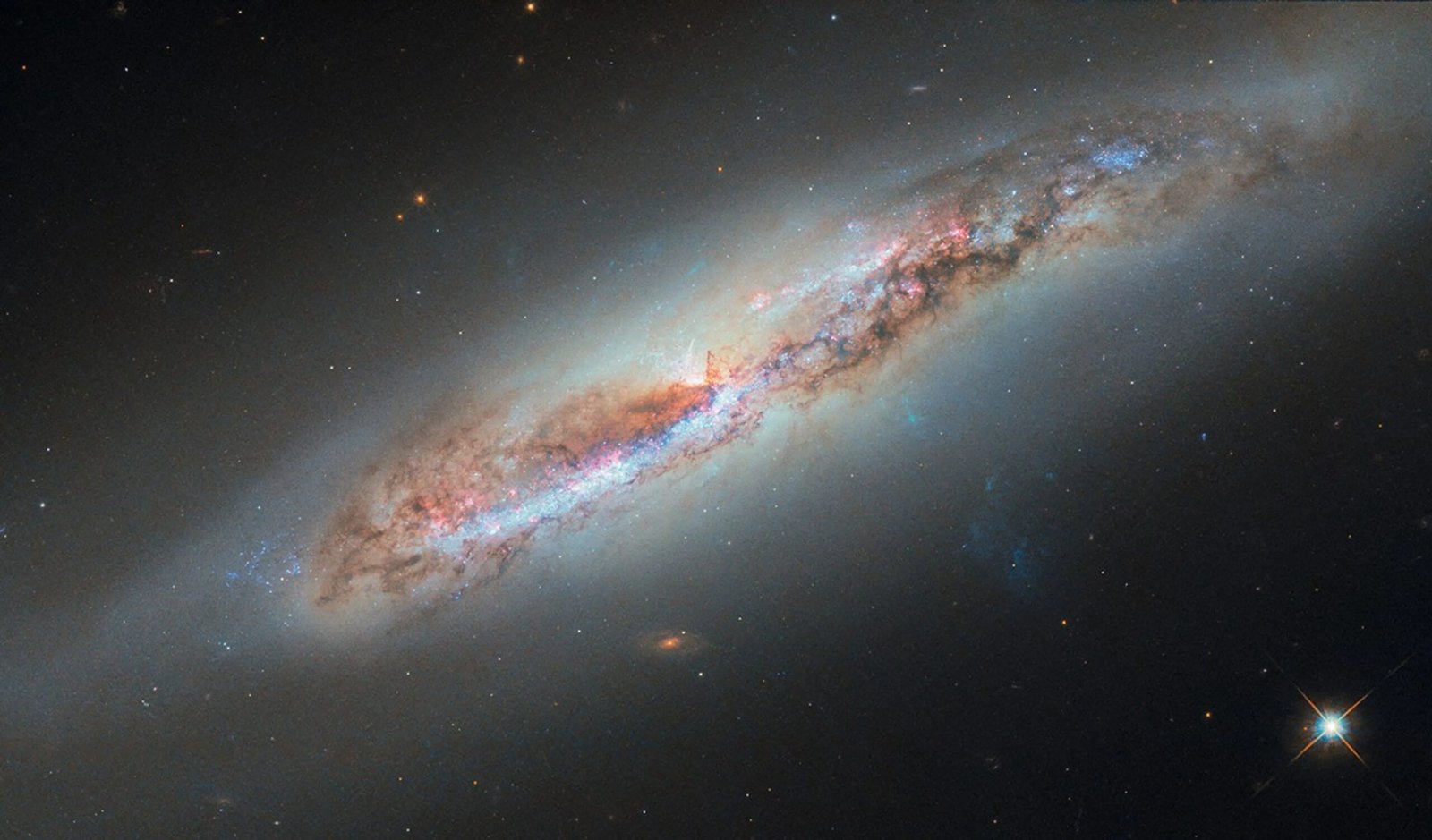
Galactic Overview: NGC 4388, a spiral galaxy in the Virgo cluster, is located approximately 60 million light-years from Earth and is viewed at an extreme angle, providing a unique perspective.
-
Gas Outflow Discovery: This recent Hubble image reveals a plume of gas emanating from NGC 4388’s nucleus, previously unnoticed in earlier observations.
-
Intracluster Medium’s Role: As NGC 4388 traverses the Virgo cluster, pressure from hot gas in the intracluster medium strips gas from its disk, creating a trailing gas cloud.
-
Ionization Sources: Ionization of the gas cloud is likely driven by radiation from a supermassive black hole at the galaxy’s center and shock waves impacting the surrounding gas.
Hubble Glimpses Galactic Gas Making a Getaway
NASA’s Hubble Space Telescope recently captured an intriguing image of the spiral galaxy NGC 4388. Located about 60 million light-years away in the constellation Virgo, NGC 4388 is part of the Virgo galaxy cluster. This cluster, the nearest large one to the Milky Way, contains more than a thousand galaxies. As Hubble focused on NGC 4388, it revealed a striking feature: a plume of gas streaming out from the galaxy’s nucleus.
This plume, visible in the latest image, wasn’t detected in previous observations from 2016. Scientists wonder about its origins. The outflow likely results from NGC 4388 moving through the hot, sparse environment of the intracluster medium. Although this space appears empty, it is filled with hot gas. As NGC 4388 travels through this medium, pressure from the surrounding gas pulls material from the galaxy, causing the plume to emerge.
Additionally, the bright glow of this gas cloud raises questions. Researchers suspect that a supermassive black hole at the galaxy’s center plays a significant role. The black hole generates intense radiation as it spins gas into an extremely hot disk. This radiation likely ionizes nearby gas, causing it to emit light. Shock waves might also affect gas farther from the galaxy.
Hubble’s latest image uses data from multiple wavelengths of light, enhancing our understanding of such outflows. Insights from NGC 4388 not only deepen our knowledge of galaxy formation but also advance technology for studying cosmic phenomena. As scientists develop improved observational techniques, they uncover fundamental processes shaping the universe.
These discoveries may lead to innovations in various fields, including communication and data processing. As we learn more about galactic dynamics, we can apply those principles to improve technology on Earth. In essence, studying the universe can enrich our quality of life and shape future technological advancements.
Expand Your Tech Knowledge
Dive deeper into the world of Cryptocurrency and its impact on global finance.
Stay inspired by the vast knowledge available on Wikipedia.
SciV1
